N.S. Lyons delivers a startling thesis: the shock felt by European elites at Vice President JD Vance's Munich speech was performative, masking a years-long, covert information war waged by the transatlantic establishment against American populism. This piece is notable not for recounting the speech itself, but for mapping the intricate, cross-border machinery of censorship that the administration now claims to dismantle. It forces the listener to confront the uncomfortable reality that the "threat from within" Vance cited may have been a deliberate strategy engineered by the very allies he criticized.
The End of the Post-National Era
Lyons argues that the Vice President's address was a declaration that the era of "post-national" globalist liberalism is over. The author writes, "The United States, he indicated, now has a core interest in seeing a Western world that is collectively strong because its sovereign nations are strong." This framing shifts the narrative from a simple policy disagreement to a fundamental clash of geopolitical philosophy. Lyons suggests that the administration is no longer willing to tolerate Europe acting as a proxy for American ideological conflicts.
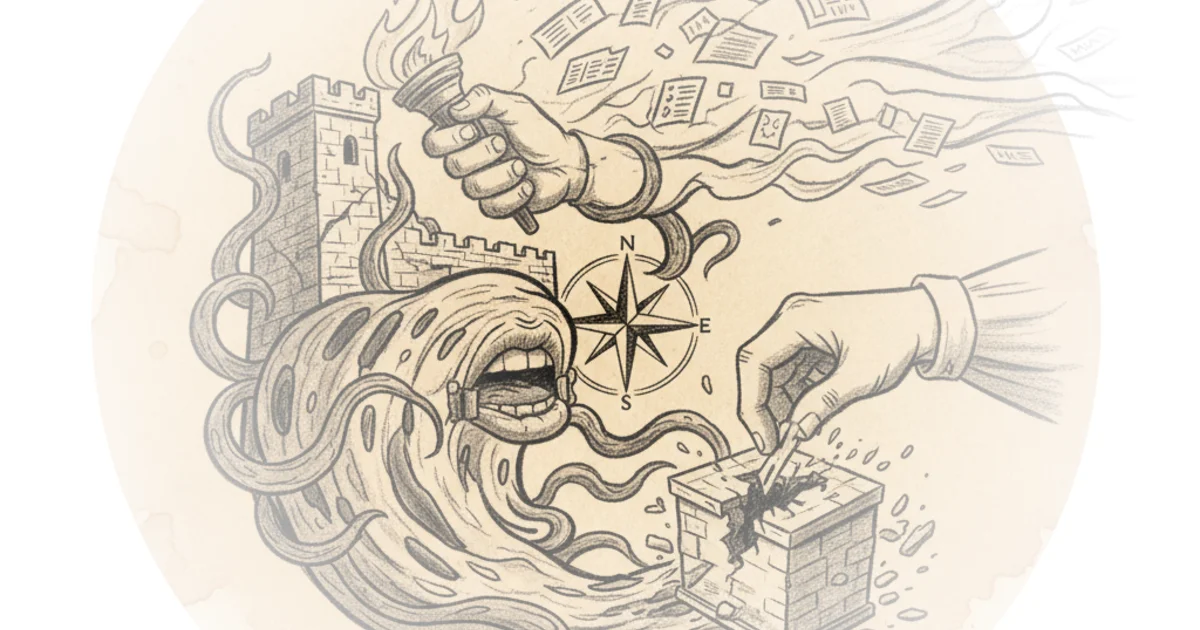
The core of the argument is that the "hidden conflict" Vance exposed was a coordinated effort to manage public opinion through strict control of information. Lyons notes that after the 2016 election, panicked elites believed that if the "information diet" of voters could be controlled, they would stop voting wrong. This assumption—that elite preferences were the only rational path and opposition was merely the result of manipulation—drove a massive regulatory overreach. Critics might note that this view dismisses the legitimate role of platforms in combating genuine disinformation campaigns, yet Lyons effectively highlights the scale of the coordination that followed.
The Brussels Effect and the Censorship Industrial Complex
The piece details how the United States, facing constitutional barriers to direct censorship, outsourced the policing of the internet to Europe. Lyons writes, "This was to circumvent the U.S. Constitution by outsourcing the policing of the internet and populist movements to other countries around the world." He describes how the European Union's massive market leverage forced global tech companies to comply with strict content removal rules, a phenomenon dubbed the "Brussels Effect."
Lyons points to the Digital Services Act as the apex of this strategy, calling it, "the most comprehensive censorship law ever passed in a Western democracy." The author explains that this law threatens fines up to 6% of global revenue for failing to remove "false" content within hours, with definitions of harm decided by small committees of experts. The argument here is that these regulations were not merely about safety, but about political containment. The author notes that the "Christchurch Call to Action" summit formalized this as an international project to eliminate content that often simply represented dissenting political views.
The construction of this counter-populist system was formalized as a distinctly international project... covering everything from applying appropriate laws and regulation to specific technical measures.
The Deep State and the Weaponization of NGOs
Perhaps the most aggressive part of Lyons' coverage is the exposure of non-governmental organizations acting as foreign lobbyists and intelligence proxies. The author highlights the Center for Countering Digital Hate (CCDH), describing it as a "British Labour Party cutout" that worked hand-in-hand with governments to create enemies lists. Lyons writes, "When CCDH published a report labeling 12 influential COVID-19 lockdown skeptics as the dangerous 'Disinformation Dozen,' 12 Democratic Party attorney generals in the United States all inexplicably sent a letter on the same day... citing the CCDH report."
This coordination suggests a blurring of lines between civil society and state power. Lyons argues that these groups, often partially state-funded, formed a "cartel of invisible gatekeepers" to distort narratives and cut off financing for political opponents. The author points out that the Atlantic Council and the Alliance for Securing Democracy (ASD) maintain deep connections to the security state, with founding boards including figures from the Obama administration and Hillary Clinton's campaign. This overlap, Lyons contends, was no coincidence; it was a "whole of society" approach to defending democracy by treating domestic populists as foreign adversaries.
Critics might argue that labeling all fact-checking and safety initiatives as "censorship" ignores the genuine dangers of viral misinformation during crises like a pandemic. However, Lyons' evidence regarding the specific coordination between NGOs and government officials to target specific individuals presents a compelling case for institutional overreach.
Fifth-Generation Warfare on Citizens
The commentary culminates in the assertion that Western intelligence services have turned counterinsurgency tactics onto their own populations. Lyons writes, "The American security establishment began to turn the tools and tactics of counterterrorism, counterinsurgency warfare, and regime change that it had developed abroad back onto its own people." He describes how the British Army's 77th Brigade and the "Five Eyes" alliance began surveilling citizens and engaging in psychological warfare, viewing the "cognitive infrastructure" of the public as a battlefield.
The author concludes that this transatlantic alliance was waging a hybrid information war with the primary objective of stopping the rise of populism. With the return of the Trump administration, Lyons suggests the dynamic has shifted dramatically. He writes, "But that war failed; now Trump is back and, as Vance warned the political and military leaders assembled in Munich, 'there is a new sheriff in town' in Washington." The implication is that the allies of the previous administration are now stranded, having invested heavily in a system that the new executive branch is prepared to dismantle.
In short, the transatlantic alliance has for years been waging a hybrid information war on the American public (among other nations).
Bottom Line
Lyons' strongest asset is the meticulous tracing of the bureaucratic and financial links between US agencies, European regulators, and private NGOs, painting a coherent picture of a coordinated censorship apparatus. The piece's greatest vulnerability is its tendency to conflate all content moderation with political persecution, potentially overlooking the complex challenges of managing online safety. Readers should watch for how the new administration navigates the legal and diplomatic fallout of dismantling these entrenched international networks.