David Smith delivers a week-in-review that transcends standard news aggregation, framing Moldova's current turbulence not as a series of isolated crises, but as a collision between deep historical memory and fragile modern governance. The piece is notable for its refusal to treat the energy crisis or political fracturing as mere headlines, instead weaving them into a narrative about a nation trying to define its sovereignty while standing on the precipice of regional conflict.
The Weight of Memory and the Fracture of Power
Smith opens by grounding the reader in the cultural rhythm of the nation before pivoting to the political chaos. He notes that following Orthodox Easter, Moldovans gather for "Paștele Blajinilor," a unique holiday where the living share food and wine with the dead in graveyards. It is a moment of profound continuity that contrasts sharply with the disintegration of the country's political opposition. Smith writes, "On Easter, we give ourselves the time to return to what really matters: our roots, our family, and the invisible thread that connects generations," quoting President Sandu's reflection on the need for reconciliation. This cultural anchor makes the subsequent political unraveling feel more jarring.
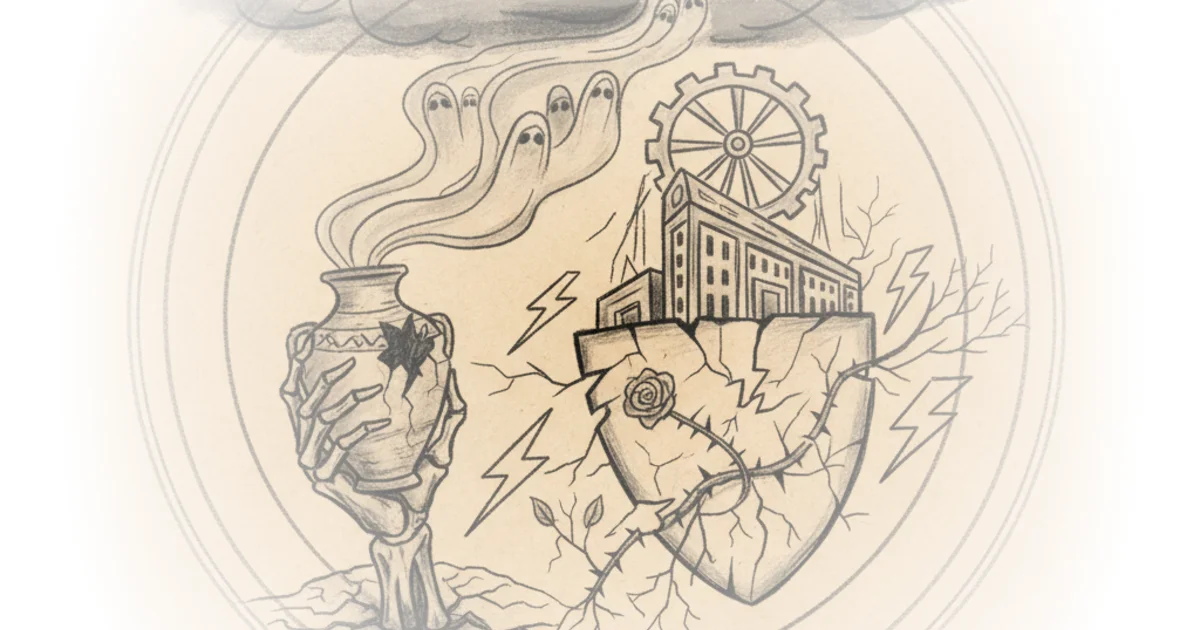
The author details how the "Alternative Bloc and Faction continue to disintegrate," with Mayor Ceban's MAN party confusingly withdrawing from the bloc while remaining in the parliamentary faction, prompting Mark Tkaciuk's Civic Congress to break away entirely. Smith observes that in a landscape where partners loudly distance themselves, the only honest move for Tkaciuk was to sever ties. This internal fragmentation is critical because it weakens the checks and balances necessary for a stable democracy, leaving the executive branch with fewer constraints as it pushes through contentious reforms.
The invisible thread that connects generations is being tested by the visible fractures in the parliament.
Smith then turns to the Central Election Commission's plans to revise the electoral code, a move that introduces tighter control over social media advertising and, crucially, new eligibility criteria for Gagauzia. The proposal requires Bashkan candidates to speak both Gagauz and Romanian, be at least 35, and have lived in the region for a year. Smith connects this to the broader context of the Gagauz language and identity, noting that these amendments could be a double-edged sword: intended to ensure local representation, they may also be perceived as a tool to disqualify specific political opponents. Critics might argue that while language proficiency is a legitimate requirement for regional leadership, the timing and specificity of these rules during a period of heightened political tension suggest a strategic maneuver rather than pure administrative reform.
The piece also highlights the human cost of historical trauma, as President Sandu commemorates the victims of the Stalinist famines. Smith quotes her stating, "The famine of 1946–1947 affected hundreds of thousands of people and led to the loss of 200,000 lives. Figures that still terrify us today, but which cannot fully encompass the trauma that parents and children, young and old, went through." This invocation of history serves as a stark reminder that the current administration is operating in a country where the scars of Soviet repression are still fresh, influencing the public's appetite for stability and truth.
Energy Volatility and the Shadow of War
The commentary shifts to the immediate economic pressures, where Smith identifies the "American-Israeli war against Iran" as the catalyst for ongoing energy uncertainty in Europe. While fuel prices have dropped slightly due to fragile ceasefires, the reality on the ground remains grim: "diesel remains 51% more expensive than before the war started while gasoline is 23% more expensive." Smith points out the irony that Moldova's Lukoil stations continue to operate because the US administration extended waivers on sanctions until October, a pragmatic decision that prioritizes energy security over geopolitical purity.
To mitigate the impact on agriculture, the Ministry of Agriculture announced a new credit facility for micro and small farmers, offering loans at a fixed 5.1% APR. However, Smith offers a sharp critique of the implementation, noting that Moldova's laws defining small enterprises often fail to account for the reality of unofficial seasonal labor. He writes, "The government has long chosen to ignore the problem of unofficial work... and this has created problems making targeted programs like this as larger companies will likely benefit more than smaller ones." This observation is vital; it suggests that well-intentioned policy can be undermined by the very bureaucratic structures it seeks to fix, potentially leaving the most vulnerable farmers without support.
Security Dynamics and the Transnistrian Question
In the realm of security, Smith presents a sobering assessment of the region's volatility. Chisinau has declared Russian army leadership in Transnistria "undesirable," blocking their entry. In response, the Transnistrian "Foreign Minister" Ignatiev called the move "unreasonable and destructive," arguing that Russian peacekeepers and military units are a "single entity." Smith contextualizes this by noting that Ukraine's General Kirill Budanov views the troops as a "known threat" but is not making their withdrawal a condition for peace talks to avoid complicating negotiations. This delicate balancing act highlights the difficulty of addressing security threats without derailing diplomatic efforts.
The situation is further complicated by Romania's decision not to shoot down Russian drones, leading former President Traian Băsescu to warn that the country is becoming a "boulevard for Russian drones." Smith reports Băsescu's comment that "we are starting to look ridiculous," underscoring the frustration among regional allies regarding the technical and political constraints on air defense. Meanwhile, the Russian Duma passed a bill to deploy forces to "protect the rights of Russian citizens" abroad, a move likely linked to fears of a special tribunal for the crime of aggression. Smith notes the extradition of Alexandru Balan, a former security chief, to Moldova, highlighting the ongoing legal battles against espionage networks that span the region.
The geopolitical chessboard is not just about moves and countermoves; it is about the survival of small nations caught between giants.
The piece concludes with a somber note on the partial collapse of the Khotyn Fortress, a site built by Stefan Cel Mare. Smith recounts the mayor's statement confirming the damage: "Unfortunately, it is not artificial intelligence... a very unpleasant and extreme emergency situation occurred." The collapse of this historic wall serves as a powerful metaphor for the fragility of the region's heritage and infrastructure under the strain of modern conflict. Smith's inclusion of this detail, noting he saw it on his own fourth-grade history textbook, personalizes the loss and reminds the reader that the destruction of the past is a tangible reality, not just a historical abstraction.
Bottom Line
David Smith's analysis succeeds in connecting the dots between cultural memory, political instability, and external security threats, offering a nuanced view of Moldova's precarious position. The strongest element is his ability to juxtapose the solemnity of the "Easter of the Dead" with the chaotic disintegration of political alliances, revealing a nation struggling to maintain its identity amidst fragmentation. However, the piece's vulnerability lies in its reliance on official statements regarding the electoral code reforms, which may understate the potential for these measures to be weaponized against opposition figures. Readers should watch closely how the new language requirements in Gagauzia are applied in the next election cycle, as this will likely be the next flashpoint in the region's political landscape.