Hamilton Nolan cuts through the sci-fi hype surrounding artificial intelligence to reveal a far more immediate and tangible threat: the systematic automation of human labor to satisfy Wall Street's demand for immediate profits. While the public fixates on whether machines will achieve god-like intelligence, Nolan argues we are already witnessing the deliberate dismantling of the middle class to fuel a stock market boom. This is not a distant future problem; it is a current economic strategy with predictable, devastating consequences for the majority of workers.
The Investment Bubble and the Profit Imperative
Nolan begins by dismantling the narrative that the current AI boom is a purely technological renaissance. He points out that the scale of investment is "ludicrous," with hundreds of billions of dollars now representing "fully half of the nation's annual economic growth figure." The author notes that AI companies are currently "more overvalued than tech companies were at the height of the late-90s tech bubble," despite significant doubts about the technology's actual utility for profit generation. The core of his argument is that this financial momentum is unsustainable without a tangible return on investment.
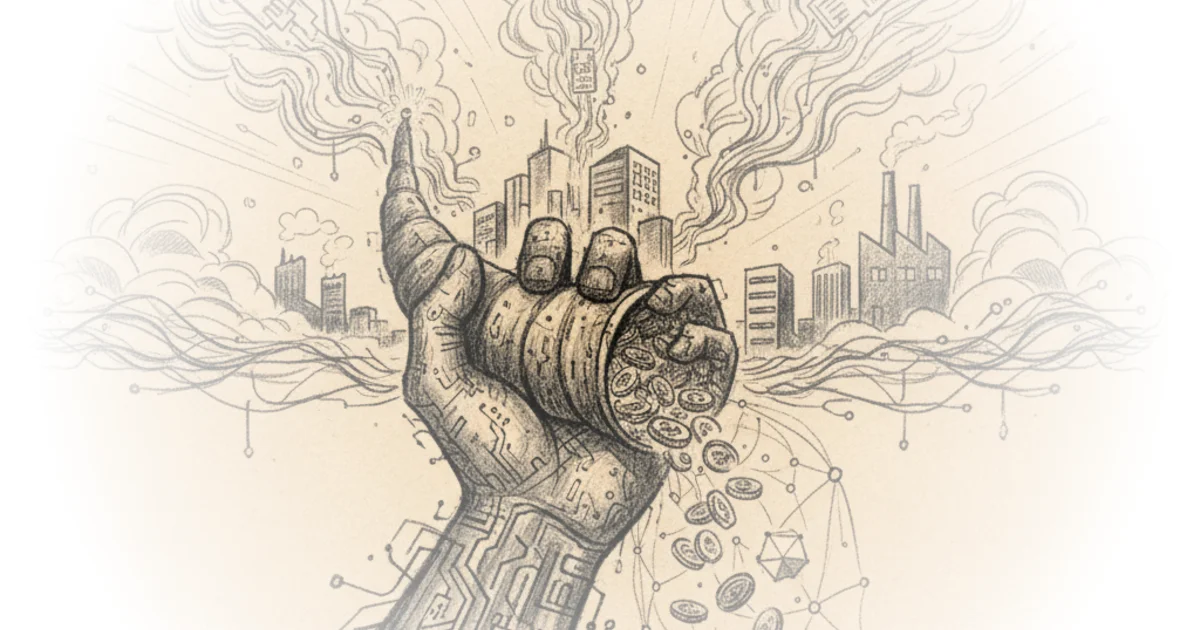
As Nolan puts it, "Investors will not wait an infinite amount of time waiting to see if AI becomes the magical superintelligence that dominates the world." This creates a pressure cooker environment where companies must pivot from dreaming of artificial general intelligence to selling existing tools that cut costs. The most direct path to those profits, he argues, is not innovation in healthcare or finance, but the automation of white-collar and creative jobs. This framing is powerful because it shifts the focus from the abstract capabilities of the technology to the concrete incentives driving its deployment.
It is a machine that is trained on our work and then used to put us out of work.
This blunt assessment strips away the philosophical debates about whether AI is "good" or "bad" and focuses on the economic reality: the technology is being sold specifically to reduce labor costs. Nolan suggests that even if AI is not yet as good as human employees, it only needs to be "good enough to convince the employers in these fields that its lack of quality is more than made up for by its potential to lower labor costs." Critics might argue that automation historically creates new types of jobs, but Nolan's analysis suggests this time the displacement could be too rapid and broad for the market to absorb, particularly in sectors like education and healthcare where the push is already visible.
The Social Cost of Privatized Gains
The commentary then pivots to the societal fallout of this corporate strategy. Nolan warns that without intervention, the economic gains from automation will be "full privatized," while the costs—mass unemployment and skill obsolescence—will be socialized. He describes a scenario where "inequality—America's most pressing underlying economic problem—will increase," creating a paradox where the stock market rises even as poverty deepens. The author highlights the absurdity of tech leaders who once championed safety nets now remaining silent as the technology they built threatens to destabilize society.
The political coalition for this should be: everyone.
Nolan's call for a unified front is compelling, yet it faces a significant hurdle: the very people he suggests should join the coalition—AI CEOs and investors—are the primary beneficiaries of the current trajectory. He questions why figures like Sam Altman and Elon Musk have stopped advocating for universal basic income, noting that "the will to bring it about seems to have dried up at right about the same time the AI gold rush that might make it a necessity got going in earnest." This observation underscores a critical gap between the rhetoric of tech optimism and the reality of profit maximization. While some might argue that market forces will naturally correct these imbalances, Nolan's evidence suggests that the momentum of the current boom is too strong to rely on organic correction.
Bottom Line
Hamilton Nolan's strongest contribution is his refusal to get lost in the speculation of superintelligence, instead grounding the AI debate in the immediate, predictable mechanics of labor displacement and wealth concentration. His argument's greatest vulnerability lies in the political feasibility of his proposed solutions, as he admits that unions and government intervention may be insufficient against the sheer weight of the industry. Readers should watch for how labor unions and policymakers respond to the aggressive push for automation in white-collar sectors, as this will determine whether the economic gains of AI remain concentrated at the top or are shared more broadly.