What makes this piece notable is that Josh Scott is doing something increasingly rare in the guitar effects world: he's showing exactly how modifications work on a live stream, walking viewers through every step of transforming a stock Big Muff into something custom. This isn't a polished tutorial video — it's raw, unfiltered, and packed with insider knowledge that would typically stay inside the shop.
Josh Scott opens by defending the stock Big Muff, writing that "this is considered like big muff New York City standard big muff by no means does it need a mod these are amazing as they are if you like what you just heard just go buy one from them they're great little affordable pedals." This matters because it sets expectations: the Moon Pie modification isn't about fixing something broken — it's about customizing something already excellent.
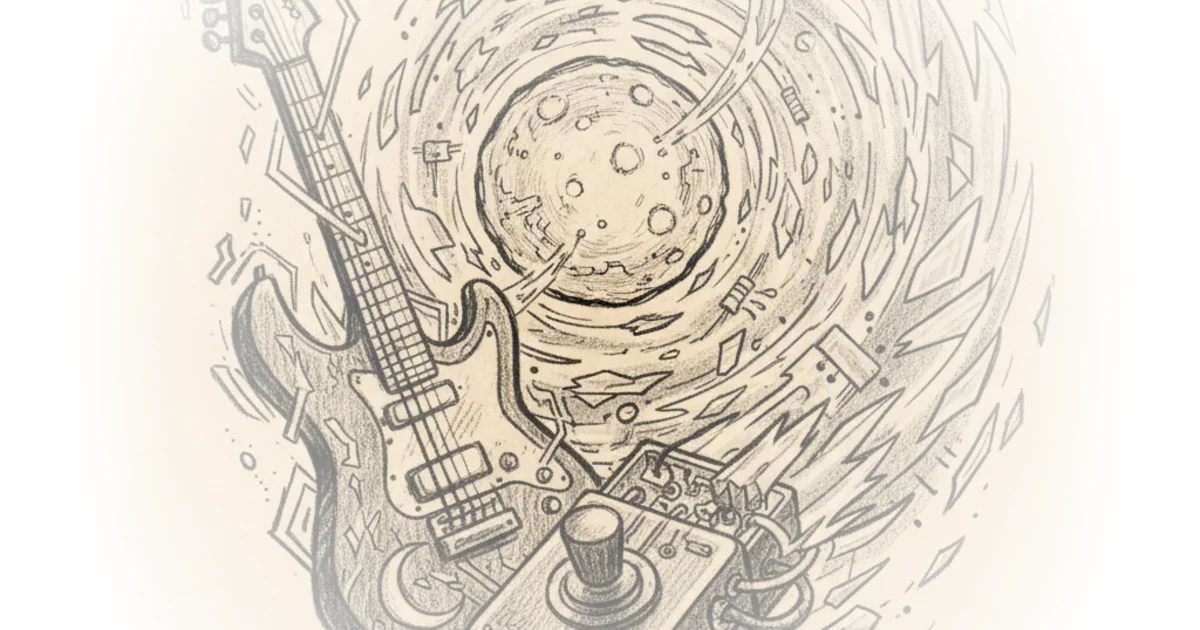
The most surprising claim in this piece comes early: "the big muff is one of the first ever soft Clippers it predates the it's crazy this is soft clipping in a feedback loop for a guitar pedal this did not exist Bob Meyer pulled this idea from his work at Bell labs." This reframes what we thought we knew about fuzz pedals. The Big Muff wasn't just another circuit — it was pioneering technology that influenced everything from radio limiting circuits to modern overdrive designs.
If you're not aware please go over to Copper sound this stuff is amazing I'm going to get back to breadboarding I promise but look at all this these sub boxes even for mods like the diode box alone right here so it's $59 that's a cup of coffee that diode substitution box get that and then just get you the smallest breadboard they make over here.
The Moon Pie Mod Explained
As Josh Scott explains it, the core modification involves changing how the circuit clips. "we're going to essentially write it down for you I think it'll be almost the same one thing I want to play with here potentially is I I think I'm going to ditch if we're going to mod it like let's mod it." He's building toward a specific vision: using Germanium diodes instead of standard silicon ones, which creates what he describes as "a buzz sentence it's the today will be the one of one JHS MoonPie German manium that's what we're going to do."
The technical heart of this modification is simple but powerful. Removing the stock diodes entirely "that's essentially a solar sound like Su tone Bender you know the tone the solo sound tone Benders that are big muff clones they essentially just don't have those diodes and that's really cool." This reveals how the Big Muff's character comes from its clipping architecture — not from mysterious "secret sauce" but from deliberate circuit design choices.
The Live Stream Context
What elevates this piece beyond a standard tutorial is the live stream format. Scott acknowledges the chaos directly: "I have my Dyson down here if you've watched the past we'll we'll try to clean that up so let's unhook this and just go to town." He's performing for an audience that understands the ritual — the blood, the swearing, the improvised tools when professional ones fail.
The community aspect matters. "there's a thousand people in there hanging out what a fun Community gathering around ridiculous pedals" he says, recognizing that his viewers aren't passive consumers but active participants in a subculture where modifying equipment is as much social event as technical project.
The Price of Rarity
One moment cuts through the hype: "there's nothing there's nothing that special about these mods it's just the Rarity and the JHS collectors love them you know don't go pay $300 for this just mod one yourself." This is Scott at his most practical — warning viewers against paying inflated collector prices when the modification itself is straightforward. The rarity adds value, not the complexity.
Critics might note that the live stream format creates pressure to rush through complex soldering work, potentially compromising safety for entertainment. The blood from his hand during this episode is evidence of exactly that tension — the show must go on, even when precision matters.
Bottom Line
This piece succeeds because it demystifies what most people treat as inaccessible shop knowledge: how clipping stages actually work in fuzz pedals, and how to modify them at home. Its vulnerability is in the format itself — live stream energy drives speed over careful explanation, which means some viewers will learn wrong lessons about safe soldering practices. The strongest element is Scott's honest warning against paying premium prices for mods that are simple enough to build yourself.