Sam Denby doesn't just report on a geopolitical dispute; he exposes a surreal collision where a slice of Middle America is grafted onto a dense, distinct Pacific island, creating a pressure cooker of cultural friction. By juxtaposing the mundane reality of high school football and Burger Kings with the lethal stakes of a 1945 battle and modern sexual assault jurisdiction, Denby reveals why Okinawa is the most volatile flashpoint in the US-Japan alliance. This is not a story about distant policy; it is about how a legal framework from 1960 allows American military power to operate with impunity in a space where the local population has no say.
The American Bubble in a Japanese Sea
Denby opens by painting a vivid picture of the island's duality, noting that while tourists flock to the beaches, a parallel world exists just beyond the perimeter fences. He writes, "This is Okinawa, an island that takes only 2 hours to drive across from tip to tail and an island that hosts two entirely different worlds at once." This framing is crucial because it immediately establishes the physical impossibility of separating the military presence from the civilian population. The author details how Kadena Air Base, the largest in the Pacific, functions not merely as a military installation but as a self-contained simulation of the United States, complete with suburban housing and American schools.
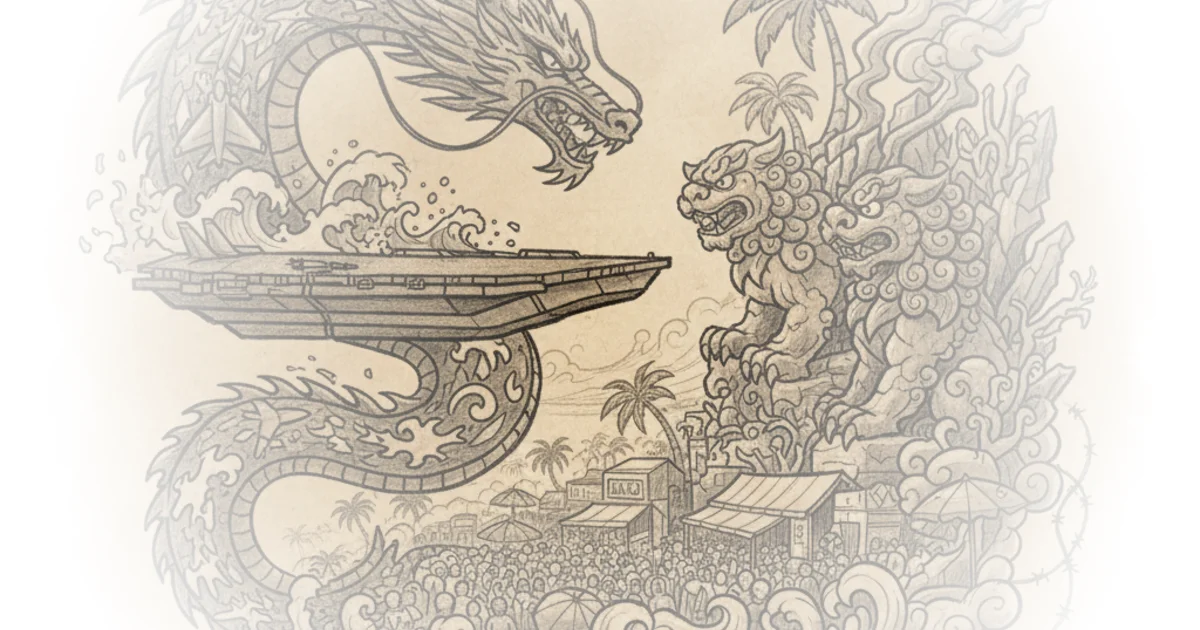
The scale of this simulation is staggering. Denby points out that the base's support group handles "everything from accommodations and logistics to budgeting, recreation, and mayoral duties of the base," effectively creating a sovereign enclave. This is where the argument lands hardest: the bases are not just places where soldiers train; they are places where they live, raising children who are born American citizens despite never setting foot on US soil. As Denby notes, "These bases don't remind of America, they simulate it." This distinction is vital because it explains why the friction is so personal; for the Okinawan resident, the American military is not an abstract foreign policy tool but a neighbor who lives in a gated community, drives on the right side of the road, and operates under a different set of laws.
Critics might argue that this simulation is necessary for the psychological well-being of deployed troops and their families, providing a sense of normalcy in a high-stress environment. However, Denby's coverage suggests that this normalcy comes at the direct expense of the host community's sovereignty and safety.
These bases don't remind of America, they simulate it.
The Legal Shield and the Justice Gap
The core of the conflict Denby explores is the 1960 Status of Forces Agreement (SOFA), a legal document that creates a profound imbalance in how crimes are prosecuted. He explains that while crimes committed on base fall under US jurisdiction, off-base crimes are theoretically handled by Japan, yet the US retains the right to withhold extradition. Denby writes, "Even if apprehended off base, the service member can't be taken into custody for questioning before prosecution." This procedural hurdle effectively shields service members from immediate accountability, a point that fuels deep resentment among locals.
The statistics Denby cites are damning. He notes that from 2001 to 2018, the prosecution rate for criminal offenses by US military personnel was a mere 13%, compared to a 44% national rate in Japan. This disparity is not an accident of the legal system but a feature of the agreement. The author highlights a specific, harrowing incident where a military policeman bodyslammed an American veteran, an act that underscores the confusion and overreach of jurisdiction. "Where this happened and why is informed by the uneasy overlap of two cultures and a set of rules agreed upon in 1960," Denby observes. This historical anchor is essential; it reminds the reader that the current tension is not a new development but a decades-long accumulation of unresolved grievances.
A counterargument often raised by defense hawks is that the US military is the only thing standing between Japan and a hostile North Korea or China, making these legal concessions a necessary price for security. Yet, Denby's narrative suggests that the local population feels they are paying the price in safety and dignity while the security benefits flow primarily to the mainland and the US.
Environmental Hazards and the Cost of Occupation
Beyond the legal and social friction, Denby turns his attention to the physical toll the military presence takes on the island's environment and infrastructure. The sheer density of the bases means that accidents are not just possible; they are inevitable. He describes a 2004 helicopter crash into a university and notes that "Okinawans have protested base locations and their sheer busyness over fear that the next accident will be the big one." The fear is compounded by the introduction of the MV-22 Osprey, a tiltrotor aircraft known for its accident-prone history, which has added to the anxiety of residents living in the shadow of the flight paths.
The environmental damage is equally insidious and often hidden from public view due to the same legal protections that shield criminals. Denby writes, "Because of the 1960s status of forces agreement, it's really difficult to get an exact picture as to just how much pollution is emanating from these bases and training facilities because Japan's not allowed to check." This lack of transparency is a critical failure of the alliance. The author details how diesel, sewage, and banned chemicals like PCBs have contaminated local water sources, yet cleanup efforts are often shrouded in redacted documents. "107 pages of test results were redacted within the foyer materials," Denby notes, illustrating the opacity that surrounds the military's environmental footprint.
Japan's not allowed to check.
This section of the coverage is particularly effective because it moves the argument from abstract legal rights to tangible, life-threatening consequences. The pollution is not a theoretical risk; it is in the drinking water and the soil of the very neighborhoods that surround the bases.
Bottom Line
Sam Denby's coverage succeeds by stripping away the geopolitical abstractions to reveal the human and environmental cost of a decades-old military footprint. The strongest part of his argument is the relentless focus on the asymmetry of power: how a legal agreement from 1960 allows a foreign military to operate a simulation of America within a sovereign nation, often with impunity. The biggest vulnerability in the narrative is the limited exploration of the strategic necessity that drives Washington and Tokyo to maintain this status quo despite the local backlash. As the alliance faces new threats in the Pacific, the question remains whether the friction on Okinawa will eventually fracture the very defense it is meant to secure.