Stealth Money in Illinois Primaries
A coordinated donor network is reshaping three competitive House primaries in Illinois, with funding patterns pointing to one of Washington's most influential foreign policy organizations. The American Israel Public Affairs Committee has developed sophisticated methods to support preferred candidates while keeping its fingerprints hidden from voters until after they cast ballots.
The Oregon Prototype
Ryan Grim & Jeremy Scahill writes, "AIPAC road-tested its stealth approach in a 2024 House primary in Oregon that pitted Susheela Jayapal, the sister of Rep. Pramila Jayapal (D-Wash.), against physician Maxine Dexter." The winning candidate raised relatively little money throughout much of her campaign, then saw a last-minute deluge organized through outside spending channels.
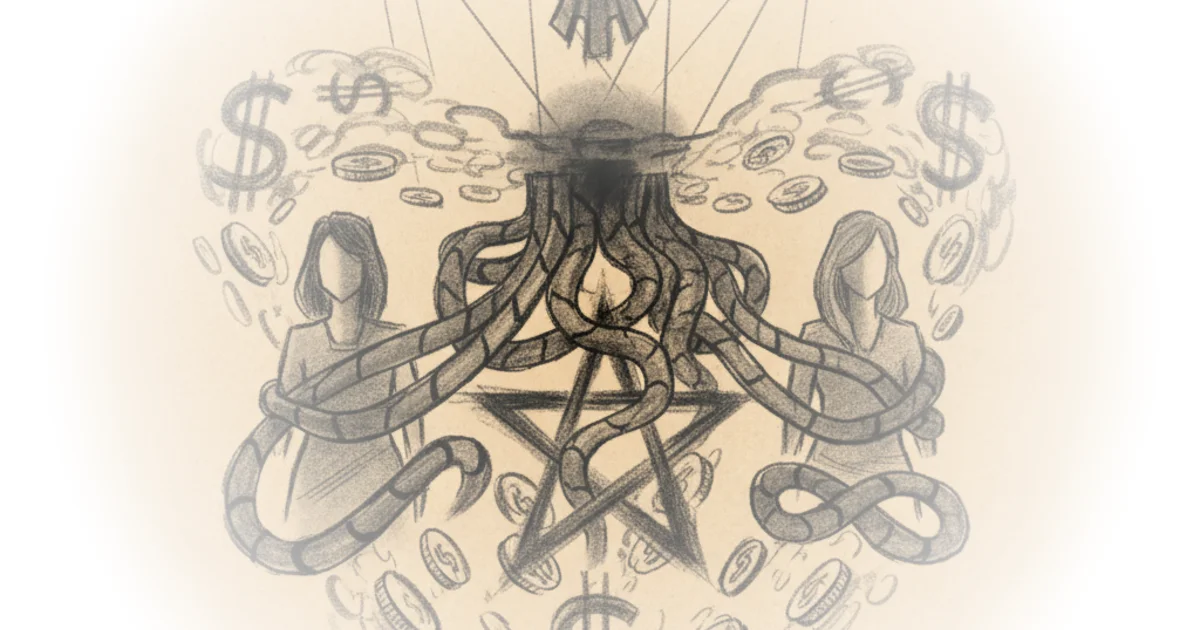
As Ryan Grim & Jeremy Scahill puts it, "The main super PAC in question (named 314 Action) explicitly denied that any funding came from AIPAC—a claim revealed as a flagrant lie once disclosure records finally became public." By then, Dexter had triumphed and was on her way to Congress. Campaign staffers expect the tactic to continue in this year's primaries.
"In these districts where we have a progressive primary fight, you're going to see AIPAC put out a network of shell PACs, putting money into races without putting their name on it."
The Super PAC structure enables unlimited contributions with delayed disclosure, creating a transparency gap that expires only after voters have already decided. A campaign finance reform amendment would close this window, but no such measure has advanced through Congress.
The Illinois Pattern
The pieces emerge in campaign disclosures of three House candidates running for open seats vacated by incumbents pursuing Senate races. Ryan Grim & Jeremy Scahill writes, "Sixty-five donors who previously gave to AIPAC or its affiliated super PAC United Democracy Project (UDP) have given to both Miller and Fine." These donors delivered $8,066.66 to the Fine campaign and $19,746.33 to Miller.
The coordination becomes more pronounced with Melissa Bean, a banker and former member of Congress making a comeback. Ryan Grim & Jeremy Scahill notes, "A whopping 237 former AIPAC/UDP donors have given to both Miller and Bean, contributing $96,288.01 to Bean and $29,083.00 to Miller." Several donations were given to the candidates on the same day, by the same donors, for the same amounts.
Critics might note that donor coordination itself is not illegal—organizations can encourage supporters to contribute to candidates they favor. The Progressive Change Campaign Committee does similar mobilization publicly. But the potential amount of money AIPAC can funnel from big donors with the ability to max out to campaigns is much bigger than grassroots mobilization, and the transparency timeline differs substantially.
Shell PACs and Timing
All three candidates are benefiting from new pop-up super PACs with anodyne-sounding names. Ryan Grim & Jeremy Scahill writes, "Affordable Chicago Now! is supporting Miller, and Elect Chicago Women is supporting Fine and Bean." The super PACs, whose donors are currently secret, were both organized in January and began rolling out television ads in the last week.
The timing is critical. Ryan Grim & Jeremy Scahill explains, "Illinois primaries will be held March 17, and the names of the funders of the super PACs will not have to be released until near or even after that date." The ads do not mention support for Israel. Neither AIPAC, UDP, nor indirectly associated PAC Democratic Majority for Israel have endorsed or spent money in these three races publicly.
In Donna Miller's case, the support came not a moment too soon. Ryan Grim & Jeremy Scahill writes, "In the 11-candidate field in IL-02, she was something of an afterthought, having raised only around $42,000 for her campaign prior to the fourth quarter of 2025, not enough to be taken seriously. Suddenly, she took in over $1 million last quarter." The haul immediately made Miller a leading contender in the race.
Candidate Responses
The candidates have offered mixed responses to questions about their funding sources. Ryan Grim & Jeremy Scahill reports, "Fine responded, 'I don't know who a Trump donor is who's donating.'" After the forum, Fine told reporters that she would "love to know who's funding" the ads.
Bean opponent Junaid Ahmed offered a sharper assessment. Ryan Grim & Jeremy Scahill quotes him: "This is the AIPAC playbook on how to control Congress. They'll spend big money now and then expect my opponent to send billions in aid and weapons to Israel when she's in Congress. This is exactly what's wrong with our politics."
Critics might argue that candidates cannot reasonably be expected to track the political affiliations of every donor who contributes to their campaigns, especially when donations arrive through coordinated email campaigns that obscure the source's broader giving patterns.
"This coordinated effort by Trump and AIPAC donors to buy multiple congressional seats in Illinois should be alarming to anyone who cares about the integrity of our democracy."
The Structural Question
Ryan Grim & Jeremy Scahill writes, "There's nothing illegal about organizations encouraging donors to support certain candidates." But the combination of candidate donations, super PAC spending, and coordinated donor funnels represents an all-out effort to place candidates who presumably agree with their desires for unconditional support for Israel into Congress.
Hannah Riddle, director of candidate services for the PCCC, framed the stakes plainly. Ryan Grim & Jeremy Scahill quotes her: "These early primaries are indicative of the exact fight we're seeing for the future of the Democratic Party. Are we going to nominate candidates who are paid for by corporations and special interests, or are we going to invest in candidates who will inspire voters, name those special interests, and fight against them?"
Bottom Line
The Illinois primaries demonstrate how foreign policy organizations can shape congressional composition through donor coordination rather than direct endorsement. The real question isn't whether this coordination exists—it's whether disclosure rules should require transparency before voters cast ballots, not after.