Chris La Tray transforms a personal inventory of grief into a searing examination of how trauma, identity, and memory are inherited across generations. Rather than offering a standard eulogy, the piece uses a forgotten pistol and a swollen paper bag of fried chicken to map the geography of a family's survival, challenging the reader to consider what we carry forward when the people who taught us to survive are gone.
The Weight of Inheritance
La Tray begins not with a grand statement, but with a startling discovery in a dresser drawer: a 9mm pistol left behind by his father. He writes, "It is a particularly notorious weapon, as it features in the essay 'My Own Private Arsenal' from my first book, One-Sentence Journal." This object becomes a pivot point for exploring the darker legacies passed from father to son. The author describes the gun as inert and harmless without ammunition, yet he admits, "Thinking about that, holding it in my own hand, evokes a creepy, macabre sensation."
The commentary here is potent because it refuses to sanitize the reality of suicide and the fear that lingers in its wake. La Tray notes that his father, in his final years, spoke of "taking care of himself," a sentiment that haunts the author even a decade later. This framing is effective because it grounds the abstract concept of "transgenerational trauma"—a theme explored in related deep dives on the subject—in a tangible, physical object. The gun is not just a weapon; it is a vessel for the father's despair and the son's lingering anxiety.
"I'm a little frightened when this darker inheritance really manifests... Could I have inherited this fear of escalating conflict from him even though he never struck me?"
La Tray argues that he has inherited not just the potential for violence, but a "pathological aversion to conflict." He suggests this aversion stems from his grandfather's abuse of his father, creating a cycle where silence is safer than confrontation. Critics might note that this psychological determinism risks oversimplifying the complex interplay of environment and choice; one can inherit a fear without being bound by it. However, La Tray's honesty about his own struggles with this inheritance lends the argument significant credibility.
The Groundhog Day of Public Grief
The piece shifts from the private sphere to the public arena, where La Tray describes the exhausting reality of discussing his family's history with strangers. He likens the experience to the film Groundhog Day, where the protagonist relives the same day over and over. "It is a kind of Groundhog Day experience, tearing the bandages from the wounds and reliving it over and over and over again," he writes. This metaphor captures the relentless nature of public discourse on Native identity, where the author must constantly defend his family's humanity against ignorant assertions.
He recounts a recent incident in Spokane where an audience member challenged his Native heritage, claiming that only "full-bloods" are truly Native. La Tray describes the encounter as a trigger for the very violence he fears inheriting: "There was a point where all I wanted to do was turn Spokane upside down looking for him, but I didn't." This moment highlights the tension between the inherited capacity for aggression and the conscious choice to break the cycle. The author's decision to eject the man, rather than engage in physical violence, serves as proof that the cycle can be interrupted, even if the emotional toll remains.
The narrative also touches on the erasure of place, noting how the physical landmarks of his childhood—the paper mill, the diners, the bars—have vanished. "Live long enough in a place and it seems like all you are left with eventually are ghosts of not just people, but places," La Tray observes. This observation resonates deeply with the historical context of industrial decline and the displacement of communities, adding a layer of socio-economic depth to the personal grief.
A Swollen Bag of Gifts
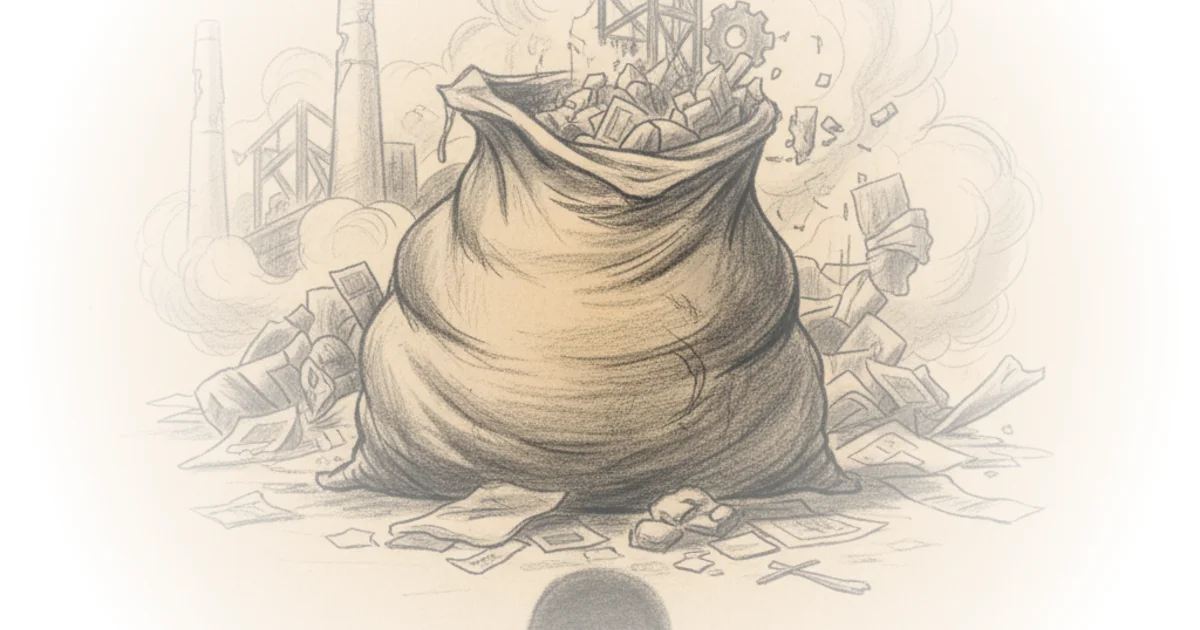
Despite the heavy themes of suicide, violence, and erasure, La Tray concludes with a powerful affirmation of life and love. He describes himself as a "swollen bag of tremendous inheritances," reframing the burden of the past as a source of strength. He writes, "The capacity to love deeply and widely is a trait that I've gained from the combination of my father and my mother and I wouldn't trade that for the world." This reclamation of the "swollen bag" metaphor from a symbol of potential violence to one of abundance is the piece's most striking rhetorical move.
He acknowledges that while he is still "twisted up" by his father's passing, he is also grateful for the story left behind. "What a fortunate person I am," he concludes, a statement that feels earned rather than clichéd. The author's ability to find gratitude amidst the grief suggests a resilience that is both personal and communal. It is a reminder that while we cannot choose our inheritance, we can choose how to carry it.
"I like to think he had some encouragement from the spirits of his, of our, ancestors, to do so."
Bottom Line
La Tray's essay succeeds by refusing to separate the personal from the political, weaving a narrative where a father's suicide and a stranger's prejudice are inextricably linked to the broader history of Native survival. Its greatest strength is its unflinching honesty about the darkness of inheritance, while its potential vulnerability lies in its reliance on individual resolution to solve systemic wounds of identity. Readers should watch for how this personal reckoning translates into broader advocacy for Native rights and mental health awareness in indigenous communities.