This piece from Reason tackles a seemingly minor soccer disciplinary ruling with the gravity of a constitutional law seminar, arguing that justice in sports requires more than rigid adherence to automatic penalties. It stands out by dissecting the tension between institutional rules and substantive fairness, using a World Cup controversy to explore how legal systems correct their own errors without collapsing into chaos.
The Substantive Case for Justice
Reason argues that the suspension of Folarin Balogun's ban was not merely a bureaucratic adjustment but a necessary correction of an unjust initial penalty. The piece posits that while the red card appeared automatic, the underlying foul lacked the intent or recklessness required for such a severe sanction. "To me, the central fact about FIFA's decision is that it is substantively correct," the article asserts, prioritizing the reality of the play over the letter of the rulebook.
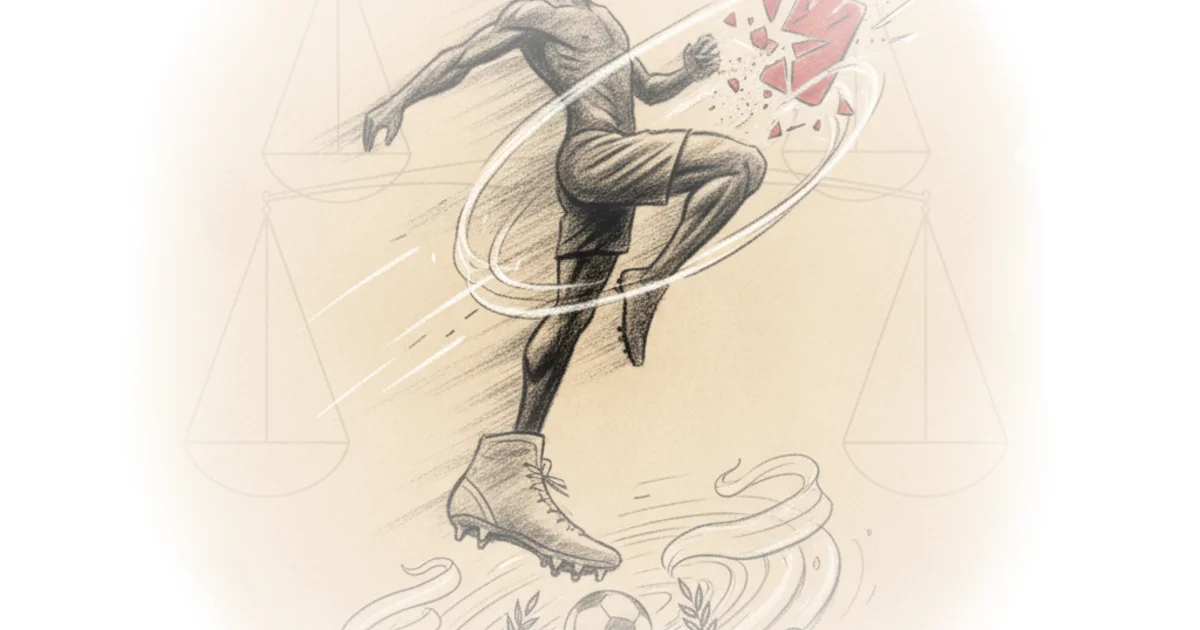
The commentary leans heavily on legal analogies to explain why the initial call was flawed. It notes that Balogun's action—leaping for the ball and accidentally landing on an opponent's ankle—did not constitute reckless endangerment. By framing the red card as a mistake rather than malice, the piece builds a case for why the subsequent suspension should also be viewed as erroneous. "It's not because I'm the head coach of the U.S.... There is no extraordinary gain we're getting out of all this," USMNT coach Mauricio Pochettino is quoted, emphasizing that the team had already suffered enough by playing with ten men.
This legalistic approach adds depth to a sports story that might otherwise be dismissed as favoritism. The piece draws on Article 27 of the FIFA Disciplinary Code, which allows for the suspension of disciplinary measures under probationary terms. "The judicial body may decide to fully or partially suspend the implementation of a disciplinary measure," Reason reports, highlighting how the rules themselves contain a mechanism for mercy and correction. This is a crucial distinction: the system didn't break; it functioned as designed to prevent an unjust outcome.
The decision [to suspend the suspension] is fair because it was never a red-card offense. Call it a mistake—whatever you want to call it—but there was an error, and the resulting sanction was excessive.
Critics might note that relying on subjective interpretations of "recklessness" can lead to inconsistency in officiating. If every controversial foul allows for post-game appeals based on intent, the clarity of the sport's rules could erode. However, the piece counters this by pointing out that Balogun is now effectively on probation; if he commits a similar offense within a year, the ban will be enforced retroactively. This balances fairness with accountability.
The Shadow of Political Influence
The article then pivots to the most contentious aspect of the story: the role of external pressure in overturning a sporting decision. Reason acknowledges that President Trump's direct lobbying of FIFA's president has cast a long shadow over the outcome, raising concerns about the integrity of international sports governance. "A core belief of Justice Scalia... was that to do the right thing for the wrong reason is wrong," the piece quotes from critic Richard Bernstein, capturing the fear that political might is overriding institutional norms.
Bernstein's argument, as presented in the text, suggests that even if Balogun deserved to play, the method used to secure his release tainted the result. The counter-argument warns of a slippery slope where powerful nations bypass standard procedures through high-level phone calls. "President Trump will have made many feel that once again, the U.S. does not play by the same rules as everyone else," Bernstein writes, evoking historical precedents where political interference corrupted sporting events.
Reason pushes back against this narrative, arguing that the appeal process was broader than just one phone call. The piece notes that U.S. Soccer Federation officials were deeply engaged in a "normal process" of defending their player's situation before any political intervention occurred. "The federation for sure was working really hard," Pochettino is quoted, suggesting that the outcome was driven by legitimate advocacy rather than mere coercion. This reframing attempts to separate the validity of the appeal from the identity of those who supported it.
However, the historical context provided in the piece adds a layer of complexity that cannot be ignored. The text reminds readers that before 1962, bans were discretionary, leading to scandals where political wrangling allowed star players to compete despite ejections. "The world was not pleased," Reason notes regarding the 1962 incident involving Brazil, which led to the creation of automatic suspension rules specifically to insulate the sport from such pressures. This history makes the current situation particularly sensitive; the very rule designed to prevent political interference appears to have been circumvented by it.
Bottom Line
The strongest part of this argument is its rigorous application of legal principles to sports governance, demonstrating that procedural flexibility can serve substantive justice when rules are applied too rigidly. Its biggest vulnerability lies in downplaying the corrosive effect of high-level political lobbying on institutional credibility, even if the outcome was technically correct. Readers should watch for whether FIFA establishes clearer precedents for how such appeals are handled to ensure future decisions remain insulated from external pressure.