Robert Reich delivers a searing indictment of modern American capitalism, arguing that the nation has not merely experienced rising inequality but has fundamentally regressed into a system of oligarchy where democracy is a facade. The piece's most startling claim is that the current concentration of wealth and political power mirrors the worst excesses of the Gilded Age, yet with a more sophisticated mechanism of control: the fusion of corporate lobbying, dark money, and a compliant corporate elite that prioritizes self-preservation over the public good.
The Three Eras of Concentrated Power
Reich structures his historical analysis around three distinct periods of oligarchy, a framing that forces the reader to confront the cyclical nature of American economic history. He writes, "Today the great divide is not between left and right. It's between democracy and oligarchy." This reframing is potent because it bypasses the usual partisan gridlock to identify a structural rot that affects all citizens regardless of political affiliation. The author traces the first era to the nation's founding, noting that "many of the men who founded the United States were slaveholding white oligarchs," a stark reminder that the original American experiment was built on exclusion. He then moves to the second era, the "robber barons" of the late 19th century, citing figures like J. Pierpont Morgan and John D. Rockefeller who "corrupted government, brutally suppressed wages, generated unprecedented levels of inequality and urban poverty."
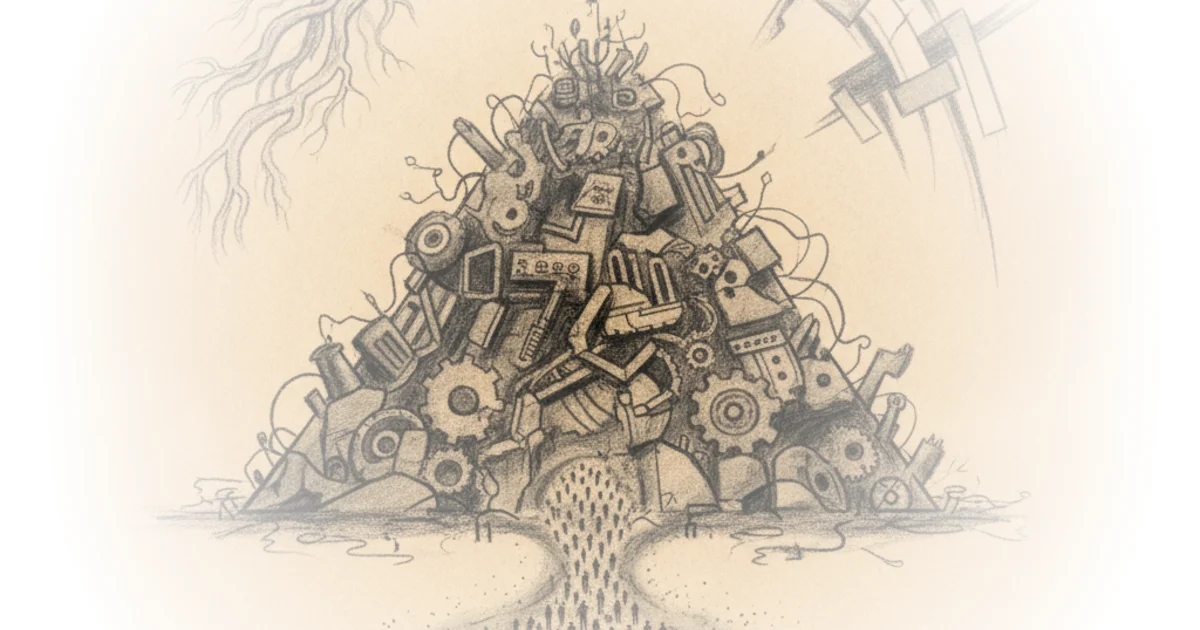
The historical parallel to the Gilded Age is not just rhetorical; Reich points to specific data to show the return of extreme wealth concentration. He notes that "the richest 130,000 Americans and their immediate families now own as much wealth as the bottom 90 percent." This statistic serves as the backbone of his argument that the middle class has been systematically dismantled. Critics might argue that historical comparisons often overlook the unique regulatory frameworks of the 21st century, but Reich counters this by highlighting the sheer scale of political influence exerted by the ultra-wealthy today. He asserts that "power is a zero-sum game. The more of it at the top, the less of it anywhere else," suggesting that the erosion of the middle class is a direct result of the elite's accumulation of political capital.
The Machinery of Oligarchy
The commentary shifts to the mechanisms that sustain this new oligarchy, specifically the role of campaign finance and lobbying. Reich points to the 2024 election as a watershed moment, stating, "In the 2024 election, just 300 billionaires (and their immediate family members) donated more than $3 billion to candidates." He contrasts this with the past, noting that "five presidential elections ago, adjusting for inflation, the share of billionaire spending on elections was almost zero." The author attributes this shift largely to the Supreme Court's 2010 Citizens United ruling, which he argues "lifted many remaining campaign finance restrictions" and allowed corporate money to flood the system.
Reich argues that this financial tsunami has led to policy outcomes that explicitly favor the rich while dismantling safety nets. He writes, "Trump's so-called Big Beautiful Bill of July 2025 cut taxes for the richest 10 percent of Americans by more than $14,700 per year, per household." While the specific legislative details are attributed to the executive branch's actions in the source text, the broader point remains: the system is rigged to transfer wealth upward. "Safety nets for the poor and middle class have unraveled," Reich observes, citing the loss of millions in healthcare coverage and food assistance. This section is effective because it moves from abstract theory to concrete human cost, illustrating how "the 'free market' has been taken over by crony capitalism, corporate bailouts, and corporate welfare."
The Hypocrisy of the Corporate Elite
Perhaps the most biting section of the piece is Reich's dissection of Jamie Dimon, the CEO of JPMorgan Chase, who serves as the archetypal figure of the modern oligarch. Reich paints a picture of a leader who publicly laments social ills while privately engineering the policies that cause them. "If you want to understand the American oligarchy, you need to understand Dimon," Reich writes, setting up a detailed critique of the bank's contradictions. He highlights Dimon's ability to pivot between political parties, noting that while he once called himself a Democrat and mentored Obama officials, he later praised the administration's policies at the World Economic Forum, claiming "Tax reform worked."
Reich lists six specific contradictions to demonstrate the gap between Dimon's public rhetoric and his bank's actions. First, while Dimon worries about inequality, "he has never mentioned America's growing concentration of wealth and power and the tight connection between the two." Second, despite speaking on climate change, "JPMorganChase pushed $58 billion toward fossil fuels, up 13 percent from 2024," earning Dimon the title of "world's worst banker of climate change." Third, regarding racial justice, the bank settled a lawsuit for discriminating against minority borrowers, yet Dimon continues to call for empathy. Fourth, on gun violence, the bank remains a major financier of gun manufacturers despite Dimon's calls for a safer society. Fifth, the bank maintained a relationship with Jeffrey Epstein for years, processing billions in transactions even after warnings from its own general counsel. Finally, Reich notes that while Dimon speaks of living wages, "JPMorgan pays its bank tellers peanuts."
Dimon knows better. Over the years, he has frankly acknowledged the dysfunctions of the American system and urged that they be addressed, yet he has failed to address the role he and his bank have played in leaving them behind.
This section is crucial because it dismantles the idea of "corporate social responsibility" as a genuine force for good. Reich argues that these contradictions are not accidents but features of a system where "oligarchs wield power for their own benefit." The author suggests that Dimon's behavior is emblematic of a broader trend where business leaders "buy off democracy" to protect their interests, regardless of the human cost. Critics might argue that individual CEOs have limited power to change systemic issues single-handedly, but Reich's point is that these leaders have the resources to influence policy and choose not to, or worse, actively work against the public interest.
Bottom Line
Robert Reich's analysis is a powerful reminder that the American middle class is not shrinking due to market forces alone, but because of deliberate political choices made by an entrenched elite. The piece's greatest strength lies in its historical grounding and its unflinching examination of the corporate leaders who enable this shift. However, its biggest vulnerability is the lack of a clear, actionable roadmap for reversing these trends beyond a general call for systemic change. As the oligarchy tightens its grip, the most critical question for the reader is not just how we got here, but whether the democratic institutions remain robust enough to push back.