Tim Mak delivers a haunting portrait of how the collision of authoritarianism and democratic aspiration is reshaping the lives of LGBTQ+ individuals in the Chinese-speaking world. This piece is notable not for its reporting of a policy shift, but for its revelation of a fragile sanctuary: a place where love and identity are legally protected, yet increasingly viewed with suspicion due to geopolitical paranoia. In an era where digital borders are hardening, Mak shows us that the most intimate human connections are now caught in the crossfire of national security anxieties.
The Sanctuary and the Siege
Mak anchors the narrative in the story of Light, a Chinese man who found refuge in Taiwan, framing the island as "the real Chinese culture I dream about" for those marginalized by the mainland's rigid social structures. The author effectively contrasts the vibrancy of Taiwan's 2019 legalization of same-sex marriage—the first in Asia—with the suffocating restrictions back home. Mak writes, "As a minority growing up in China, this is the real Chinese culture I dream about," a line that immediately reframes the cross-strait dynamic from a purely political dispute to a profound cultural and human divergence. The piece argues that for many, Taiwan represents not just a political entity, but a necessary haven for survival.
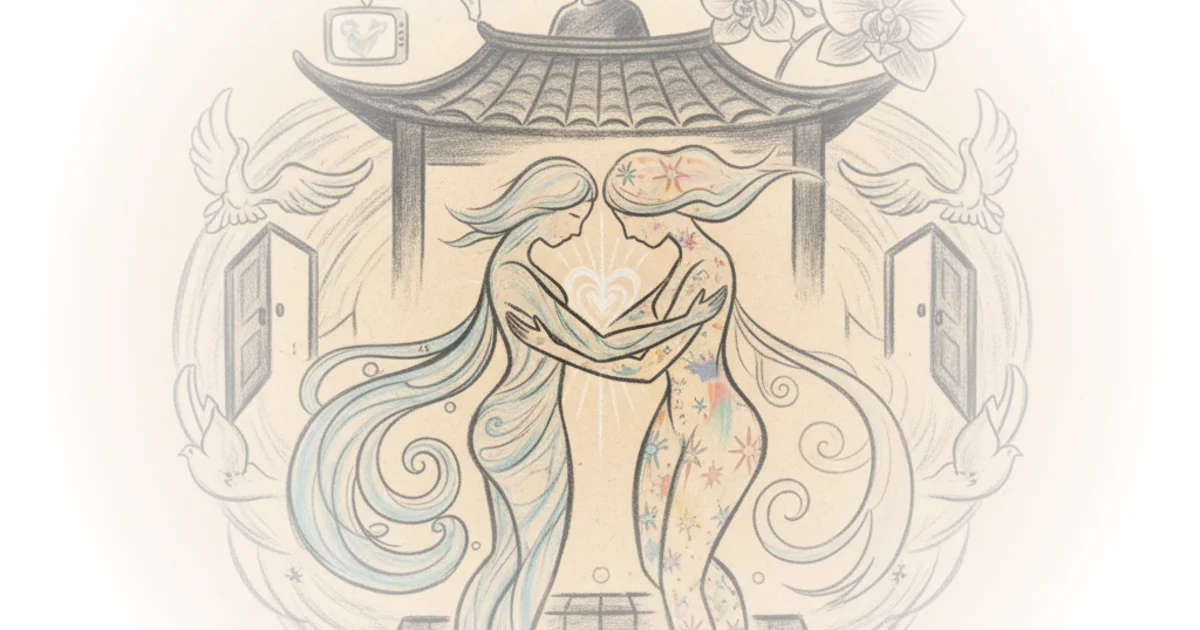
However, Mak does not shy away from the fragility of this haven. He details how the Taiwanese government, driven by fears of Beijing infiltrating the island with undercover agents, has begun to harden its stance against Chinese migrants. The author notes that after three Chinese migrants publicly supported the use of force to reunify the island, authorities moved swiftly to deport them. Mak observes, "Many Taiwanese people praised the government's action, but some questioned if it was a violation of freedom of speech." This tension highlights a critical vulnerability: the democratic impulse to protect human rights is being strained by the existential fear of authoritarian subversion. Critics might argue that the government's crackdown is a necessary defense mechanism against a genuine intelligence threat, yet Mak's reporting suggests the net is cast so wide that it threatens to drown out the very voices of dissent the island claims to protect.
"I don't agree with what those Chinese migrants say or do, and I think I need to respect the country if I want to stay here."
The Bureaucracy of Love
The article excels in exposing the absurd and painful hurdles placed on cross-strait couples. Mak illustrates how the legal non-recognition of same-sex marriage in China forces couples to undertake a costly, international charade to secure their futures. He describes the journey of Light and his partner Eason, who had to travel to Thailand to marry because the Cross-Strait Act required a marriage certificate that Chinese law would never issue. Mak writes, "It's a hassle, and an expensive process... Light and Eason had to travel to Thailand, where same-sex marriage is legal, before moving together to Taiwan."
This bureaucratic labyrinth is not just an inconvenience; it is a systemic barrier that tests the limits of love against the rigidity of state power. The author points out that while the Taiwanese government eventually opened a path for these couples by recognizing third-country marriages, the process remains fraught with delay and expense. Mak notes that the couple spent five months and thousands of dollars just to get residency approved. This framing is powerful because it humanizes the abstract concept of "immigration policy," showing it as a series of emotional and financial gauntlets that couples must run to simply exist together. The underlying argument is that the administrative burden is a form of indirect discrimination, one that disproportionately affects those fleeing repression.
Cultural Echoes and Political Erasure
Mak weaves in a rich cultural context, connecting the personal struggles of his subjects to a broader history of cultural exchange and suppression. He references the tragic death of Yeh Yung-Chih in 2000, a boy bullied to death for his femininity, and how pop star Jolin Tsai's song "Womxnly" transformed that tragedy into a movement for acceptance. Mak writes, "Who put this soul into the wrong body?" and notes that the song "went on to resonate quietly with listeners in mainland China," hitting the top 20 on KKbox. This historical thread adds depth, showing that the desire for diversity is not a new import but a deep-seated cultural current that has been repeatedly suppressed by the Chinese Communist Party.
The author contrasts this cultural openness with the mainland's aggressive campaign to erase "sissy men" culture in 2021 and the subsequent removal of LGBTQ+ dating apps like Blued and Finka in 2025. Mak explains that the party "denounced Western culture infiltrating the minds of Chinese men with men wearing makeup and androgynous clothing." This section effectively illustrates the widening chasm between the two societies. While Taiwan grapples with the complexities of integration, the mainland is actively dismantling the spaces where such identities can flourish. The implication is clear: the flow of people from the mainland to Taiwan is not just a migration of individuals, but a migration of values that the mainland government is desperate to contain.
The Cost of Suspicion
Despite the legal protections, Mak reveals that the social climate in Taiwan is turning hostile toward Chinese migrants. The fear of espionage is creating a culture of suspicion where even a well-intentioned post about government policy can lead to social ostracization. Mak recounts how Light was blocked by friends after sharing news about a policy benefiting Taiwanese tourists, with one friend retorting, "I would never never never go to China in my life." The author captures the isolation Light feels, noting, "As a Chinese migrant, I'm not sure if the Taiwanese people would recognize me as part of their society."
This is the piece's most poignant insight: the sanctuary is imperfect. The very act of seeking safety can make one a target of the host society's anxieties. Mak's framing suggests that the democratic ideal of a pluralistic society is being tested by the reality of an existential threat. The government's actions, while perhaps legally defensible, are creating a social environment where trust is eroding. The author does not offer a simple solution, but rather presents a stark reality: the line between protecting national security and violating human rights is becoming increasingly blurred, and it is the vulnerable individuals who pay the price.
Bottom Line
Tim Mak's reporting succeeds in shifting the focus from high-level geopolitical maneuvering to the intimate, often heartbreaking reality of those caught in the middle. The strongest part of the argument is its demonstration of how authoritarian pressure is reshaping democratic societies, forcing them to choose between openness and security in ways that often compromise both. The piece's biggest vulnerability lies in its inability to offer a clear path forward for these couples, leaving them in a precarious limbo. As tensions escalate, readers should watch for how Taiwan balances its moral obligation to refugees with its legitimate security concerns, a decision that will define the future of the region's human rights landscape.