Jeffrey Kaplan offers a masterclass in the invisible social contract of higher education, arguing that academic success hinges less on raw intelligence and more on mastering the unspoken etiquette of professional interaction. While many guides focus on study hacks, Kaplan zeroes in on the friction points—email syntax, office hour psychology, and the strategic value of letters of recommendation—that actually determine how faculty perceive and support students. This is not merely a list of rules; it is a translation of the academic culture's hidden curriculum for those who have never been taught it.
The Architecture of Professional Email
Kaplan opens by dismantling the assumption that digital communication is inherently casual. He draws a sharp parallel between the awkwardness of his father signing text messages and the jarring effect of a student sending a screenshot with only four question marks. "Email conversations that you will be having with your college professors also have their own etiquette," Kaplan writes, noting that failing to follow these norms makes a student look "weird" rather than just informal. This framing is effective because it shifts the burden from "respect" to "efficiency," a language busy professionals understand immediately.
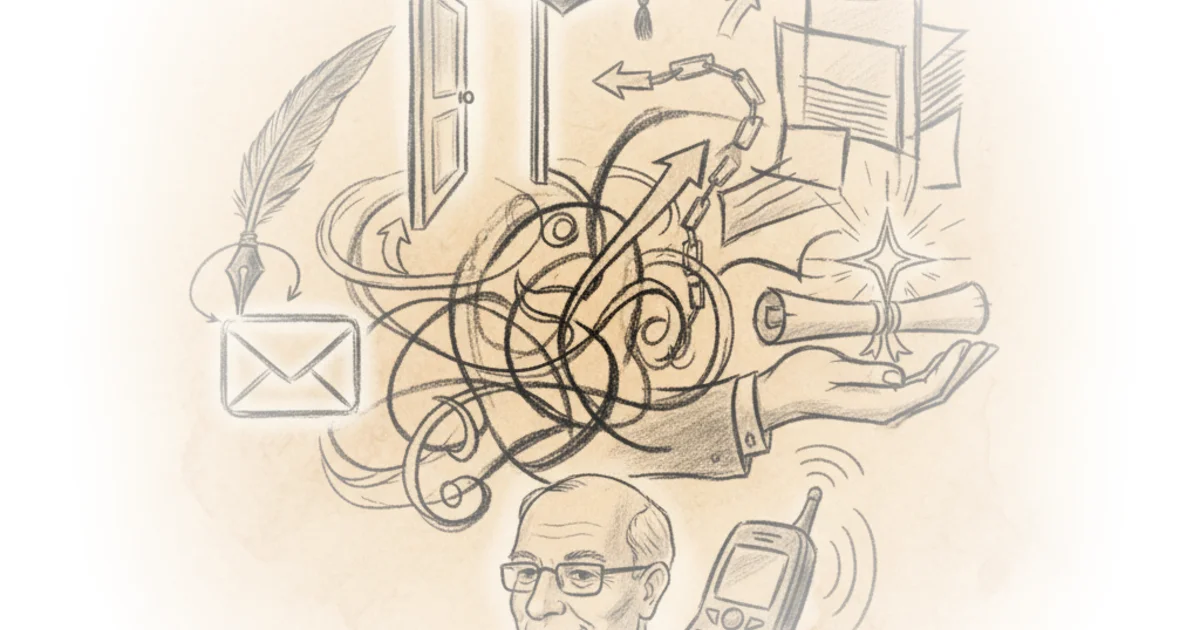
The author provides a granular breakdown of salutations, advising students to default to "Professor So-and-So" regardless of whether the instructor holds the rank of full professor. He cautions against the overly familiar "Hey," explaining that while students aren't being disrespectful, they are simply unaware of the professional environment they are entering. "If you're going to be working in an office at some point, you're going to be doing basically the same thing," Kaplan argues, positioning these academic norms as a direct training ground for white-collar careers. This connection is vital; it transforms a minor annoyance into a career-relevant skill.
"You want to start in this somewhat formal way and then you want to see how they respond. If they dial down the level of formality... that's a signal to you that you can dial it back."
Kaplan's advice on matching the professor's tone is particularly astute. He warns students against misinterpreting a professor's casual sign-off (like initials) as an invitation to use first names, clarifying that "they never want you to call them by their initials." This nuance is often missed by students who mistake brevity for intimacy. Furthermore, he emphasizes the logistical necessity of identifying one's specific class section in every email, noting that professors teaching multiple sections cannot be expected to memorize every student's schedule. "It's nice if I don't have to do it," he admits regarding the time spent cross-referencing rosters. This humanizes the faculty, turning a potential complaint into a plea for mutual efficiency.
Critics might argue that rigid adherence to these formalities could stifle the development of authentic relationships or alienate students from non-dominant backgrounds who view such formality as a barrier. However, Kaplan's stance is pragmatic: these conventions are the current operating system of academia, and learning to navigate them is a prerequisite for access.
The Strategic Value of Office Hours
Moving from digital to physical interaction, Kaplan reframes office hours not as a remedial resource for struggling students, but as an "incredible educational resource" that is often underutilized due to intimidation. He acknowledges the fear of one-on-one conversations but urges students to "swallow it and go anyway." The core of his argument rests on preparation: students must do the readings and assignments in advance to ask "specific questions" rather than generic ones.
He illustrates the difference between a wasted trip and a productive one by contrasting administrative queries with substantive engagement. Kaplan reveals a widely known "meme" among faculty: professors are hired to discuss their field of study, not to answer questions that are already listed on the syllabus. "If someone got a PhD in chemistry they love talking about chemistry. They didn't do it because they love talking about when the midterm is scheduled," he observes. This is a crucial insight for students; it explains why some interactions feel flat while others feel energizing.
"If you want to be the type of student who comes to them and asks questions that they're excited to answer, then ask them questions about the course material."
Kaplan suggests a tactical approach: listing office hours on a personal calendar. He notes that simply seeing the time slot listed will trigger the memory of a question, prompting a visit that otherwise wouldn't happen. This behavioral nudge is simple yet powerful, turning a passive opportunity into an active strategy for academic success. The payoff, he argues, is not just better grades but the cultivation of relationships necessary for future letters of recommendation.
The Hidden Economy of Recommendations
The piece concludes by connecting these daily interactions to long-term career outcomes, specifically the letter of recommendation. Kaplan highlights a critical gap in student knowledge: the difference between tenure-track faculty and other instructors. He explains that tenure is designed to protect academic freedom, ensuring that faculty can pursue controversial or difficult lines of inquiry without fear of dismissal. "The contributions that they are going to make to the knowledge of our society is so great that we want them the freedom to say whatever they want," Kaplan writes, providing a rare, clear explanation of the tenure system's purpose.
This section underscores why building a relationship with tenure-track faculty matters. These are the individuals who have the most to lose by writing a generic letter and the most to gain by writing a glowing one for a student they know well. By engaging with them on substantive topics during office hours, students signal their intellectual seriousness, making them viable candidates for strong advocacy later.
"They will write a much better letter if they know you. And one of the main ways for them to get to know you is for you to go to office hours and ask substantive good questions."
Bottom Line
Jeffrey Kaplan's analysis succeeds because it treats academic etiquette not as arbitrary bureaucracy, but as a functional language of professional respect and efficiency. The strongest part of his argument is the reframing of office hours from a safety net for the unprepared into a strategic tool for the ambitious. The only vulnerability in his approach is the assumption that all institutions operate with the same rigid formality; as higher education evolves, some departments may indeed prioritize casual accessibility over these specific conventions. However, for the vast majority of students, mastering these norms remains the fastest route to unlocking the full potential of their education.