In a landscape where cannabis legalization is almost universally celebrated as a progressive triumph, Compact Magazine drops a jarring counter-narrative: the federal rescheduling of marijuana isn't a public health victory, but a massive corporate bailout that obscures a deepening crisis in American families. The piece argues that the administration's recent move to shift the drug from Schedule I to Schedule III is less about medical research and more about unlocking billions in tax relief for industry giants while ignoring a wave of adolescent mental health collapse.
The Tax Loophole Myth
The article cuts straight to the financial mechanics behind the policy shift, stripping away the rhetoric of "innovation" and "equity." Compact Magazine reports, "When the executive order was signed... major players who stand to benefit from the reclassification" were present, including Kim Rivers, CEO of Trulieve, who "played a major role at a private meeting in convincing" the White House to adopt the policy. The piece contends that the administration's stated goal of promoting research is a smokescreen, noting bluntly that "marijuana is already one of the most studied drugs in the world."
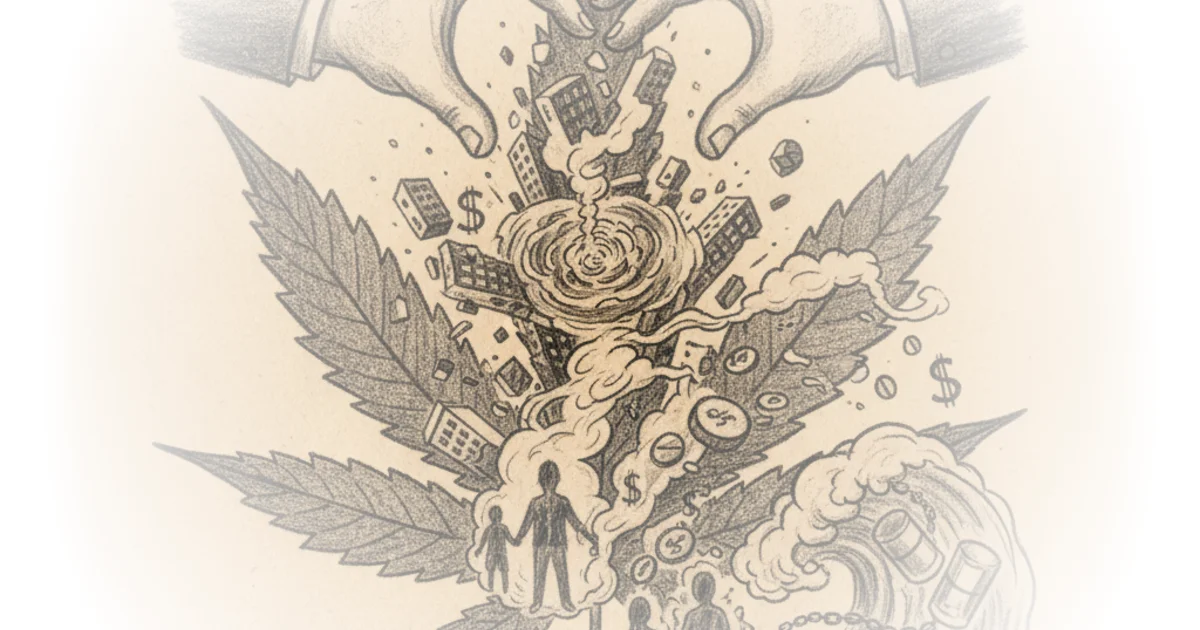
The core of the argument rests on Section 280E of the tax code, a provision that currently prevents businesses trafficking in Schedule I substances from claiming standard deductions. The editors explain that moving the drug to Schedule III would dismantle this barrier. "A move into Schedule III would end this restriction, providing significant tax relief and freeing up funds to spend on driving up sales," the piece notes. One analysis cited suggests these tax breaks have already cost the public over $2 billion since the industry's inception. This reframing is powerful because it shifts the debate from moral permissibility to fiscal accountability, suggesting the policy is designed to enrich cultivators rather than protect consumers.
Critics might argue that reducing the tax burden is necessary to force the industry out of the shadows and into a regulated, taxable market. However, the article counters this by pointing out that the industry is already generating massive revenue without these specific federal deductions, implying the primary beneficiary is corporate profit, not public safety.
The Illusion of Economic Benefit
The commentary then pivots to the political theater surrounding legalization, specifically targeting the celebration of rising sales figures as a metric of success. The piece highlights a press release from New York Governor Kathy Hochul, who celebrated the state crossing $1 billion in legal sales as a "historic milestone." Compact Magazine reports that Hochul called this a "testament... to the hard work of those who helped build the strongest cannabis industry in the nation."
The editors find this celebration deeply troubling, drawing a sharp contrast with how other vice industries are treated. "It is hard to imagine this sort of public celebration about the growth of New York's alcohol sales or its tobacco sales," the article argues. The piece suggests that politicians are actively subverting public health interests for corporate gain, noting that in states like California, officials demand carcinogen warnings on bread but cheerfully hail the "subordination of the public interest to corporate interests" when it comes to cannabis. This juxtaposition exposes a cognitive dissonance in modern governance that often goes unexamined.
"Marijuana remains the most misunderstood vice in America. Our large and growing marijuana industry depends on obscuring the well-documented connection the drug has to a wide variety of severe physical and mental health issues."
The Human Cost of Commercialization
Perhaps the most visceral section of the article moves from policy to personal tragedy, challenging the narrative that legalization is a net positive for society. The piece details the story of the Bacchus family, whose son Randy died by suicide in Colorado after struggling with addiction. "His death came after an adolescence plagued by addiction to marijuana and desperate attempts to get sober," the editors write, quoting his final texts where he expressed a desire to quit. This anecdote serves as a grim anchor for the statistical data that follows.
Compact Magazine leans heavily on recent medical studies to dismantle the idea that marijuana is harmless. It cites a February study in the JAMA Health Forum involving nearly 500,000 adolescents, which found that even past-year use was linked to a "more than doubled risk of psychotic disorder and bipolar disorder by age twenty-six." The article also references a 2023 Danish study linking cannabis use disorder to 30 percent of schizophrenia cases among young men. The editors argue that while the industry markets the drug as a sleep aid or anxiety treatment, the science is "beyond weak," citing a Cochrane review that found no meaningful effect of THC on pain.
The piece further connects parental use to family instability, citing a 2016 UCLA study showing that parents who used marijuana engaged in physical abuse "three times more frequently than those who did not." It also highlights a 2024 study led by addiction scientist Nora Volkow, which found a significant link between daily male marijuana use and violent behavior. These findings are presented not as isolated incidents but as systemic outcomes of a policy that prioritizes market growth over family stability.
The Pediatric Emergency
The final thrust of the argument focuses on the unintended consequences for the youngest members of society. The article points to data from Ohio, where pediatric exposures to THC skyrocketed from 196 in 2018 to 1,028 in 2024. "More than half of all tracked exposures occurred in the youngest group studied, the 0-5 group," the piece reports, noting a staggering 1,138 percent increase in that demographic alone. The symptoms described—seizures, respiratory depression, and hallucinations—paint a stark picture of a public health emergency that politicians seem eager to ignore.
Despite these alarming trends, the article observes that politicians continue to tout tax revenue as the silver lining. The editors dismantle this by noting that in Illinois, the "significant tax revenue" from cannabis accounted for a mere 0.25 percent of the state's total revenue in 2022. "Such arguments... are flatly contradicted by even cursory examination of publicly available data," the piece concludes. The argument suggests that the entire legalization framework is built on an economic myth that crumbles under scrutiny, leaving behind a trail of mental health crises and family devastation.
Bottom Line
This piece delivers a necessary, if uncomfortable, corrective to the prevailing pro-legalization consensus by rigorously connecting federal policy shifts to corporate tax avoidance and documented public health harms. Its strongest asset is the synthesis of hard tax data with harrowing case studies, effectively arguing that the rescheduling of marijuana is a wealth transfer to industry insiders rather than a public good. However, the argument's vulnerability lies in its tendency to conflate correlation with causation in complex mental health outcomes, a nuance that critics will likely exploit to dismiss the broader warnings. Readers should watch for the immediate impact of the Schedule III reclassification on state-level tax codes and whether the promised surge in research materializes or if the industry simply consolidates its profits.