This piece cuts through decades of educational noise with a stark, uncomfortable truth: teaching is not a science-based profession, but a belief-based one. Robert Pondiscio introduces a compelling argument from Dr. Jim Hewitt and Dr. Nidhi Sachdeva that challenges the very foundation of how educators are trained and how schools operate. For busy leaders and practitioners, the value here isn't just in the critique, but in the specific roadmap for turning teaching into a discipline as rigorous as medicine or engineering.
The Belief Trap
Pondiscio sets the stage by highlighting a provocative claim from Douglas Carnine, a scholar who argues that unlike medicine, education lacks scientific rigor. The authors note that while teachers often assume their training is evidence-based, "education, as it currently stands, is clearly not a science-based profession." This assertion lands hard because it exposes a systemic failure that has persisted for generations. Instead of relying on data, educators frequently default to "instincts, experience, or strategies picked up from colleagues."
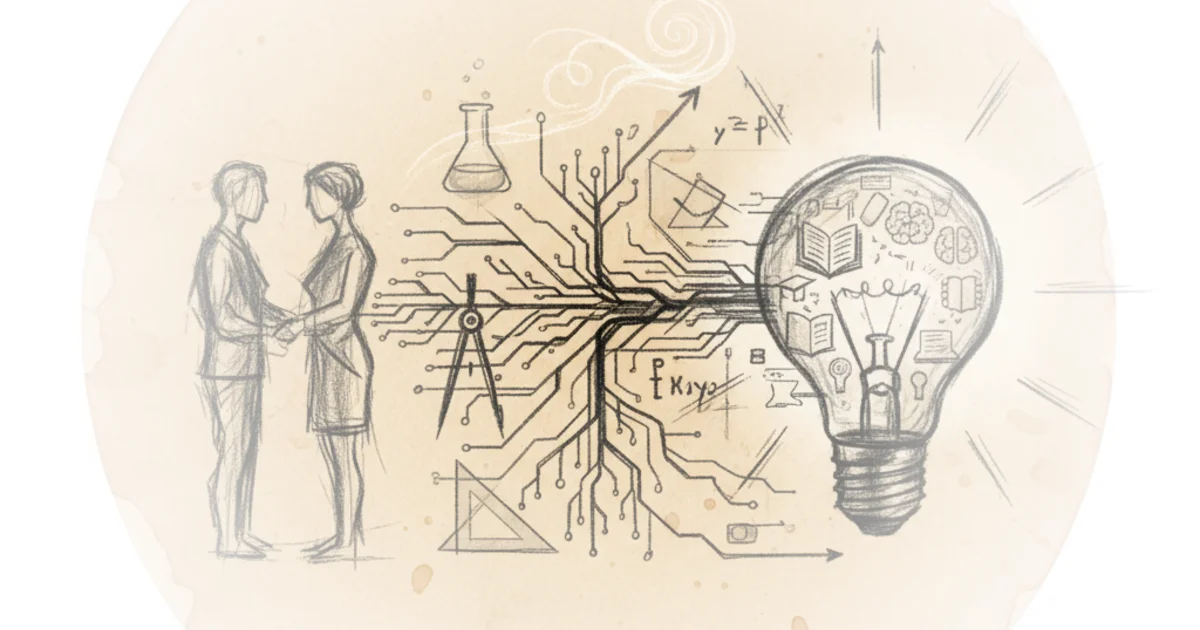
The commentary here is sharp: the profession is trapped in a cycle of reinvention rather than improvement. Pondiscio points out that "countless hours of professional development have been spent — and are still spent — on edu-fads like learning styles and multiple intelligences, in spite of decades of research that have failed to show any benefits for student learning." This is a devastating indictment of the current system. It reminds us of the historical context of the "learning styles" myth, which was debunked years ago yet remains a staple in teacher training, much like the discredited theories that once dominated medical practice before evidence-based protocols took hold.
Education is trapped in a cycle of reinvention, constantly recycling ineffective ideas under new names rather than building on proven ones.
The authors argue that this persistence is cultural. Instructional choices are often driven by "personal or ideological convictions" rather than demonstrated effectiveness. This explains why concepts like "discovery learning" or "Brain Gym" continue to circulate widely despite weak evidence. They feel right, which makes them appealing, but the lack of a feedback loop means ineffective practices are never phased out. A counterargument worth considering is that classrooms are uniquely complex human environments where rigid scientific protocols might stifle the necessary creativity and relationship-building that define great teaching. However, the authors push back against this, suggesting that science offers a "powerful support system" rather than a script.
From Belief to Design Science
The piece pivots to a vision of what a science-informed profession would look like. Pondiscio writes that in this ideal world, "every teacher would understand how cognitive load affects learning." This reference to cognitive load theory is crucial; it grounds the argument in the mechanics of how the brain actually processes information, moving beyond abstract pedagogical theories. The authors suggest that teachers should be equipped with strategies like "retrieval practice and test anxiety" management, knowledge that is currently the exception rather than the rule.
The argument is that the "science of learning" offers clarity where ideology offers confusion. Unlike educational fads, this approach "doesn't begin with statements of belief or personal values. It begins with data." This distinction is vital for a profession drowning in conflicting advice. The authors acknowledge the fear that this could lead to "rigid standardization," but they reframe it as "exercising that judgment within a shared framework of evidence." This is a nuanced take that respects teacher autonomy while demanding accountability to what works.
The science of learning shouldn't be seen as a set of practices to be accepted on faith. Rather it's a growing body of evidence that helps us understand what works in education, and why.
Critics might argue that the sheer volume of cognitive science research is overwhelming for practicing teachers who are already stretched thin. The authors address this by proposing a "shared core of professional knowledge," similar to how every pilot understands the laws of aerodynamics. They argue that without this foundation, the profession remains susceptible to the next trend.
Four Steps to a New Reality
Pondiscio outlines four concrete steps to bridge the gap between research and practice. First, teacher preparation must prioritize "proven instructional strategies, such as retrieval practice, spaced repetition, formative assessment, and explicit instruction." This is a direct challenge to current university curricula that often prioritize theory over tested methods. Second, teachers need "scientific literacy" to read and evaluate research themselves, rather than taking claims on faith. Third, the profession needs a "shared foundation of scientifically grounded knowledge" to unify its efforts. Finally, there must be a system to "vet professional development for evidence quality," ensuring that the training teachers receive is not just popular, but effective.
The authors note that the biggest barrier is "cultural inertia." Even advocates of the science of learning sometimes talk about "believing" in these methods, which perpetuates the very problem they are trying to solve. The shift requires a move from "belief" to "critical inquiry." This is a profound cultural shift for a field that has long operated on intuition.
Bottom Line
The strongest part of this argument is its refusal to accept the status quo, demanding that teaching be held to the same evidence-based standards as other critical professions. Its biggest vulnerability lies in the immense difficulty of overhauling teacher preparation and professional development systems that are deeply entrenched in belief-based traditions. Readers should watch for how institutions respond to this call for a "design science" approach, as the next decade of reform will likely hinge on whether the field can finally let go of its fads and embrace the data.