In a stunning reversal of national security logic, a new podcast episode reveals how a single CEO's relentless lobbying campaign has convinced the White House to prioritize corporate profits over military dominance. Jordan Schneider and security expert Dmitri Alperovitch dissect a policy shift that allows the export of advanced H200 chips to China, framing it not as a trade victory but as a catastrophic surrender of American technological leverage.
The Contradiction of "Addiction"
Schneider opens by highlighting the jarring disconnect between a Justice Department raid on chip smugglers and the President's subsequent announcement to legalize those same sales. The core of the argument rests on the absurdity of the tech industry's public stance. As Schneider puts it, "It's ludicrous that this technology is transformative for every field except for the military." This framing effectively exposes the cognitive dissonance required to claim AI is a revolution for civilian logistics while insisting it poses no threat to a rival nation's defense capabilities.
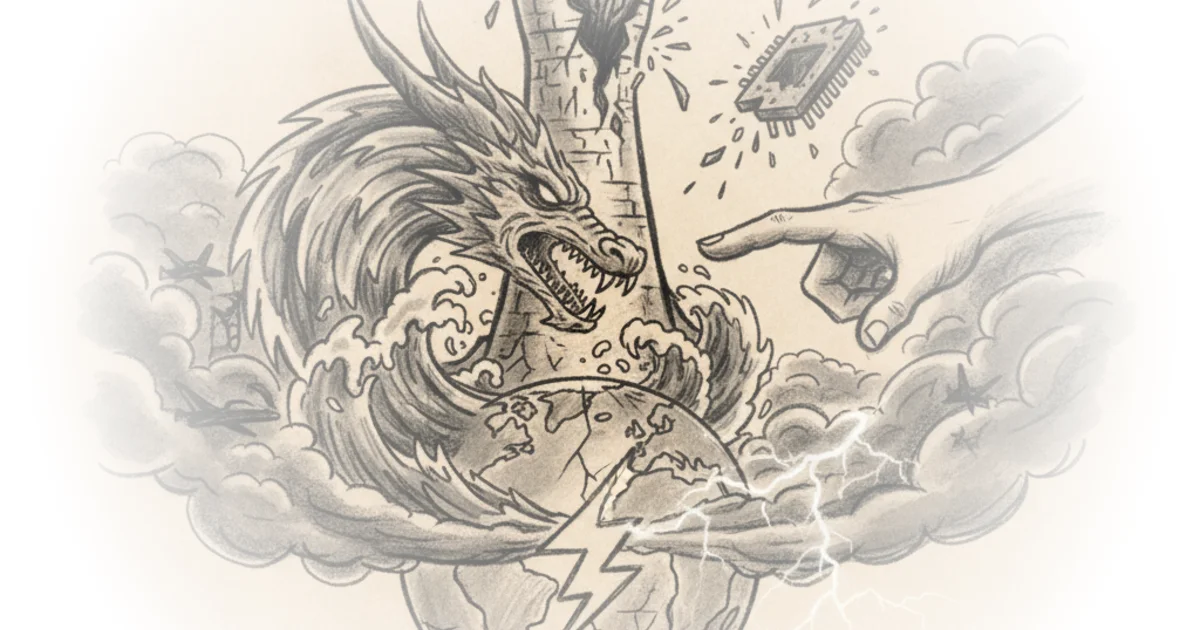
Alperovitch, a former cybersecurity official, dismantles the industry's favorite talking point: that China will inevitably build its own chips, so the U.S. might as well sell them the current generation to lock them into American software. He calls this narrative "knowingly false," arguing that the fear of "addiction" to the CUDA platform is a myth. "There is no addiction — chips aren't cocaine," Alperovitch asserts, noting that major U.S. hyperscalers like Google and Amazon are already migrating to their own custom silicon. This point is critical because it suggests the administration is making a concession based on a false premise, effectively handing a strategic advantage to a competitor without gaining the promised software lock-in.
Jensen Huang said if you're a China hawk, you're unpatriotic and un-American. I think selling supercomputing capabilities to the Chinese military is as unpatriotic and un-American as it gets.
The commentary draws a sharp historical parallel to the Cold War to underscore the shortsightedness of the decision. Alperovitch compares the current situation to the 1970s, asking why no one considered selling supercomputers to the Soviet Union despite their potential to aid agriculture. "No one even considered doing that... because those same computers could be used for nuclear weapons testing," he explains. This historical anchor provides necessary gravity, reminding listeners that the current debate ignores fifty years of established precedent regarding dual-use technology. Critics might argue that the current economic landscape is too globalized to apply 1970s logic, but the sheer speed at which Chinese models like DeepSeek have caught up suggests the risk is immediate, not theoretical.
The Influence Game and the GAIN Act
The piece shifts to the mechanics of how this policy change occurred, attributing the outcome to the sheer persistence of Nvidia's CEO. Schneider notes that while the rest of the tech industry, including Microsoft and AWS, supports the GAIN Act—which would ensure U.S. demand is met before exports to China are approved—Nvidia has successfully killed the legislation. "He's single-handedly beating everyone in this town," Schneider observes, describing a scenario where one executive's daily phone calls to the President overrode the consensus of the entire industry.
This section highlights a disturbing trend in modern governance: the ability of a single corporate actor to dismantle a bipartisan national security consensus through direct access. Alperovitch points out that the administration is already facing a compute shortage for its own agencies. "The U.S. government cannot get enough chips... Now we're shipping part of that limited supply to China. How does that make sense?" he asks. The argument here is that the policy is not just a security risk, but an economic blunder that starves domestic innovation to feed a foreign competitor.
The fight wasn't about the details — the fight was a push for no restrictions on sales to China, which is unbelievable.
The commentary also touches on the cascading effects of this decision on export controls. Alperovitch warns that approving the H200, which contains High-Bandwidth Memory (HBM), calls into question existing bans on HBM exports. "We may see a cascading failure of export controls," he predicts, suggesting that this single decision could pave the way for relaxing restrictions on semiconductor manufacturing equipment, further aiding China's domestic chip production. This connects to broader geopolitical tensions, echoing the strategic friction seen in recent AUKUS and Wassenaar Arrangement discussions, where the definition of "critical technology" is constantly being tested.
The Political and Strategic Cost
The final segment of the coverage addresses the inevitable political fallout. Schneider notes that the administration campaigned on "American AI dominance," yet this decision directly enables China to close the gap. Alperovitch predicts a future where Chinese models, trained on these very chips, eclipse American capabilities. "The Chinese will crush us with cheaper power, tons of researchers, and massive state subsidies," he warns. The only variable they were missing was compute, and now, the administration has provided it.
The piece concludes by questioning the lack of reciprocity. Unlike a traditional trade deal, this concession was made without securing any tangible benefit from Beijing. "It is a favor to Jensen, to China, and to the PLA," Alperovitch concludes. The analysis suggests that the administration has prioritized a short-term stock price bump for a single company over the long-term strategic posture of the United States.
Bottom Line
Schneider and Alperovitch deliver a damning indictment of a policy decision that appears to be driven by corporate lobbying rather than strategic necessity. The strongest part of their argument is the dismantling of the "CUDA addiction" myth, which removes the primary economic justification for the export. However, the piece's biggest vulnerability lies in its assumption that the administration is entirely unaware of the long-term consequences; it is possible the White House views this as a necessary short-term concession to maintain diplomatic stability, even if the cost is high. Readers should watch closely for the next move: whether this opens the floodgates for Blackwell and Rubin chips, or if the backlash from the broader tech sector forces a policy reversal.