Josh Greenblatt delivers a jarring cultural diagnosis: we aren't just loving our dogs more; we are actively retreating from the messy, unpredictable nature of human intimacy to find safety in the predictable affection of animals. This isn't a fluffy piece about pet adoption trends; it is a sharp critique of how the pet industry and social isolation are converging to create a generation that treats canines as surrogate children while treating actual humans as disposable. The evidence presented suggests a market worth half a trillion dollars is built on a psychological void, and the consequences for our social fabric are far more alarming than a few overpriced dog beds.
The Rise of the Pet Parent
Greenblatt opens by illustrating the depth of this emotional shift through the story of a friend who values his dog above any monetary sum, noting that the entire reason for having wealth would be to "take Crosby on a boat to Europe." This anecdote sets the stage for a broader observation: the line between ownership and parenthood has not just blurred; it has vanished. The Walrus writes, "An obsession with one's pet was once a hallmark trait of eccentric sitcom characters. But if the question 'Who rescued who?' used to induce eye rolls and forced smiles, today, it elicits earnest nods of recognition."
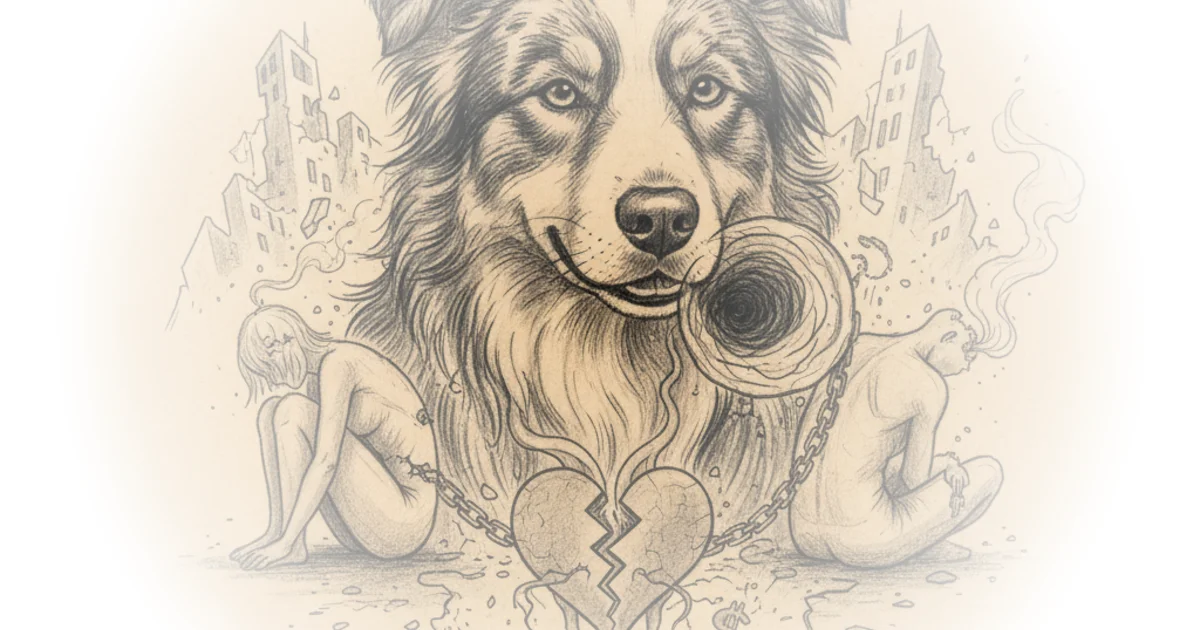
This framing is effective because it highlights a generational pivot. We have moved from viewing pets as property to viewing them as family members with equal standing. The author points out that this isn't just a Western quirk; it is a global phenomenon where young people in South Korea are opting out of parenthood to pamper pets, while in China, owners organize matchmaking events for their animals. The data supports this cultural shift, with studies showing that over half of American pet owners see their animals as being on the same level as any human family member. However, this elevation comes with a cost. As Greenblatt notes, "Dog parents have lost their goddamned minds. Why are we treating pets like they're people? And worse yet, are we treating each other like dogs?"
The argument here is that we are outsourcing our need for caregiving to creatures that cannot reciprocate in a moral or intellectual sense. Andrea Breen, a professor at the University of Guelph, explains that this "parentification" is driven by a desire for authentic connection, yet she cautions that "the dogs are not my babies. The dogs are dogs." This distinction is crucial. While dogs offer a visceral, non-judgmental connection that humans often struggle to provide, treating them as human substitutes risks distorting our expectations of relationships. Critics might note that for those suffering from severe social anxiety or trauma, the dog's unconditional love is a necessary lifeline, not a delusion. Yet, the article suggests that when this bond becomes a replacement rather than a supplement, it signals a deeper societal fracture.
In trading the tricky mess of human relationships for pet companionship free of emotional guesswork, we lose out on the essential fulfillment of a connection we can't control.
The Economics of Emotional Safety
The commentary then pivots to the commercial forces fueling this trend. Greenblatt argues that the pet industry is not merely responding to demand but manufacturing it. The core of the argument is that corporations like Mars and Purina are investing millions in research to validate the idea that "pets and people are better together," effectively selling a myth of completion. The Walrus writes, "Brands don't just meet demand for pet products; they manufacture it. These companies are making puppy-dog eyes at us, branding companionship as luxury dog hotels, pet spas, and private members' clubs with annual fees starting at $890."
This is a powerful critique of how capital exploits loneliness. By framing pet ownership as a luxury lifestyle choice, the industry encourages owners to spend exorbitant amounts on products that promise to deepen a bond that is already biologically strong. The author cites a 2024 report in Undark which found that most pet studies are sponsored by pet companies, raising questions about the objectivity of the data claiming pets improve mental health. While a 2021 review in Veterinary Sciences found mixed results on the mental health benefits of pet ownership, the narrative pushed by the industry is one of unequivocal success. This creates a feedback loop where isolation drives pet adoption, and the pet industry profits by convincing owners that their dog is the solution to their loneliness, rather than a temporary buffer.
The article also touches on the historical context of this bond. Scientists trace the domestication of dogs back at least 11,000 years, noting that in ancient graves, dogs were buried with possessions and treated with as much care as people. This historical depth adds weight to the current phenomenon, suggesting that the human-canine bond is a fundamental part of our evolution. However, the modern iteration of this bond is distinct. As Greenblatt observes, "Dogs are easier than humans for a lot of people." They cannot ghost you, gossip, or express a bad opinion. They offer a safe harbor in a world that feels increasingly hostile and polarized. But this safety comes at the price of growth. Human relationships require navigating conflict, ambiguity, and disappointment—skills that atrophy when we retreat into the predictable world of pet parenthood.
The Social Cost of Retreating
The final section of the piece addresses the broader societal implications. Greenblatt references Derek Thompson's concept of a "crisis of social fitness," where individuals retreat into self-imposed solitude. The Walrus writes, "By retreating into 'self-imposed solitude,' Thompson writes, we are disintegrating social ties. We prefer to be alone or to mediate our interactions through front-facing cameras than to leave the house."
This is the most alarming part of the argument. The shift toward pet parenthood is not just a personal choice; it is a symptom of a larger disintegration of community. The author notes that people who feel isolated are more likely to anthropomorphize animals, creating a cycle where loneliness drives pet ownership, which in turn reduces the incentive to seek human connection. The article highlights the irony that while we claim to love our dogs more than ever, we are becoming less capable of loving each other. As one friend in the story admits, "Just that whole idea of opening up and building trust... that's very calculated for me." With a dog, there is no calculation. There is only love.
However, the author acknowledges that for some, the dog provides a necessary structure. "When I first adopted Coco, I was really struggling with my mental health," says one owner. "That gave me a lot of structure. It was about having to take care of something that also loved me no matter what." This nuance is important. The dog is not the enemy; the enemy is the societal conditions that make human connection so difficult. Yet, the article warns that we must be careful not to let the dog become a substitute for the human. As Greenblatt concludes, "Canine companionship may enrich my life, but it can't complete it."
Bottom Line
Greenblatt's argument is strongest in its exposure of how corporate interests are capitalizing on a crisis of loneliness, turning a biological bond into a consumer identity. The piece's biggest vulnerability is that it risks oversimplifying the complex reasons people choose pets over people, ignoring that for many, the dog is a bridge back to humanity, not a wall against it. The reader should watch for how this trend evolves as social isolation deepens; if the pet industry continues to frame animals as the primary source of emotional fulfillment, we may see a further erosion of the social contracts that hold communities together.
People who need people are the luckiest people in the world. But what happens when we decide we only need dogs?