What makes this Q&A session notable is how candidly Rivkah Brown and Aaron Bastani discuss the brutal reality of left-wing journalism in Britain today. Rather than offering hollow encouragement, they paint an unflinching picture of a "very sparse media landscape" where full-time positions are rare and right-wing outlets have the resources to train and employ more people. This honesty is unusual — most media figures either dismiss concerns about journalism careers or offer performative optimism. Brown doesn't do either.
It is a very sparse media landscape which is why you know supporting Navarra and helping the leftwing media ecosystem to grow I think is such an incredible thing for people to do
The conversation shifts immediately into one of the most substantive discussions of the piece: whether journalism as a career is worth pursuing. Brown admits she was told it would be "absolutely impossible" to make a career in journalism — and that this has only become more statistically likely over time. Yet she's also clear that her position at Novara Media feels like an "incredibly supportive home." The tension here is revealing: she's not lying about the obstacles, but she's also not letting that fact become a barrier. This lands because it acknowledges the real precarity while still modeling hope.
Brown's response to whether she would recommend journalism is telling. She says she "wouldn't recommend many jobs really given the pace of technological change and the uncertainty around a whole host of things." That's striking — she's not just being modest about her own field, she's actively steering people toward skills rather than credentials. Her advice: become an expert on something where you think you can add real value.
The Trump Question
The conversation turns to a Super Chat question about whether Trump will win in 2024 and what that would mean for trans people in the UK. This is where the commentary gets particularly sharp.
Rivkah Brown responds with specific electoral analysis: "Trump can absolutely win right it's one of those things which I think people are sort of sleeping on." She walks through the mechanics — how Biden would need to win the popular vote by roughly three to four million to secure the Electoral College, and how Trump's polling suggests he's closer than many assume. But she also notes that "Biden quite gaff so Trump by the way but quite you know Gaff prone could play against him" — a convoluted sentence that nonetheless captures the real vulnerability in Biden's position.
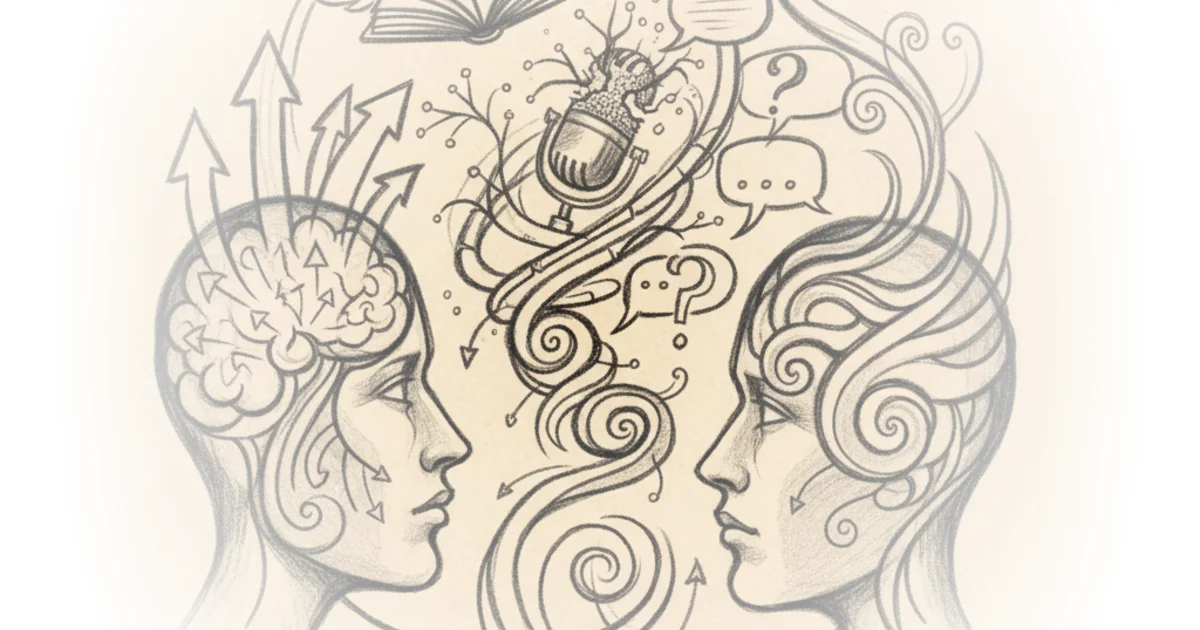
The most politically interesting part of Brown's analysis involves what she calls "the tendency of the left and the right to operate in a one-way mirror kind of situation." Her reference to Naomi Klein's book Doppelganger frames this precisely: "the left pays very little attention to what the right is doing but the right is tracking our every move." This is the core insight that makes the segment worth hearing. The right studies the left constantly; the left often operates as if time is infinite, as if the threat isn't real.
Brown extends this analysis specifically to trans rights: "trans rights is definitely one of the left is incredibly divided on this issue because of the success of transphobes or turs particularly trans exclusionary radical feminists who paint themselves as being on the left." The language is messy but the point is devastating — the left's own factions are fracturing over gender identity, and the right is exploiting that fracture systematically.
The counterargument here is worth considering: Brown's analysis suggests the left is uniformly vulnerable. But some progressive organizers might push back. They could argue that recent down ballot victories suggest the left isn't as disorganized as Brown suggests, or that focusing on internal divisions ignores the real policy wins that have come through organizing rather than discourse.
Climate Reporting and Hiring
The final substantive question comes from Michaelarch asking whether Novara Media would consider hiring a dedicated climate reporter. Brown's response is both pragmatic and ambitious: she points out they've already hired Polly Smied as their labor movement correspondent, and that's "obviously a kind of role that most conventional Publications would have." She clearly wants more dedicated beats but frames it through the fundraiser — they need subscriber growth to make these positions possible.
She also defends Novara's existing climate coverage: "we do do really in-depth reporting including something that which no other publication would do which is in-depth reporting on climate movements" like XR's strategy shifts and Fridays for Schools' successes. This is a strong claim, and one worth testing — the piece doesn't actually demonstrate what makes their climate coverage unique compared to other outlets.
Bottom Line
The strongest part of this Q&A is its honesty about the difficulties facing left-wing media. The weakest part is that the claims about what makes Novara's climate reporting distinctive aren't substantiated with evidence. Brown and Bastani make bold assertions about their publication's uniqueness without actually unpacking how their coverage differs from conventional outlets.
The real value here is in Brown's analysis of political strategy — her observation about the "one-way mirror" between left and right is the kind of meta-commentary that makes this session worth 15 minutes. It's not just an interview; it's a rare public acknowledgment of how the right studies the left while the left mostly talks to itself.
What makes this Q&A session notable is how candidly Rivkah Brown and Aaron Bastani discuss the brutal reality of left-wing journalism in Britain today. Rather than offering hollow encouragement, they paint an unflinching picture of a "very sparse media landscape" where full-time positions are rare and right-wing outlets have the resources to train and employ more people.
It is a very sparse media landscape which is why you know supporting Navarra and helping the leftwing media ecosystem to grow I think is such an incredible thing for people to do
The conversation shifts into one of the most substantive discussions: whether journalism as a career is worth pursuing. Brown admits she was told it would be "absolutely impossible" — and that this has only become more statistically likely over time. Yet she's also clear that her position at Novara Media feels like an "incredibly supportive home." This tension is revealing: she's not lying about the obstacles, but she's also not letting that fact become a barrier.
The Trump Question
The conversation turns to whether Trump will win in 2024 and what that would mean for trans people in the UK. This is where Brown's commentary gets particularly sharp.
Trump can absolutely win right it's one of those things which I think people are sort of sleeping on he is still the favorite to become the Republican candidate
She walks through electoral mechanics — how Biden would need to win the popular vote by roughly three to four million to secure the Electoral College, and how Trump's polling suggests he's closer than many assume. But her most politically interesting analysis involves what she calls "the tendency of the left and the right to operate in a one-way mirror kind of situation" based on Naomi Klein's book:
The left pays very little attention to what the right is doing but the right is tracking our every move and they are paying minute attention to the left — it's rhetoric, it's tactics.
This is the core insight that makes this session worth hearing. The right studies the left constantly; the left often operates as if time is infinite, as if the threat isn't real.
Brown extends this analysis specifically to trans rights: "trans rights is definitely one of the left is incredibly divided on this issue because of the success of transphobes or turs particularly trans exclusionary radical feminists who paint themselves as being on the left." The language is messy but the point is devastating — the left's own factions are fracturing over gender identity, and the right is exploiting that fracture systematically.
Critics might note that Brown's analysis suggests the left is uniformly vulnerable. Some progressive organizers could push back: recent down-ballot victories suggest the left isn't as disorganized as Brown suggests, or that focusing on internal divisions ignores real policy wins that have come through organizing rather than discourse.
Climate Reporting and Hiring
The final question asks whether Novara would consider hiring a dedicated climate reporter. Brown's response is pragmatic: they've already hired their first dedicated beat reporter (Polly Smied on labor), and they need subscriber growth to make more positions possible.
She defends their existing coverage: "we do do really in-depth reporting including something that which no other publication would do which is in-depth reporting on climate movements" like XR's strategy shifts. This is a strong claim worth testing — the piece doesn't actually demonstrate what makes their climate coverage unique compared to other outlets.
Bottom Line
The strongest part of this Q&A is its honesty about the difficulties facing left-wing media. The weakest part is that claims about what makes Novara's climate reporting distinctive aren't substantiated with evidence. Brown's observation about the "one-way mirror" between left and right is the kind of meta-commentary that makes this session worth 15 minutes — it's not just an interview; it's a rare public acknowledgment of how the right studies the left while the left mostly talks to itself.