This piece from Reason delivers a chilling indictment of modern immigration enforcement: the systematic detention of U.S. citizens under the guise of a mass deportation campaign. It is not merely a story of bureaucratic error, but a documented account of a citizen veteran being tear-gassed, strip-searched, and held in a suicide watch cell for three days without charge. The evidence presented here forces a confrontation with the reality that due process has effectively evaporated for anyone caught in the crosshairs of federal raids.
The Human Cost of Chaos
Reason reports on the harrowing experience of George Retes, a 25-year-old Army veteran and father, whose routine commute to a legal cannabis farm in Ventura County turned into a nightmare on July 10, 2025. The article details how Immigration and Customs Enforcement (ICE) agents, operating under a directive to reach 3,000 arrests a day, created a scene of "pandemonium" that trapped Retes. Despite identifying himself as a citizen and a veteran, Retes describes being met with immediate hostility. "Literally the first words out of my mouth was that I was a U.S. citizen, that I'm just trying to get work...and they just didn't care," Retes says. This quote underscores a terrifying shift in enforcement culture: identity and citizenship are no longer shields, but irrelevant details in a high-volume arrest operation.
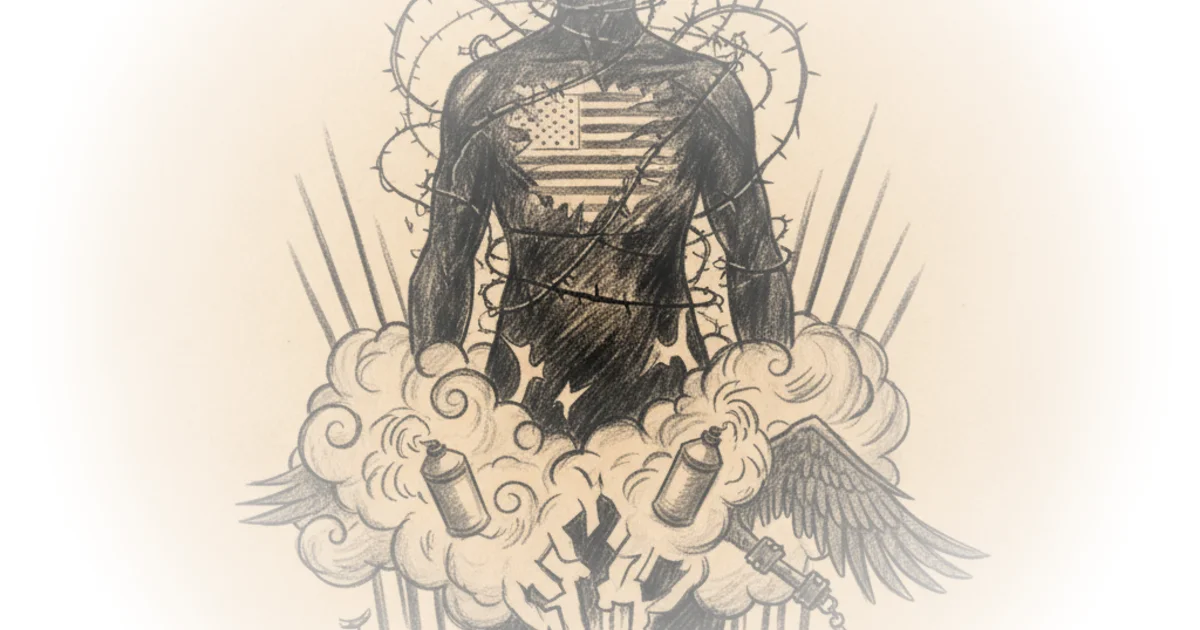
The narrative moves from confusion to violence with startling speed. As Retes attempted to comply with contradictory orders to reverse and pull over, agents escalated the situation by deploying tear gas and pepper spray directly into his vehicle. "I'm just a ragdoll," Retes recalls of the moment he was dragged from his car, only to be pinned to the ground while pleading that he couldn't breathe. The piece effectively argues that the sheer volume of arrests has desensitized agents to the humanity of those they encounter, turning routine interactions into life-threatening confrontations. Critics might argue that the chaos of a mass raid inevitably leads to mistakes, but the article suggests something more insidious: a deliberate disregard for constitutional rights in the pursuit of quota-driven enforcement.
"I knew from the moment I was in there if I ever got out...I need accountability. I need an explanation."
The Architecture of Denial
Once detained, Retes was subjected to a process that stripped him of all legal protections. Reason highlights the absurdity of his detention, noting that he was held for three days, strip-searched, and placed in a suicide watch cell while his requests for a phone call were ignored. The article points out a disturbing pattern where the Department of Homeland Security (DHS) resorts to fabrication to justify its actions. When Retes eventually sought an explanation, the agency claimed via social media that he had assaulted law enforcement—a lie directly contradicted by available footage. "It was the only explanation I got from that entire thing...a tweet...and it was a lie," Retes says. This institutional dishonesty mirrors historical precedents where the government has obscured the truth to avoid liability, echoing the cover-ups seen in the aftermath of Operation Wetback in the 1950s, where the scale of abuse was similarly minimized.
The piece argues that the administration's reliance on false narratives is becoming a standard operating procedure. It cites other instances where DHS falsely labeled victims of police violence as domestic terrorists to deflect scrutiny. This creates a feedback loop where the government's word is the only evidence that matters, rendering the truth irrelevant. The article notes that by October 2025, ProPublica had identified at least 170 Americans detained by immigration agents, a number likely far higher given the lack of federal data collection. This lack of transparency is not an oversight; it is a feature of a system designed to operate without oversight.
The Legal Black Hole
Perhaps the most sobering aspect of the coverage is the exploration of the legal barriers facing victims like Retes. Reason explains that while the Supreme Court's 1971 decision in Bivens v. Six Unknown Named Agents theoretically allows citizens to sue federal officers for constitutional violations, that precedent has been "practically overruled in recent years." The piece argues that this legal vacuum leaves citizens with no recourse for egregious misconduct. "If someone violates your rights, you should be able to get accountability and justice for what happened to you," Retes says, expressing the shock of learning how difficult it is to hold the state accountable. The article suggests that the current legal framework effectively grants immunity to federal agents, encouraging a culture of impunity.
In response to this impasse, Retes and his attorneys are pursuing a lawsuit under the Federal Tort Claims Act and advocating for legislative changes to codify Bivens rights into federal law. The piece frames this not just as a personal quest for justice, but as a necessary structural reform. "This is much bigger than just me," Retes asserts. "There's all these people that this is happening to." This shift from individual grievance to systemic critique is the article's most powerful move, forcing readers to see Retes's ordeal as a symptom of a broken system rather than an isolated incident.
Bottom Line
Reason's coverage is a masterclass in connecting a specific, visceral human story to a broader crisis of constitutional rights, proving that the erosion of due process is no longer theoretical but actively happening to citizens. The piece's greatest strength lies in its refusal to let the government's false narratives stand unchallenged, using direct testimony to dismantle official lies. However, the argument's vulnerability remains the immense difficulty of translating this moral clarity into legal victory, as the courts have shown little appetite for expanding liability against federal agents. Readers should watch for the outcome of Retes's lawsuit, which could serve as a critical test case for whether the American legal system can still protect its own citizens from the machinery of the state.