Most economic analyses dismiss the public's anger over post-pandemic price hikes as mere political posturing, but this piece from Nominal News suggests the outrage is rooted in a measurable, strategic shift in market behavior. By leveraging new data on supply chain disruptions, the article argues that what feels like 'greed' is actually a rational, yet painful, response to broken logistics that economists have largely ignored until now.
Redefining the 'Greed' Argument
The piece begins by dismantling the caricature of 'greedflation'—the idea that firms simply woke up one day and decided to be more avaricious. Instead, the editors argue that the public's frustration is a signal of deteriorating competition and unchecked pricing power. "Unlike economics commentators, who do not view 'greedflation' and firm power as related, the public outrage about 'greedflation', appears to be focused on that firms may have too much power in dictating prices and that current competition levels do not sufficiently rein their pricing power in," Nominal News reports. This reframing is crucial; it moves the debate from moral judgment to structural analysis. The article posits that valid questions remain about whether competition has eroded and if firms are better able to extract consumer surplus.
"All of the above are valid questions, which I would capture under the umbrella of the word 'greedflation'."
The editors suggest that dismissing these concerns outright ignores the reality of how markets function under stress. Critics might argue that attributing inflation to 'power' rather than 'cost' is a political distraction, but the piece counters that the mechanism of price-setting itself has changed in ways that benefit the seller disproportionately.
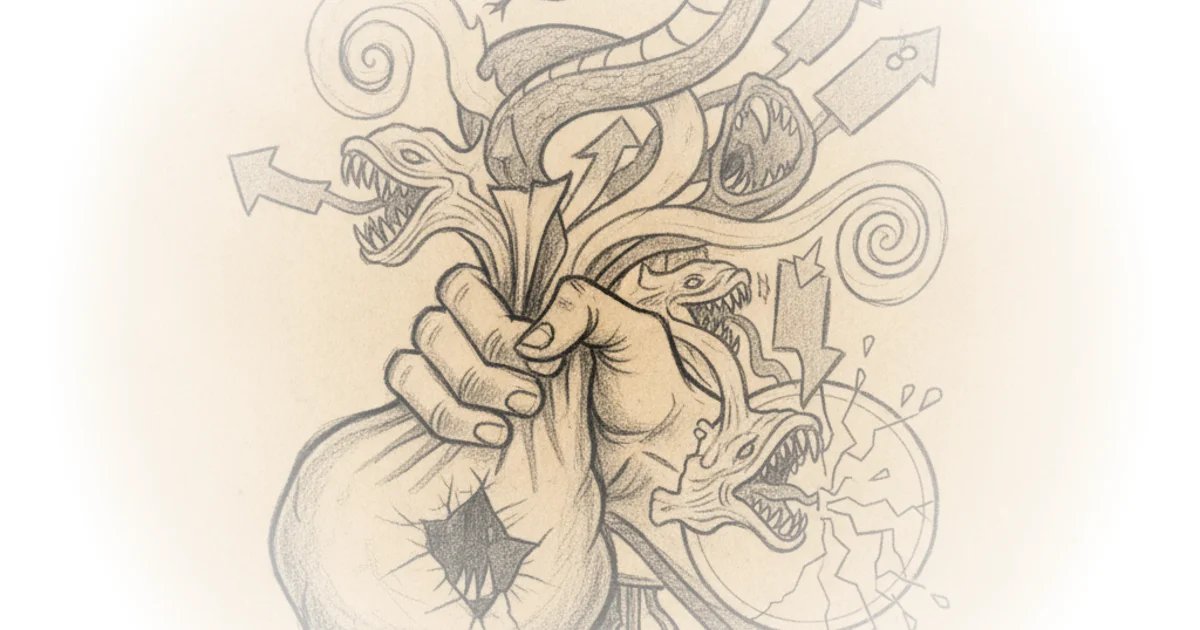
The Mechanics of Supply Shocks
To explain how a broken shipping line translates to higher prices on a shelf, the article introduces a model by Federal Reserve economists Baslandze and Fuchs. The intuition is stark: when supply is uncertain, firms raise prices not just to cover costs, but to ration scarce inventory. The piece illustrates this with a basketball analogy, noting that if a firm faces a three-month shipping delay, it must raise prices to sell only a third of its daily volume to avoid running out. "Basically, the firm needs to now sell a third of the basketballs per day, or around 33 basketballs a day – and the only way it can make that happen is by raising the price," the article explains. This behavior, while economically rational for the firm, feels predatory to the consumer.
What makes this analysis distinctive is its inclusion of competitor behavior. The model shows that even if one firm has perfect supply, it will still raise prices if its competitors are facing delays. "Thus, even though you were not directly impacted by the shipping delays, you may still raise prices," Nominal News notes. This dynamic creates a market-wide inflationary pressure that has nothing to do with individual firm morality and everything to do with strategic interdependence. This connects to the concept of the Kinked Demand curve, where firms are reluctant to lower prices for fear of starting a price war, yet eager to raise them when costs or supply constraints shift the market equilibrium.
"Without including the competitive interactions, we would be underestimating the impact of Covid-driven supply chain disruptions by half."
The data supports this: the piece reports that for a 1% increase in delivery shortfalls, firms increase prices by 0.25%, a figure nearly identical to the pass-through of actual import cost increases. This suggests that the 'cost' of uncertainty is being priced in just as heavily as the cost of goods.
The Hidden Cost of 'Fairness'
The article concludes by addressing the semantic war over the term 'greedflation.' The authors admit that economists prefer not to use the word 'greed' because the price hikes are strategically correct responses to market conditions. "It's worth noting that the price hikes are strategically correct and firms have always been doing them, so their 'greed' didn't change," the piece argues. However, they concede that the mechanism fits the public's definition of unfairness. The real takeaway is that our understanding of what constitutes a 'competitive' market may be outdated. If a market with four firms was previously considered competitive, the new reality of strategic pricing during disruptions might require five or six firms to achieve the same level of price stability.
"Regardless of what we call it, studying these interactions is crucial, as the impact on prices and general inflation of such supply disruptions can be large."
This insight challenges the Bertrand paradox, which suggests that even with just two firms, prices should drop to marginal cost. The new data implies that with supply chain volatility, the paradox breaks down, and firms can sustain prices well above cost without losing market share. The piece notes that economists are finally listening to public dissatisfaction, shifting from dismissal to investigation.
Bottom Line
The strongest element of this analysis is its demonstration that supply chain fragility acts as a hidden tax, amplified by strategic pricing that mimics collusion without requiring explicit agreements. Its biggest vulnerability is the difficulty in translating these micro-level strategic adjustments into a macro-level policy solution that doesn't simply punish firms for reacting to global chaos. Readers should watch for how regulators might redefine 'competitive markets' in light of these findings, potentially shifting antitrust focus from market share to supply chain resilience.