Sara Ahmed does not merely analyze a fairy tale; she exposes how the very stories we tell to enforce obedience are the same tools used to justify empire and silence dissent. By tracing the word "willful" from a Grimm fable to the halls of Canadian residential schools and the abstract dialectics of Hegel, Ahmed reveals a chilling continuity: the "willful" body is the one that must be beaten down to maintain the status quo. This is not literary criticism for its own sake, but a forensic examination of how violence is disguised as moral correction.
The Phantom Limb of Authority
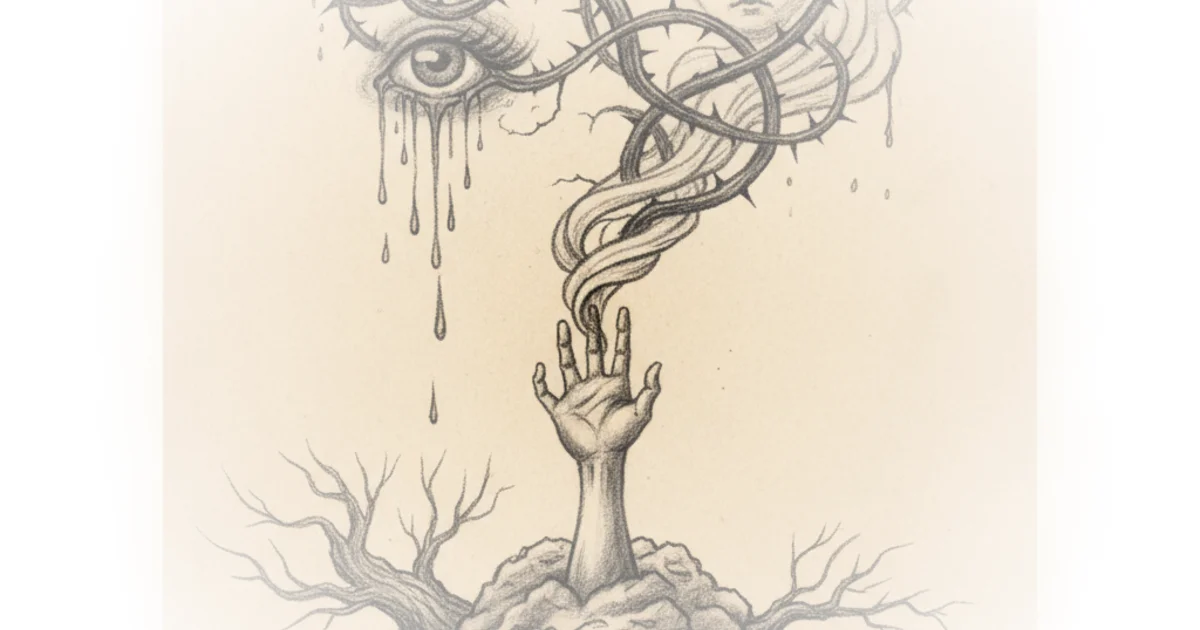
Ahmed begins her inquiry by following the word "willful" to a grim story about a child whose arm refuses to stay buried. "Once upon a time there was a child who was willful and would not do as her mother wished," she recounts, noting that the child's fate is sealed not by illness, but by a chain of command that includes God and doctors. The core of her argument is that willfulness is a diagnosis applied to those who fail to comply with authority, turning mere persistence into a crime. "The costs of such a diagnosis are high: through a chain of command... the child's fate is sealed," Ahmed writes, highlighting how the story externalizes will into a body part that must be physically suppressed.
She connects this fable to the history of science, specifically the misapplication of Lamarck's law of use and disuse. Ahmed points out that the "blacksmith's strong arm" is often cited as proof that labor is inherited, a myth that implies the sons of workers are born to work. "The strong arm is not really how a work load is eased but acquired," she argues, calling this a "phantom limb" because the arm in the story is missing from the actual scientific text. This framing is effective because it exposes how myths of natural order are constructed to justify social hierarchies. Critics might argue that focusing on the textual absence of the arm distracts from the material reality of labor, but Ahmed's point is precisely that the story of the arm is what does the ideological work.
The rod is an externalization of the mother's wish, but also of God's command, which transforms a wish into fiat, a 'let it be done,' thus determining what happens to the child.
The Colonial Rod and the Rising Arm
The piece shifts from abstract philosophy to brutal historical reality when Ahmed recounts a moment with Indigenous writer Maria Campbell. After Ahmed read the Grimm story at a conference, Campbell revealed that nuns in Canadian residential schools used the same tale to discipline children. "When delivered to an Indigenous child, obedience... meant giving up not just your own will but your hand, your language, your land, your people," Ahmed explains. This connection transforms the fairy tale from a moral fable into a weapon of cultural erasure. The story was not just about a disobedient child; it was a warning that resistance would be met with physical violence.
Ahmed draws on historian Caroline Elkins to contextualize this violence within the broader "civilizing mission." "A Victorian-era parents disciplined their progeny, recalcitrant natives in the empire had to be punished," she quotes, showing how domestic discipline and imperial violence are linked by the same logic. The arm that keeps rising in the story becomes a metaphor for the resilience of Indigenous peoples who refused to be buried. "That's why there is nothing mere about persistence," Ahmed writes, reframing stubbornness as a vital act of survival. This is the article's most powerful move: reclaiming the "willful" label as a badge of honor rather than a mark of shame.
The Dialectic of the Stolen Hand
Ahmed then turns to Hegel's master-slave dialectic, arguing that the "slave" is judged as willful simply for developing a will of their own through labor. She notes that in Hegel's fable, the slave's independence is framed as a defect: "having a 'mind of its own' is simply stubbornness, a type of freedom which does not get beyond the attitude of bondage." Ahmed suggests that we must "misread" Hegel to hear the history of those who were forced into bondage. The master, she argues, becomes dependent on the slave's arms while his own become "flaccid organs," unable to act without the labor of others.
This analysis is deepened by her reference to Frantz Fanon, who recognized how blackness was dissolved in Western philosophy as a mere stepping stone to universal freedom. "My effort was only a term in the dialectic," Fanon remarked, an effort that resulted in the loss of a hand. Ahmed insists, "We cannot let Fanon keep losing his hand. Not just lost but stolen." This section challenges the reader to see how philosophical systems often rely on the erasure of the very bodies that build them. A counterargument worth considering is whether this reading of Hegel overlooks the potential for the dialectic to be a universal theory of consciousness rather than a specific critique of racial capitalism, but Ahmed's focus on the material consequences of the theory remains compelling.
The arms do not appear in the fable because they can smash it. And by it, I do not mean just the dialectic. They can bring the house down. After all, they built it.
The Master's Tools and the Rising Arm
Finally, Ahmed addresses how institutions today invert the roles of the arm and the rod. She observes that those who abuse power often claim to be the victims, while the complainers are cast as the aggressors. "Those who abuse the power given to them by institutions pass themselves off as the arms, as the one's being beaten by a disciplinary regime," she writes. This inversion is particularly evident in how complaints about harassment or discrimination are labeled as "carceral," effectively turning the victim into the jailer in the public eye. Ahmed warns that nation-states, too, speak as if they are the persecuted arms while acting as the rods, citing genocidal states that claim victimhood while perpetrating violence.
She concludes by invoking Audre Lorde's famous assertion that "the master's tools will never dismantle the master's house." Ahmed interprets this not as a call for resignation, but as a "call to arms." The willful arm that keeps rising is the tool that can dismantle the house, provided we recognize it for what it is. The argument lands because it refuses to separate the personal from the political, showing how the smallest act of disobedience is part of a larger historical struggle against erasure.
Bottom Line
Ahmed's most striking contribution is her ability to weave a Grimm fable, colonial history, and high philosophy into a single narrative about the politics of the body. The argument's greatest strength is its refusal to let the "willful" subject be buried, instead highlighting the persistent, rising arm as a symbol of resistance. The only vulnerability lies in the sheer density of its theoretical connections, which may require the reader to pause and retrace the threads between the blacksmith, the slave, and the Indigenous child. Ultimately, this is a vital reminder that the stories we tell about obedience are often the very mechanisms of our oppression, and that the only way to break the cycle is to keep the arm rising.