Andrew Sullivan transforms a community guessing game into a meditation on the quiet endurance of human curiosity against the backdrop of a warming planet and an aging society. Rather than simply cataloging the week's winners, the piece uses the "View From Your Window" contest as a lens to examine how ordinary people navigate memory loss, historical continuity, and the sheer scale of the American landscape. The most striking element is how the author elevates a simple visual puzzle into a narrative about the "dilapidated glory" of our shared world, suggesting that the act of looking closely is itself a form of resistance against the chaos of modern life.
The Architecture of Memory and Place
Sullivan frames the contest not as a trivia challenge, but as a collective exercise in observation. He highlights a recurring theme among the contributors: the burden and beauty of caring for aging parents. "The A2 Team asks: Am I noticing it just now, or is it a new kind of thread in the recent write-ups: taking care of aging parents?" This observation grounds the digital contest in a very physical, emotional reality. The author notes that one contributor is in Nuremberg, Germany, visiting a 90-year-old mother with failing short-term memory, yet still managing to buy Christmas gifts for grandchildren. This juxtaposition of personal fragility with the permanence of institutions is powerful. Sullivan points out that the photo was taken from "Korn & Berg, which happens to be Germany's oldest bookstore, founded in 1531," and notes that the school he attended has existed "since 1526."
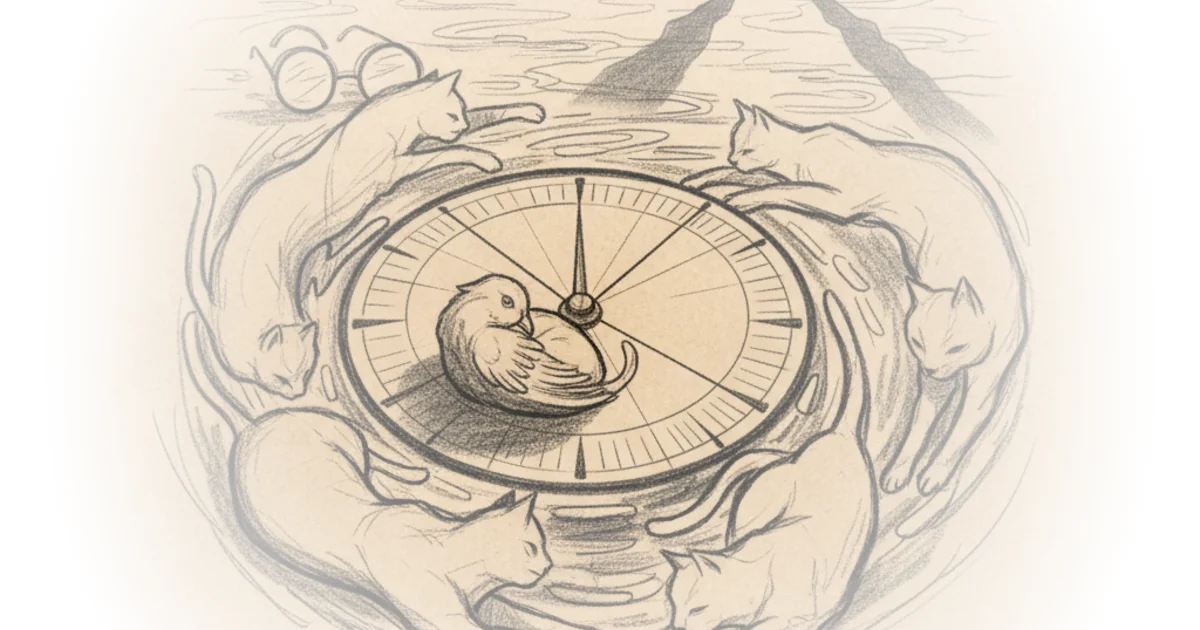
This historical anchoring serves a specific purpose: it contrasts the fleeting nature of human memory with the endurance of printed words and physical structures. The reference to the Reformation and the print revolution adds depth, reminding the reader that the act of recording and observing is centuries old. Critics might argue that focusing on European history distracts from the American-centric nature of the contest, but Sullivan uses it to universalize the experience of time passing. The argument holds up because it connects the personal struggle of memory loss to the institutional struggle of preserving history.
We are surrounded by institutions that go back to the days of the Reformation and the print revolution, even as our own memories begin to fray.
The Gamification of Geography
The piece then shifts to the mechanics of the contest itself, exploring how participants use pop culture and gaming to decode the physical world. Sullivan details the extensive history of Tom Clancy's influence on video games, noting that he "bears the distinction of having had his name appear in the title of more videogames than that of any other person, with over 40 games bearing the 'Tom Clancy' moniker." The author traces this from a 1987 strategy title to the founding of Red Storm Entertainment in 1996, where Clancy appointed a friend who "had never played a game" to run the company. This historical digression is not merely trivia; it illustrates how fictional narratives have reshaped our understanding of real-world geography and military strategy.
Sullivan writes, "The Clancyverse first appeared in game form in a 1987 strategy title based on The Hunt for Red October," and later notes that Clancy "sold his name outright to Ubisoft in 2008." This transition from author to brand owner mirrors the way the contest participants move from personal observation to brand recognition. When a participant sees a Caterpillar logo, they don't just see a truck; they see a brand with a specific history. The author's choice to include the meme-inspired game "Fight Crab" and the joke about "Tom Clancy's Fight Crab" adds a layer of levity, but the underlying point is serious: our perception of the world is increasingly mediated by the stories and games we consume. A counterargument worth considering is that this reliance on pop culture might blind participants to the actual ecological or social realities of the places they are guessing, reducing complex landscapes to mere backdrops for entertainment.
The Economics of Attention
Finally, the commentary addresses the financial reality of sustaining such a community. Sullivan is transparent about the inflation eroding the value of subscriptions, stating, "We haven't changed our subscription price for five-and-a-half years, even though inflation has eroded 25 percent of the value in the interim." The author makes a direct appeal to the community's sense of stewardship: "If you're a longtime subscriber and have the means to help us keep up with inflation, we'd also be deeply grateful if you choose to increase your sub." This is not a standard call to action; it is framed as a collective effort to maintain a space for intellectual curiosity. The mention of the "incredible army of sleuths" reinforces the idea that the value lies in the community's engagement, not just the content itself.
The piece concludes with the mystery of the current week's location, where a participant notes, "This week's VFYW was taken from Nowhere, Noplace, Nohow." This admission of uncertainty is the piece's strongest moment. It acknowledges that despite our best efforts to map, name, and categorize the world, there are still places that remain elusive. The author's framing of this uncertainty as a challenge rather than a failure is a testament to the enduring power of the human desire to understand our surroundings.
Bottom Line
Sullivan's commentary succeeds by treating a community contest as a profound exploration of memory, history, and the human need to make sense of the world. The strongest part of the argument is the seamless integration of personal anecdotes about aging parents with broad historical context, creating a narrative that feels both intimate and universal. The biggest vulnerability is the reliance on niche cultural references that may alienate readers unfamiliar with the specific gaming history or European institutions mentioned. Readers should watch for how this community continues to navigate the tension between digital abstraction and physical reality in an increasingly uncertain world.