This isn't just a courtroom transcript; it is a forensic dissection of how modern monopolies are built and defended in the digital age. Brendan Benedict captures a pivotal moment where the abstract economics of "network effects" collide with the gritty reality of a federal trial, revealing that the definition of a market can be the difference between a tech giant's survival and its breakup. The piece matters now because it exposes the specific legal and economic machinery the administration is using to challenge the status quo, moving beyond political rhetoric to the hard data of competition.
The Roadshow and the Sausage Factory
Benedict begins by peeling back the curtain on the origins of the case, tracing it to a 2019 "roadshow" where critics, including former Facebook co-founder Chris Hughes and law professors Tim Wu and Scott Hemphill, pitched the antitrust case directly to enforcers. "The roadshow worked," Benedict writes, noting that this behind-the-scenes advocacy culminated in the lawsuit filed in the final days of the previous administration. This framing is crucial; it reminds readers that antitrust enforcement is often driven by sustained intellectual pressure from experts, not just sudden regulatory whims. The defense's attempt to paint Hemphill as a professor with an "axe to grind" during cross-examination highlights the high stakes of this expert testimony.
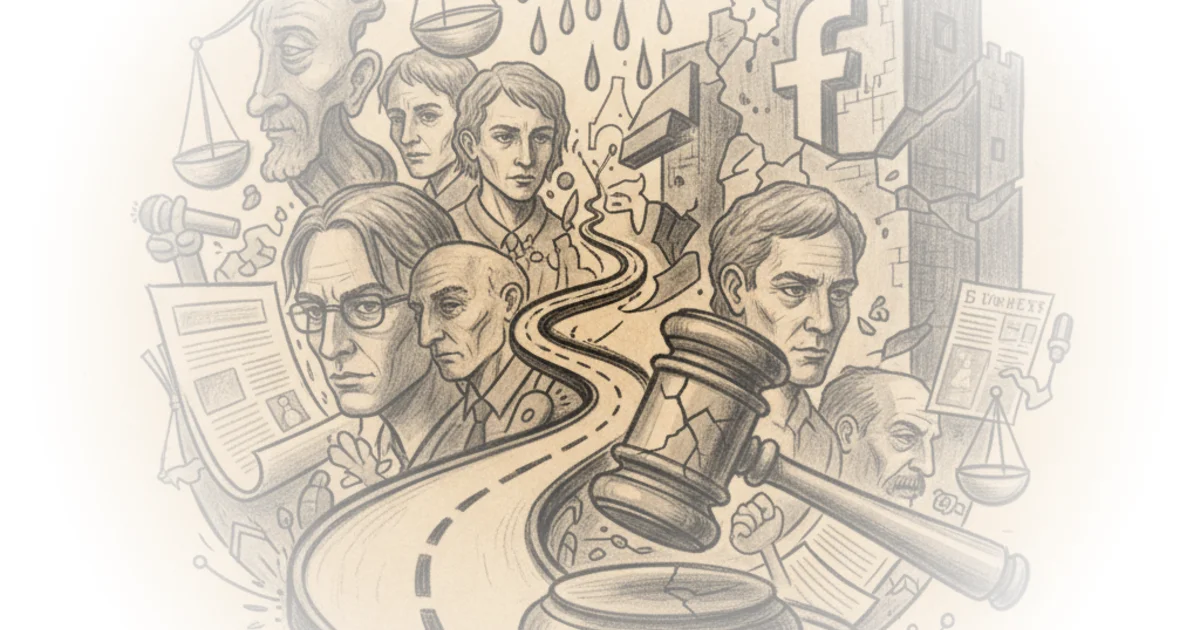
The author details how defense counsel Mark Hansen tried to undermine Hemphill's credibility by revealing the very slide deck from that initial roadshow, calling it an "explosive behind-the-scenes look at how the sausage gets made." This is a clever narrative hook that humanizes the legal process, showing that the case was built on years of strategic planning rather than a spontaneous reaction to current events. However, this focus on the "roadshow" risks distracting from the core economic arguments that actually determine the case's outcome. The real battle isn't about who started the conversation, but whether the evidence supports the claim of monopoly power.
Defining the Battlefield: The Hypothetical Monopolist Test
The core of Benedict's analysis lies in the explanation of the "Hypothetical Monopolist Test" (HMT), a complex economic tool used to define the relevant market. Since social media apps are free for users, traditional price-based tests fail. Benedict explains that Hemphill adapted this test to focus on quality degradation rather than price hikes. "Zero price doesn't mean competition is suspended," Hemphill explained, arguing that competition occurs along dimensions like ad load, data collection, and integrity. This shift from price to quality is the intellectual pivot point of the entire trial, and Benedict does an excellent job of translating this dense economic theory into accessible language.
The author notes that while critics point to the lack of a quantitative price test, the 2023 Merger Guidelines explicitly support using "qualitative and quantitative evidence and tools." This context is vital, as it shows the administration is operating within updated regulatory frameworks that acknowledge the unique nature of digital markets. Benedict writes that Hemphill's analysis asks if a single firm controlling Facebook and Instagram could "profitably lower quality from the competitive level," and the answer was yes. This conclusion is the linchpin of the FTC's argument: if Meta can degrade the user experience without losing customers, it holds monopoly power.
Critics might note that defining a market based on "quality" is inherently subjective and harder to prove than a simple price increase. The defense argues that users have endless alternatives for their "time and attention," from TikTok to reading a book. Benedict addresses this by citing the court's rejection of the "time and attention" market, which the judge called an "infinite range" of substitutes with no limiting principle. This judicial pushback against an overly broad market definition strengthens the FTC's position significantly.
"Competition between Meta and other social-media firms for users' time and attention does not necessarily make them part of the same relevant product market."
The Social Graph vs. The Content Graph
Benedict then dives into the specific data that distinguishes "personal social networking services" (PSN) from video platforms. The distinction rests on the nature of connections: PSN apps are built on a "social graph" of mutual friends, while platforms like TikTok rely on a "content graph" of algorithmic recommendations. Hemphill presented data showing that the average Facebook user has 458 friends, "more than 15 times as many connections as the average U.S. user of TikTok." This statistical gap is the empirical evidence that separates the two markets, suggesting that users cannot simply switch to TikTok if Facebook degrades its service.
The author highlights that Meta has tried to mock the inclusion of smaller competitors like MeWe, but Hemphill argues it is "conservative to include them in the market even if they're not a big player." This adherence to the "smallest market principle" is a strategic legal choice that prevents the market from being defined so broadly that no monopoly can exist. Benedict notes that the court agreed, stating that if the market were defined as broadly as Meta suggests, it would include "watching a movie at a friend's house" or "playing online poker." This absurdity underscores the necessity of a narrow, precise market definition for antitrust law to function.
Bottom Line
Benedict's coverage effectively demystifies the complex economic arguments at the heart of the antitrust case, proving that the definition of the market is the decisive factor in determining whether Meta is a monopolist. The strongest part of the argument is the clear distinction between social networking and content consumption, supported by hard data on user connections. However, the case's vulnerability remains the subjective nature of defining "quality" degradation in a zero-price market, a challenge that will likely define the appeals process. Readers should watch for how the court weighs this qualitative evidence against Meta's claims of broad competition for user attention.