Walter Kirn delivers a hauntingly prescient fable about a society that has criminalized the very act of dreaming, framing imagination not as a human right but as a public health hazard. This is not merely science fiction; it is a sharp critique of a culture so terrified of disengagement that it has legislated the mind into submission. Kirn's narrative forces us to confront a terrifying question: at what point does the protection of society become the imprisonment of the soul?
The Architecture of Compliance
The story opens with Ben, a man released from a virtual prison where he spent four years constructing a medieval kingdom, only to find his physical world has been radically re-engineered for "austere essentials." Kirn writes, "The point, I think, is renewal, regeneration. We've cleaned up our act, Ben. And none too soon, I'd add." The narrator, a digital projection named Russ, explains that headsets and immersive technology are now illegal because they "isolate" and lead to "disengagement." The administration has decided that the "Cognitive Commons" is too fragile to allow citizens to vanish into their own private dream holes.
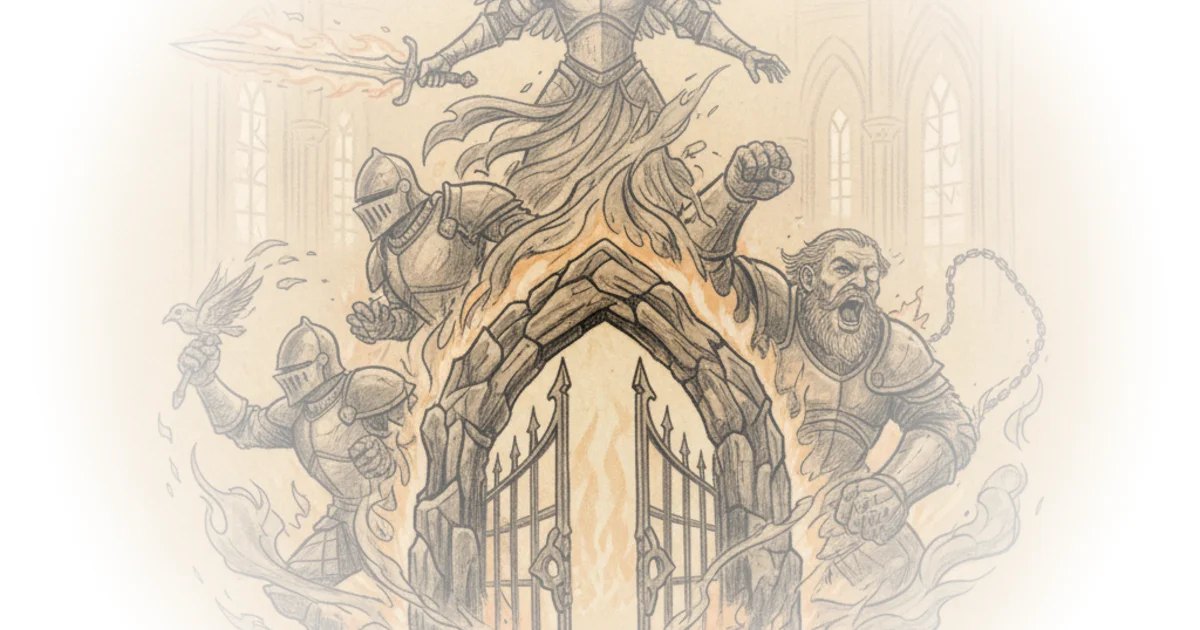
This framing is chillingly effective because it mirrors real-world anxieties about screen time and social isolation, but Kirn takes the logic to its totalitarian extreme. By banning "Class A Escapist Instruments," the state has essentially outlawed introspection. The argument here is that a society cannot function if its members are mentally absent. However, this overlooks the fundamental human need for internal sanctuary. As Kirn notes through the character Russ, "fully exiting the Cognitive Commons... is something society realized it just can't tolerate." The implication is that the state owns the citizen's attention, and any diversion from collective productivity is a crime.
"They're tyrants. They want to rule it all. From ear to ear, from neck to scalp, every last neuron in every human skull."
The Rebellion of the Analog
Ben's journey into the real world reveals a stark, sterile landscape of new buildings and wary neighbors, a place where "honest associates and smart decisions" are enforced by a HealthBand that monitors diet, sleep, and exercise. Yet, in a faded warehouse district, Ben discovers "The Orbiter," a coffee shop dedicated to vintage science fiction and analog games. Here, Kirn introduces the central conflict: the state's mandate for conformity versus the human impulse for myth-making.
The shop owner, Ollie, becomes the voice of resistance. He argues that the new laws are a "superstitious moral panic" targeting the imagination itself. "For a country with alleged Puritan roots, it's always game for an orgy of self-righteousness," Ollie observes, noting that this time the target is "an essential mental faculty." He describes the shop as "a flickering little lamp of pure 'fuck you'" against a regime that views daydreaming as a defect. This section is the narrative's emotional core, suggesting that the only way to remain human in a hyper-regulated world is to cling to the "radiant totems" of the past.
Critics might argue that Kirn romanticizes the isolation of the past, ignoring the very real harms of addiction and escapism that the new laws ostensibly address. The story acknowledges that Ben was a "druggy fuckup" before his virtual confinement, suggesting that total immersion can indeed be destructive. Yet, the story posits that the cure—total surveillance and the banishment of fantasy—is far worse than the disease.
The Cost of a Dreamless World
As Ben begins his job sorting books and games, he experiences a resurgence of purpose, realizing that "certain figures, objects, games, and books conspired to weave a story around themselves." The act of organizing these artifacts becomes a spiritual exercise, a way to reclaim a vocabulary for "higher things" that he lost in the foster care system and the prison of his own making. Kirn writes, "I've never been one of anything... Except, unfortunately, your gang." This moment of connection highlights the tragedy of the new society: it has solved the problem of isolation by creating a world where no one truly connects, only coexists in a state of enforced alertness.
The story suggests that the "Fantasy Codes" are not just about technology, but about the control of narrative. By banning the tools of imagination, the state attempts to ban the ability to imagine a different future. Ollie's warning that "they're tyrants" resonates because it identifies the ultimate goal of such policies: the colonization of the inner self. The administration's claim of "renewal" is revealed as a facade for a profound spiritual atrophy.
Bottom Line
Walter Kirn's "Angel Fire" is a masterful warning against the pathologizing of the human imagination, arguing that a society without the capacity to dream is a society without a future. Its greatest strength lies in its refusal to offer a easy resolution, leaving the reader with the unsettling image of a "flickering little lamp" in a world of enforced darkness. The story's vulnerability is its reliance on a binary between a toxic, immersive past and a sterile, controlled present, yet this simplification serves the fable's purpose: to remind us that the right to be lost in thought is the bedrock of liberty.