Emily Jashinsky makes a surprising argument: the New Right has quietly adopted Marxist analysis of base and superstructure to explain how culture shapes politics. This shift represents a fundamental break from the libertarian economics that once dominated conservative thought.
The New Right's Marxist Turn
The traditionalist movement intertwines with what practitioners call Maha philosophy—a rejection of classical liberalism's corrosive individualism. Traditionalists believe liberty and market competition inevitably lead to the territorialization of traditional values. They're now drawing on Marxist distinctions between economic base and cultural superstructure to make their case.
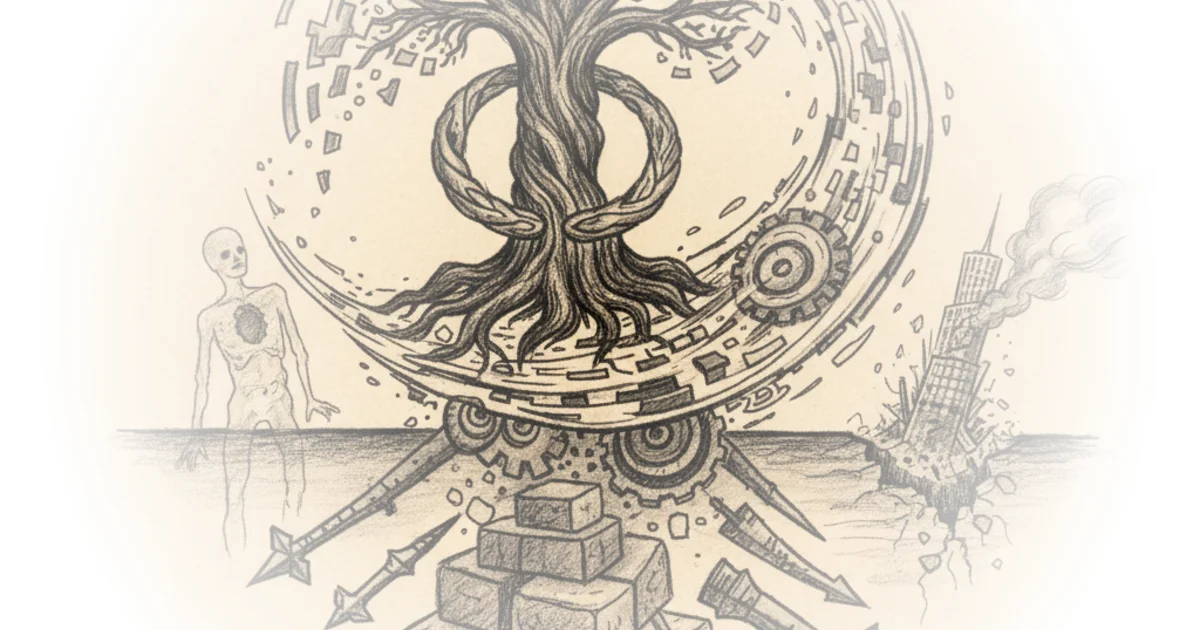
When asked if the New Right agrees with Marxist analysis, Jashinsky confirmed it outright: "Yes." The shift is significant because it marks a rare moment when contemporary conservatism explicitly embraces framework long associated with left-wing thought.
Progressive Hegemony's Collapse
The progressive cultural hegemony that dominated institutions—particularly Hollywood and Netflix—is crumbling. Jashinsky notes this wasn't obvious to everyone on the left. Conservatives constantly cite "communist Hollywood," but applying a Marxist lens reveals something different: these are arch capitalists laundering wokeness through their films to make more money.
Jashinsky coined what she calls "cultural Marxism" as shorthand for how millennials seized the means of cultural production without seizing economic production. They weren't trying to overthrow capitalism; they were trying to overthrow white supremacist and misogynistic systems. The left underestimated its own power over those institutions—a failure rooted in affluent bubbles that had no idea how to seize economic means of production.
The message has changed because the medium has changed.
Meanwhile, the base—using Marxist terminology—is becoming more scarce. People are being dispossessed and proletarianized while the cultural war over symbols and narratives intensifies.
Young People's Political Drift
The question of whether young people will continue drifting rightward requires nuance. During the Trump years, the right owned free speech as an issue. After Meresa Ozurk's support for pulling kids off streets for writing critical op-eds about Israel, it's impossible for the right to claim ownership of that topic.
Jashinsky sees Gen Z as potentially won by figures like Pod Save America—creating an illusion of authenticity similar to how Donald Trump was eventually packaged through podcasters. The podcast environment has fundamentally changed political communication: politicians are becoming influencers, and influencers are becoming political actors.
What once defined as "conservative" or "liberal" is now scrambling. Gen Z's anti-Israel sentiment isn't classified as conservative—it's making classically liberal arguments about strong power oppressing weak power. This defies traditional ideological labels.
The Gaza Shift
Marjorie Taylor Greene in 2014 would never have applied the term genocide to Gaza because she'd have been blacklisted from Fox News immediately—no ladder back into the right-wing ecosystem. What changed was the incentive structure.
Now gatekeepers hold less power. Newsmax, War Room, and similar outlets provide platforms. She can create her own content farm across YouTube, Instagram, and X without traditional media approval. The medium became the message—and this signals more left-right populism ahead.
Burnham's Managerial Revolution
James Burnham wrote The Managerial Revolution, breaking from Marxism while arguing the capitalist class would be overthrown by a new professional managerial class. This proved influential in 2017-2020 as institutions suddenly faced crumbling leftist control—rapidly and unexpectedly.
Patrick Denine's regime change work about needing a new elite became intoxicating for young right intellectuals: you are the new elite creating cultural production, spending donor money on champagne while wearing tuxedos.
Jashinsky believes Burnham is losing steam now. The professional managerial class analysis quickly grew into the antitrust movement on the right and the reactionary cultural right—giving people a diagnosis that hadn't existed before.
Gamergate as the Archduke Ferdinand
The culture wars began with Gamergate—a term Jashinsky calls "the Archduke Ferdinand assassination of the culture war." So many influencers became prominent from that moment. The 2011-2015 college experience captured a pivotal time: graduating in May 2015, watching Trump enter the race weeks later, seeing what became woke culture bubble up.
The tea party movement was actually cultural populism rather than economic populism—cultural questions were becoming far more interesting than economics. Christina Hoff Summers' involvement with Gamergate planted seeds that grew into what we now call wokeness.
Fusionism's Breakdown
Fusionism emerged from the 1950s and 1960s, describing how the Republican party could be held together by three pillars: traditionalists, neoconservatives, and fusionists. This orthodoxy is now being questioned in unprecedented ways.
Jashinsky wasn't always skeptical of libertarian ideas—most people in conservative movement had identified as libertarian. But within a couple years of arriving in DC around 2016, she began questioning that orthodoxy while not being particularly interested in economics.
The fusionist dogma was built on three legs: neoconservatism, traditionalism, and populism—and each is now fracturing under pressure from changing media environments and shifting cultural politics.
Critics might note that applying Marxist frameworks to explain conservative politics risks legitimizing analysis many would consider ideologically suspect. The danger lies in borrowing analytical tools while rejecting their political implications.
Jashinsky's core insight is solid: the media environment has fundamentally shifted how politics operates. Her biggest vulnerability is strategic—acknowledging these changes doesn't automatically reveal what comes next. That remains unresolved, and it's precisely where attention should focus.