Tim Mak exposes a chilling evolution in modern warfare: the battlefield has migrated from the trenches to the bedroom, where Russian intelligence operatives are systematically grooming Ukrainian children into unwitting agents of destruction. This isn't just about propaganda; it is a documented, escalating campaign of coercion where the currency of recruitment is not just ideology, but blackmail, isolation, and the promise of easy money for teenagers who simply want to fit in. For busy readers navigating a world of information overload, this piece cuts through the noise to reveal a terrifyingly human cost of digital information warfare that standard military briefings often miss.
The Illusion of Safety
Mak frames the danger not as a distant geopolitical abstraction, but as a domestic crisis unfolding in real-time. He illustrates how the digital realm creates a false sense of security, a phenomenon he terms the "illusion of the bedroom." "This is how the 'illusion of the bedroom' works – when you are relaxed and physically safe, you think you'll be fine online," Mak writes, quoting Vasyl Filonenko, an information security trainer who has dedicated his career to protecting Ukrainian youth. The author's choice to anchor the narrative in the specific experiences of teenagers—like the 21-year-old arrested after being lured through World of Tanks—grounds the abstract concept of cyber-warfare in visceral, personal tragedy.
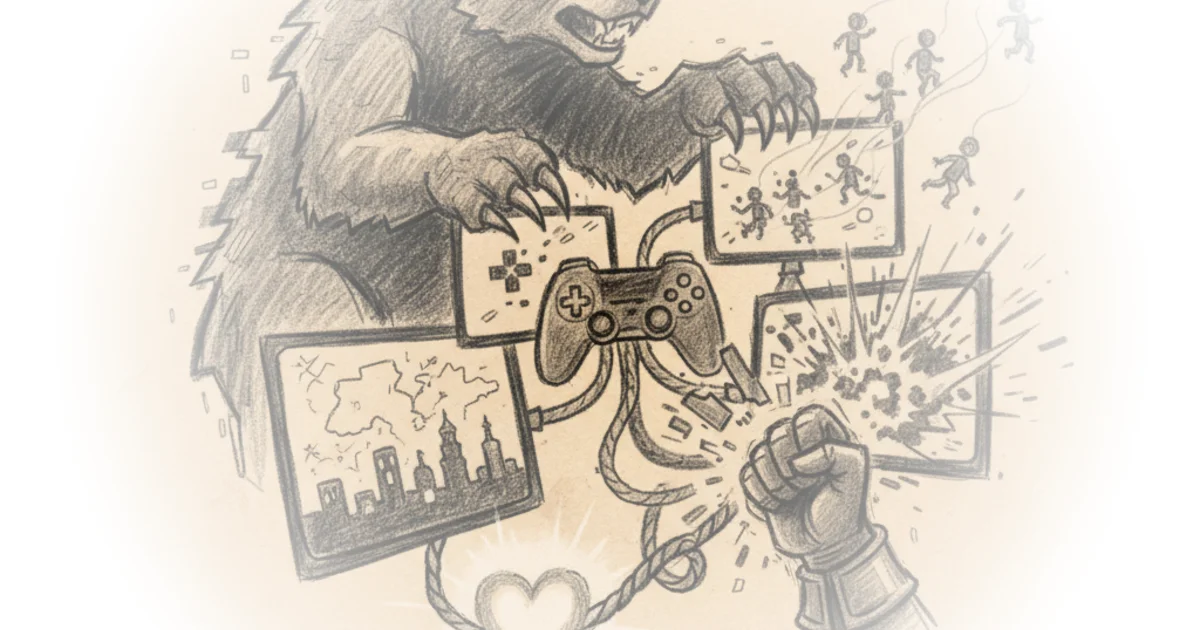
The piece argues that the recruitment process is a calculated escalation, starting with benign tasks like marking locations on maps and spiraling into espionage or terrorism. Mak notes that the trap is often sprung not when the child accepts the first task, but when they try to quit. "Certain means of manipulation turn on, and it is very difficult to get rid of them," Filonenko explains to Mak. "Let's say, with the help of artificial intelligence, they would receive some child's material and blackmail the child with them. They can even threaten to kill his or her parents." This framing is crucial; it shifts the narrative from one of criminal culpability to one of victimization, highlighting how the state's inability to protect its digital borders is being exploited by adversaries who weaponize family bonds.
"We shouldn't underestimate Russians. They are extremely smart, cunning, cold-blooded, and cruel. And they treat people who cooperate with them as consumable material."
Critics might argue that focusing on individual recruitment cases distracts from the broader strategic failures of the Ukrainian state to secure its digital infrastructure. However, Mak's reporting suggests that the threat is too decentralized and personal for traditional state-level defenses to fully mitigate, requiring a societal shift in how families interact with technology.
The Mechanics of Coercion
Mak delves into the specific platforms where these interactions occur, moving beyond the usual suspects to highlight the ubiquity of Telegram and the rising danger of gaming forums like Discord and Steam. The author presents a stark statistic that underscores the scale of the problem: "One in five Ukrainians recruited by Russia to commit crimes is below 18," according to the Security Service of Ukraine. This data point, paired with the observation that 2025 saw a fourfold increase in crimes committed by children against national security, serves as a grim indicator of the campaign's success.
The article effectively dismantles the assumption that economic desperation is the primary driver. Mak reports that Filonenko initially believed poverty made children vulnerable, only to find that "Even if the parents can afford most things their child needs, he or she might still jump at the chance to earn some money independently." This insight is vital for a global audience; it suggests that digital radicalization is not merely a symptom of poverty but a psychological vulnerability that can strike any demographic. The author uses this to pivot toward the psychological profile of the victim, noting that "unjustified self-confidence" is a common trait among those who fall prey to these schemes.
The narrative also touches on the historical context of information warfare, implicitly linking these tactics to the long-standing strategies of nations like Russia, China, and Iran to leverage online tools for agenda-pushing. As Mak notes, "In the age of the internet, nations whose governments control the press and the flow of information... are increasingly leveraging online tools to push their agendas." This connects the specific Ukrainian tragedy to a broader, global trend of state-sponsored digital manipulation that threatens democratic societies worldwide.
A Path Forward Through Trust
Rather than offering a purely technical solution, Mak highlights a human-centric approach championed by Filonenko: building trust through communication. The article argues that parents cannot simply block apps or monitor screens; they must understand the culture of the platforms their children inhabit. "Kids need to know you will not scold them if they come to you with a problem or ask for advice," Filonenko tells Mak. "Also, you need to do a huge pile of work and figure out what skins are there in Brawl Stars and what a standoff is."
This section of the piece is perhaps its most actionable. It reframes digital literacy not as a technical skill set, but as a form of parental engagement. Mak illustrates this with the story of two boys from Kryvyi Rih who successfully reported recruiters and were rewarded, suggesting that empowerment is a viable defense. "In 2025, about 120 potential victims reported attempts to recruit them for dangerous tasks," Mak writes, showing that awareness is already yielding results. However, the author is careful not to paint this as a silver bullet, acknowledging that the "spark" of interest in learning is key to keeping up with rapidly evolving threats.
"Communication has to be systematic... If they start to pull a joke from Roblox, it is very difficult to communicate without understanding what Roblox is."
A counterargument worth considering is whether this burden of education falls too heavily on individual families in a society already fractured by war. While the article celebrates the success of community-led initiatives, the sheer scale of the threat—where 92% of the Ukrainian population uses Telegram weekly—suggests that without robust state-level digital literacy programs in schools, the burden on parents may be unsustainable.
Bottom Line
Tim Mak's reporting succeeds by humanizing a complex digital threat, revealing that the most effective weapon in Russia's arsenal is not a missile, but the psychological vulnerability of a teenager seeking connection. The piece's greatest strength is its refusal to treat these children as mere statistics or criminals, instead exposing the sophisticated, predatory machinery used to ensnare them. However, the article leaves the reader with an unsettling question: in an era where the battlefield is everywhere and nowhere, can trust alone be enough to stop a state that treats its own citizens as "consumable material"? The answer likely lies in a global reckoning with how we protect the next generation in the digital age.