Luke Savage delivers a scathing critique of the mainstream liberal establishment's intellectual retreat, arguing that its current defense of freedom is less a coherent philosophy and more a desperate bid for elite solidarity. The piece is notable not for what it says about policy, but for what it reveals about the moral bankruptcy of a class that prioritizes personal comfort over human rights, using a bizarre anecdote about a Star Wars book party to deflect from the crimes of a war criminal.
The Illusion of Consensus
Savage begins by dismantling the premise of Cass Sunstein's new book, On Liberalism: In Defence of Freedom. He argues that Sunstein, a former high-ranking official in the Obama administration, has constructed a definition of liberalism so broad it becomes meaningless. Savage writes, "The vision of liberalism he offers Chotiner is politically and philosophically all over the place, and I'd argue the only thing that really holds it together is less a coherent set of moral and ethical commitments than the deep sense of solidarity the author feels with fellow elites across the partisan divide." This framing is sharp because it exposes the hollowness of a political identity that claims to bridge divides while ignoring the fundamental differences in how those divides affect human lives.
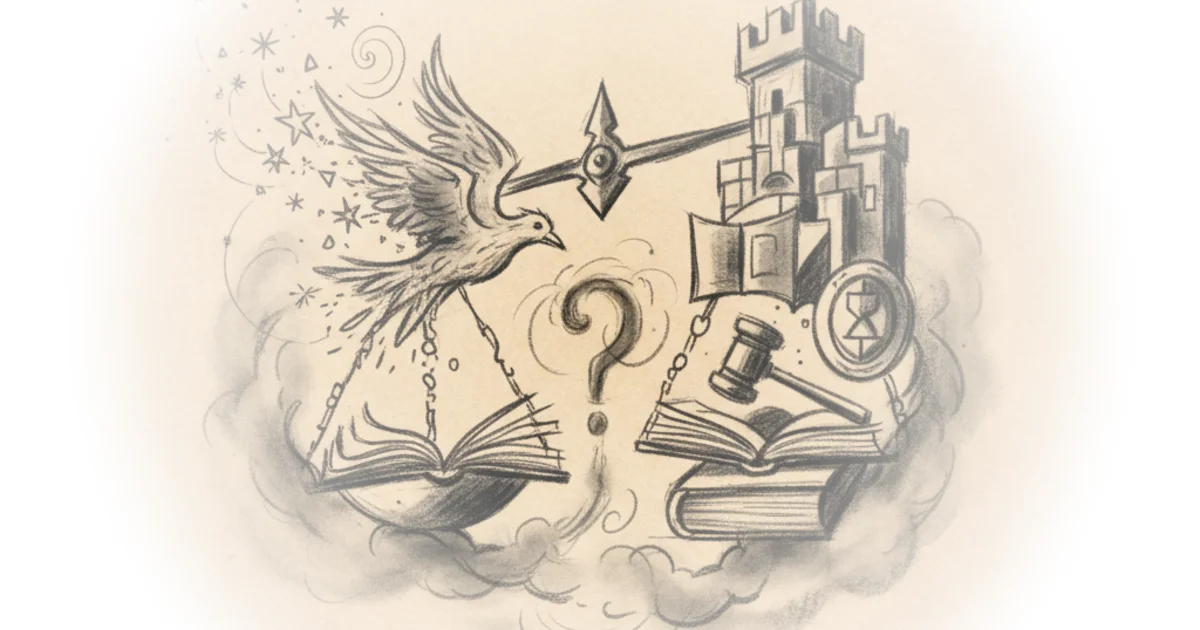
The author points out that Sunstein's definition includes figures as disparate as Friedrich von Hayek and John Rawls, or Ronald Reagan and Franklin Roosevelt. Savage notes that this approach relies on "horseshoe theory," implying a false equivalence between critics on the left and the right. He writes, "Those of us on the left generally want greater democracy and abundant universal public goods, whereas liberalism's critics on the right seek theocracy, legalized racial discrimination, and minority rule." This distinction is crucial; it highlights that conflating these opposing forces serves to protect the status quo rather than advance freedom. Critics might argue that broad coalitions are necessary for political stability, but Savage effectively counters that stability without moral clarity is merely stagnation.
The liberal, according to Sunstein's thirty-four theses, believes in economic redistribution but also may reject it.
The Star Wars Deflection
The most damning section of Savage's commentary focuses on Sunstein's defense of his friendship with Henry Kissinger, a figure widely regarded as responsible for massive loss of life in Southeast Asia and Latin America. When pressed on this relationship, Sunstein does not address the human cost of Kissinger's policies. Instead, he pivots to a story about a book party. Savage describes this exchange as "feigning earnestness" and "morally evasive." He writes, "Sunstein's defence of liberalism is about as unconvincing as his argument that it's okay to be friends with war criminals because they like happen to like the book you wrote about Star Wars."
This anecdote is not just a gaffe; it is symptomatic of a deeper rot. Savage argues that for the liberal intelligentsia, political identity has become a matter of "disposition rather than something distillable to clear moral or ethical premises." He observes that Sunstein claims, "I feel generally very grateful for friendship, and he was, when I knew him, a person of immense kindness," while ignoring the millions who suffered under that same man's orders. This refusal to engage with the reality of violence in favor of personal anecdotes reveals a profound disconnect from the suffering of others. The administration and the diplomatic corps often operate in this sphere, where personal relationships can obscure institutional accountability.
Savage connects this to the broader failure of the mainstream liberal project, citing Samuel Moyn's observation that liberals have retreated into abstractions like "freedom" and "democracy" to distract from their own errors. He writes, "In an era convulsed by war, revolution and counterrevolution it discovers the virtues of 'moderation.'" This moderation, Savage suggests, is a luxury that those facing existential threats cannot afford. The human cost of this intellectual scleroticism is real; it manifests in the inability of the Democratic Party to respond meaningfully to human rights crises, such as the ongoing conflict in Gaza, where the administration has largely ignored pleas from human rights organizations.
The Haunted Air
Ultimately, Savage concludes that the modern liberal tradition has become a "blur in the realm of ideas," where momentary concurrences are mistaken for deep harmonies. He quotes Irving Howe to describe this state: "Liberalism dominates, but without confidence or security; it knows that its victories at home are tied to disasters abroad." This is a powerful indictment of a political philosophy that has lost its way. Savage argues that the solution is not to abandon liberalism entirely, but to strip away its contradictions and reclaim its egalitarian impulses. He writes, "If liberalism has made vital contributions to egalitarian thought and been complicit in the likes of imperial violence and war, why not simply take the former and reject the latter?"
This call to action is the piece's strongest element. It challenges readers to stop accepting vague definitions of freedom that serve the powerful and to demand a politics that is specific, moral, and accountable. The alternative, as Savage implies, is a continued drift toward a hollow centrism that protects the elite while the world burns.
Liberalism as an ideology, as "the haunted air," has never been stronger in this country; but can as much be said of the appetite for freedom?
Bottom Line
Savage's critique is a necessary corrective to the self-congratulatory tone of the liberal intelligentsia, exposing how a focus on abstract consensus has blinded the establishment to concrete human suffering. While some may argue that his dismissal of Sunstein's work is too harsh, the evidence of moral evasion regarding Kissinger and the Gaza crisis makes his argument impossible to ignore. The reader must watch for whether the broader Democratic coalition can move beyond this "haunted air" of moderation and embrace a more robust, ethical vision of freedom that prioritizes human life over elite comfort.