Chris Chappell transforms a live broadcast into a visceral document of institutional overreach, stripping away the sterile language of diplomatic reports to reveal the raw friction between a populace and an unyielding state. While most coverage focuses on policy statements or casualty counts, Chappell's footage captures the immediate, sensory reality of a city where the right to assemble is met with water cannons and the blinding glare of tactical lights. This is not just a report on a protest; it is an on-the-ground indictment of how the executive branch's interpretation of "public order" has effectively criminalized dissent in a special administrative region.
The Theater of Enforcement
Chappell's framing is distinct because he positions himself not as a detached observer, but as a participant in the chaos, using his own physical discomfort to illustrate the broader atmosphere. He describes the scene as a "totalitarian nightmare world," a phrase that immediately sets a high-stakes tone. The commentary gains power from the juxtaposition of the holiday setting against the militarized response. "This is Hong Kong on national grand celebration of 70 years of Chinese Communist Party," Chappell notes, highlighting the irony that the state's biggest day of celebration coincides with its most aggressive suppression of local voices. The argument here is that the violence is not an anomaly but a feature of the system's operation.
"This is the failure of communism right here. This is communism."
The author's logic suggests that the crackdown was inevitable, a direct result of the "one country, two systems" framework failing to deliver on its promises. He argues that observers could have predicted this outcome decades ago, stating, "It was like watching a bus go off a cliff. Everyone knew it was going to go off the cliff." This historical determinism is a strong rhetorical move, shifting the blame from a specific day's events to a long-term structural flaw. However, critics might note that framing the situation as purely inevitable risks absolving the specific tactical choices made by local police commanders on the ground, choices that could have been de-escalated.
The Targeting of the Press
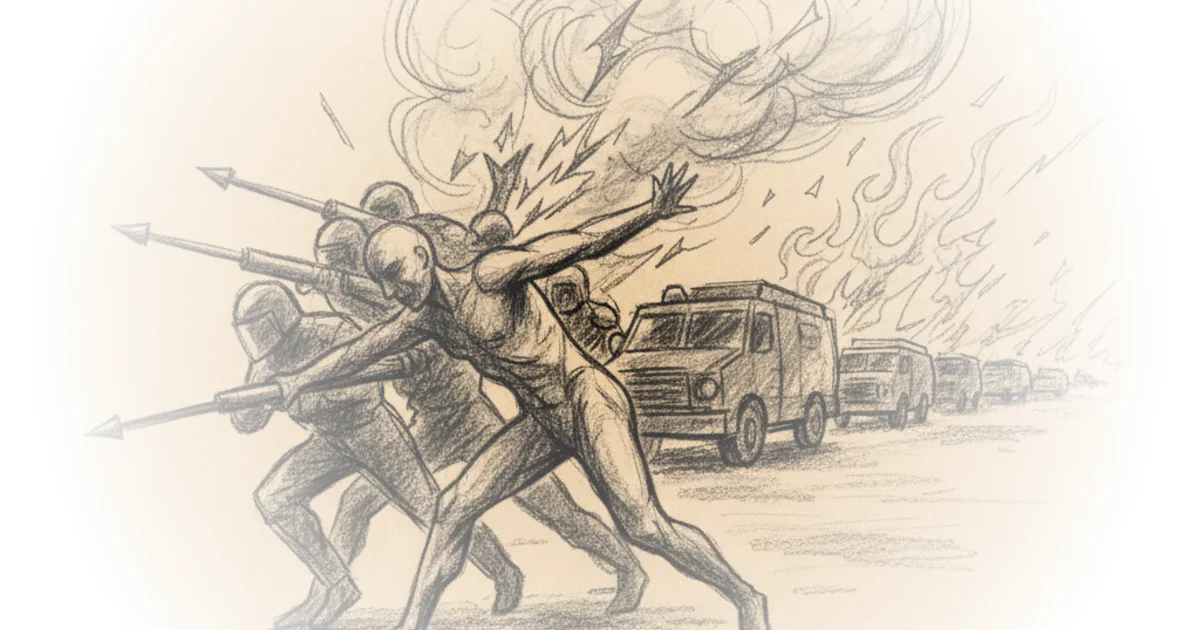
Perhaps the most compelling aspect of Chappell's coverage is his focus on the specific tactics used against journalists. He details how authorities use high-intensity lights to blind cameras and physically shove reporters out of the frame, treating the press as an obstacle rather than a constitutional right. "Why are the police breaking up a public assembly and shining light trying to disrupt the press from reporting this?" he asks, pointing out the absurdity of the situation. The narrative suggests that the administration is not just suppressing protesters but is actively trying to control the visual narrative of the event.
Chappell describes a moment where an officer, while pushing him with a baton, politely said, "Please move." He uses this interaction to underscore the dissonance of the situation: "He said please to please move as he was pushing me with his baton but he said please." This detail humanizes the absurdity of the enforcement, suggesting a bureaucratic coldness masked by superficial civility. The coverage implies that the "rule of law" is being weaponized, where the police act with impunity while maintaining a veneer of order.
"It's almost as if they're ashamed of... I think they need a time out to think about what they're doing."
The author argues that the presence of the media is the only thing holding the police back from total chaos, suggesting that without cameras, the violence would be even more severe. "I actually very comforted here watching because definitely the presence of the media and does control what they're doing," he observes. This is a crucial point: the administration's actions are performative, designed for a domestic audience that may never see the unfiltered footage Chappell is capturing.
The Human Cost and the Future
As the broadcast progresses, the tone shifts from observational to deeply concerned about the long-term implications. Chappell describes seeing injured protesters, including an elderly man, and notes how the police attempt to cover up these injuries to prevent documentation. "Matt and I did see like a couple of injured protesters... the police cover it up so they so we can uh difficult for us to shoot," he explains. This points to a systematic effort to obscure the human cost of the crackdown.
The commentary concludes with a warning to the international community. Chappell asserts that the situation will not resolve itself without external pressure, stating, "It's going to take international pressure to really..." The argument is that the local population is trapped between the will of the people and the will of Beijing, with no legal recourse. "This is the will of the people of Hong Kong on this side and the will of Beijing on that side," he summarizes, framing the conflict as a zero-sum game where the administration has chosen force over dialogue.
"Hong Kong falls apart and I just gotta wonder this is obviously what was going to happen to a long time... there was no way the Chinese Communist Party was going to honor its agreement for the one country two systems."
Critics might argue that Chappell's narrative is heavily skewed toward the protesters, potentially overlooking the complexities of maintaining public order in a city facing genuine security threats. Yet, the sheer volume of footage showing disproportionate force against peaceful marchers makes this a difficult counterargument to sustain. The evidence presented suggests that the administration's primary goal is not safety, but the assertion of absolute control.
Bottom Line
Chappell's coverage succeeds by bypassing the political spin to deliver a raw, unfiltered account of state power in action, making a compelling case that the "one country, two systems" promise has effectively collapsed. The strongest element of the argument is the detailed documentation of anti-press tactics, which reveals an institutional fear of transparency. The biggest vulnerability remains the lack of a clear path forward for the administration, as the reliance on force appears to be deepening the very instability it seeks to quell. Readers should watch for how the international community responds to these documented violations, as the administration's strategy relies heavily on the world eventually looking away.