Matt Stoller delivers a jarring diagnosis: the left isn't failing because it lacks good ideas, but because it has been systematically stripped of the institutional machinery required to execute them. While most political analysis fixates on polling numbers or personality clashes, Stoller traces a forty-year decay in governing capacity that leaves populists like New York Mayor Zohran Mamdani fighting with one hand tied behind their backs.
The Asymmetry of Power
The piece opens by contrasting two recent moves by the Mamdani administration. On one side, there is a decisive victory: reshaping the Rent Guidelines Board to freeze rents for a million apartments using savvy legal tactics. On the other, a stumble where the Department of Education had to retreat from an AI proposal after public backlash. Stoller argues this gap reveals a deeper truth about modern governance.
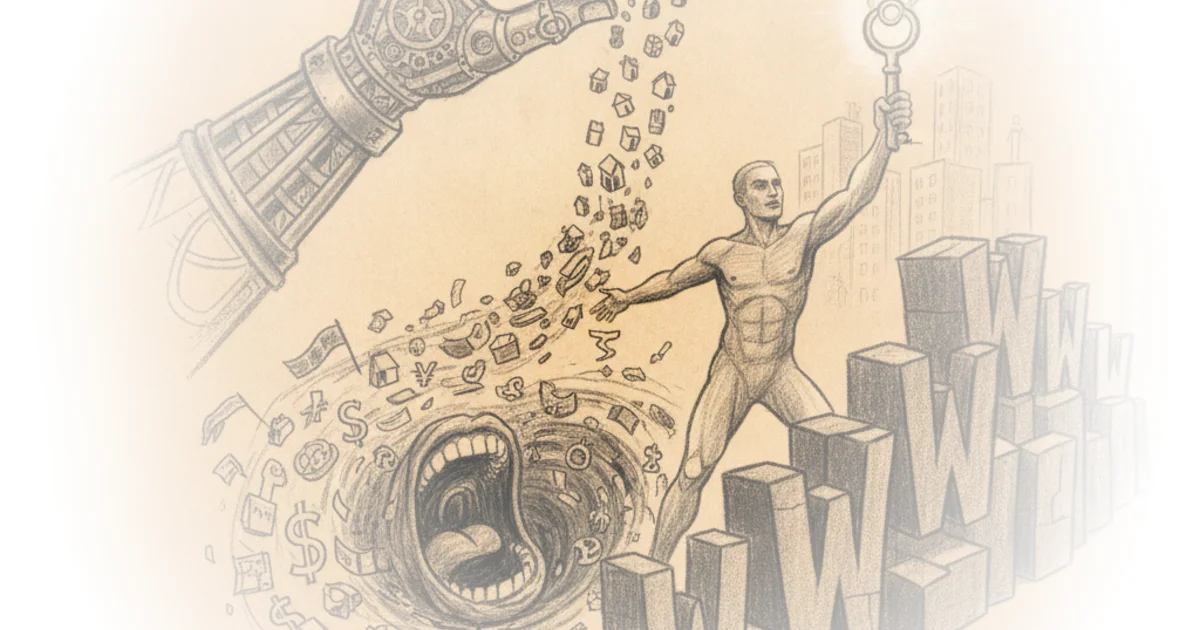
"Mamdani has been most successful where his people have discovered credible legal tools to govern," Stoller writes, noting that consumer protection chief Sam Levine is effectively taming corporate power by blocking junk fees and forcing gig economy giants to stop cheating workers. This success terrifies Wall Street. As one lobbyist admitted, "if not [for this specific strategy], we are in for a rough ride." The fear isn't just about policy; it's about competence.
Stoller points out that Levine works because he understands the law and business mechanics. However, such figures are rare. The article highlights a stark contrast with the right, where officials like Russ Vought of the Office of Management and Budget operate with creative, albeit malevolent, effectiveness. "There is basically no analogue on the left, little capacity to govern," Stoller asserts. This isn't just an observation; it's a warning that without technical mastery, political mandates remain hollow.
The Great Lobotomy of 1995
To explain this void, Stoller takes readers back to a specific inflection point: the Republican takeover of the House in 1995 under Newt Gingrich. This wasn't merely a change in leadership; it was an institutional dismantling. Gingrich and his allies sought to "fundamentally re-gear Congress so it could no longer serve as the brains for the Democratic Party," according to Stoller's analysis.
The strategy was ruthless. The Office of Technology Assessment, which provided long-term scientific studies on everything from climate change to space shuttle decommissioning, was killed. Congressional staff were slashed by a third. Most damagingly, the Democratic Study Group and other networks that organized legislative rhythm disappeared. "It's our intention to largely replace CBO with more moderate economists," Gingrich's spokesperson declared at the time, signaling a shift away from independent analysis toward ideological conformity.
Stoller paints a vivid picture of what was lost: an era where members like Wright Patman could deploy blank subpoenas and travel budgets to investigate banks on their own terms. "His people were confident they could do as good a job as the bankers in running powerful institutions," Stoller notes, contrasting this with today's reality where Congress is staffed by young operatives who lack deep subject matter expertise.
Gingrich struck the death blow to that culture, and the House was soon staffed by 25-year-olds.
The right didn't just strip the left; they built parallel institutions. Through the "K-Street Project," corporate lobbyists were forced into GOP loyalty, shifting policy research from public committees to private, corporate-backed think tanks. The result was a Congress that could no longer govern, only react. Critics might argue that centralization under Nancy Pelosi after 2006 offered some efficiency, but Stoller counters that she simply accepted the lobotomized state of affairs because "living in Newt Gingrich's world was quite comfy."
The Crisis of Expertise
The consequences of this decay became undeniable during the 2008 financial crisis and subsequent inflation spikes. When the House Financial Services Committee faced a meltdown, it issued zero subpoenas and lacked access to basic data tools like Bloomberg terminals. "Dodd-Frank was written by Goldman Sachs lobbyists, passed to the Fed, to Treasury, and then to Barney Frank," Stoller explains. The legislative branch had outsourced its brain.
This dependency continued into the Obama and Biden administrations. Despite having brilliant outliers like Elizabeth Warren, the broader apparatus deferred to Wall Street economists who were often wrong about inflation. "When prices began spiking, there was simply no capacity to even assess what was happening," Stoller writes. The administration was paralyzed, caught between political operatives sensing voter rage and economists insisting everything was fine.
The culmination of this failure is visible in the current political landscape. When Kamala Harris debated her opponent, she couldn't name a specific policy alternative for inflation, relying instead on "the best economists in our country." Stoller argues that for thirty years, Democrats have deferred their understanding of money and power to a cloistered class. "When these experts are wrong or unsure, the Democratic Party was unable to govern," he concludes.
The Path Forward
Stoller's final critique is that the modern left, while correctly identifying corruption, still lacks an intellectual culture capable of governing massive institutions like the Federal Reserve, the military, or Big Tech. "Is there anyone on the left who knows trains, or airline regulation?" he asks rhetorically. The answer, he suggests, is a resounding no.
The article implies that without rebuilding the internal capacity to understand and regulate these levers of power, populism will remain a protest movement rather than a governing force. Stoller warns that until the left can match the right's institutional creativity—without the moral bankruptcy—the status quo will hold firm.
Bottom Line
Stoller's most compelling argument is that the left's weakness is structural, not ideological; they have been fighting a war with weapons they were forced to surrender decades ago. The piece's vulnerability lies in its somewhat deterministic view of history, potentially underestimating how quickly new coalitions can build capacity if the political will exists. Readers should watch for whether emerging populist leaders can actually reverse the 1995 dismantling or if they remain trapped by the very institutions Stoller describes as broken.