Sara Hildreth has uncovered a quiet crisis in the modern reading life: we are no longer choosing books based on our own curiosity, but on the algorithmic validation of a digital crowd. While most coverage of "BookTok" or "Bookstagram" focuses on which titles are selling, Hildreth's survey of nearly 300 readers reveals a deeper psychological shift—a collective erosion of trust in our own literary instincts. This is not just about what we read; it is about how the internet has rewired the very mechanism of discovery, turning the solitary joy of opening a book into a performative act of data verification.
The Paradox of Discovery
Hildreth begins by acknowledging the obvious upside: the digital sphere has dismantled traditional gatekeepers and exposed readers to a wider array of voices. She notes that for many, "being exposed to and interacting with a wide variety of readers continues to broaden what we read." This is a crucial observation. The internet has allowed readers to bypass the limited curation of local bookstores or traditional media, finding translated works and mid-century fiction that might otherwise remain hidden. One respondent told Hildreth, "Following a broader set of readers has opened my eyes to new authors and new genres I might not otherwise have found."
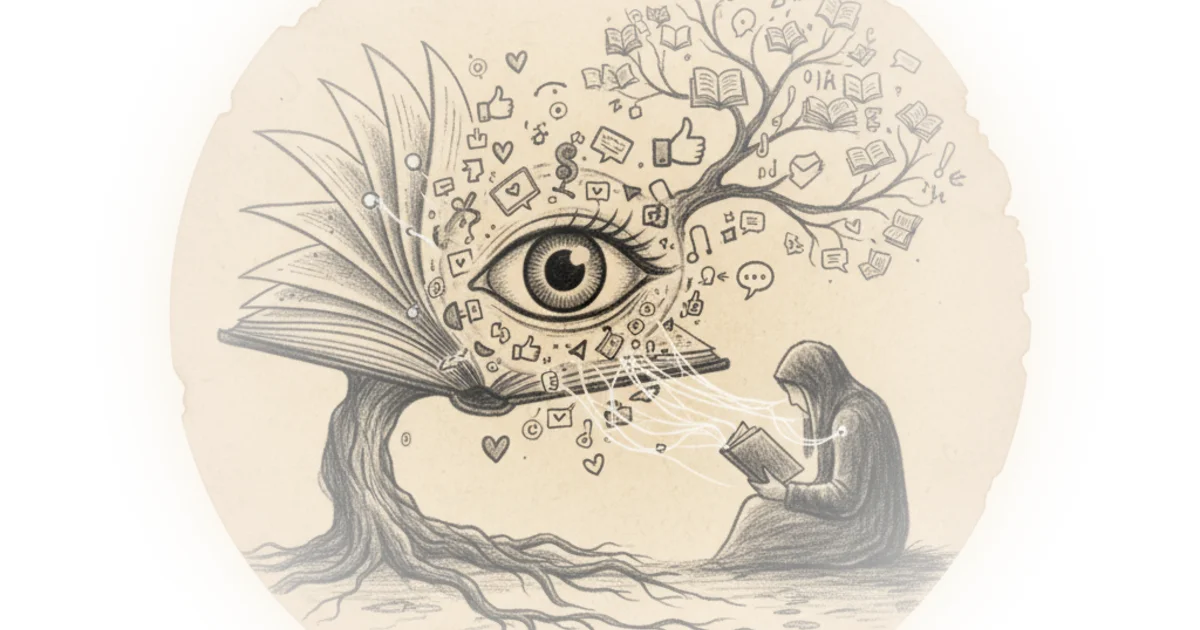
However, Hildreth argues that this expansion comes with a hidden tax on our autonomy. The sheer volume of content creates a paradox where having more choices leads to less confidence. As she puts it, "In being inundated new releases, books of the moment, and what other people are reading, some of us are forgetting how to trust ourselves and our own taste." The argument here is that the noise of the feed drowns out the internal signal of personal preference. We are no longer reading to satisfy our own hunger for story; we are reading to satisfy an external metric of what we "should" be consuming.
"FOMO has made me pick up books that I might not otherwise, but I also feel that I have lost my own personal taste in reading. I'm not even sure what it is anymore because of taking in so many Bookstagram posts."
This phenomenon mirrors the mechanics of the "fear of missing out" (FOMO) discussed in related deep dives on digital behavior, where the anxiety of being out of the loop drives consumption more than genuine interest. The result is a reading life that feels crowded and performative rather than intimate and satisfying.
The Tyranny of Expectations
Perhaps the most damaging effect Hildreth identifies is the pre-loading of expectations. Before the era of ubiquitous online reviews, a reader approached a book with a relatively blank slate. Now, the experience is often ruined before the first page is turned because the hype has created a ceiling that the book cannot possibly reach. Hildreth writes, "Before social media was awash with readers sharing their reviews, rankings, and star ratings, we went into books with fewer—perhaps even zero—expectations." The modern reader, however, is burdened by the collective opinion of thousands.
The survey responses reveal a painful cycle of disappointment. "It's not that bad—but when a particular book is so hyped by many people that my expectations exceed reality, a book that is good still feels a bit of a letdown when it ought not," one reader admits. Hildreth suggests that this constant calibration against the crowd makes it nearly impossible to enjoy a book on its own merits. We are no longer judging the book; we are judging how well the book matches the marketing machine surrounding it.
Critics might note that Hildreth romanticizes a pre-digital era where word-of-mouth was just as powerful, albeit slower. The difference, however, is the speed and scale of the modern consensus. In the past, a bad recommendation was a personal failure; today, a bad recommendation is a global event that can tank a book's reputation before a single copy is sold.
The Death of the Unvetted Book
The most disheartening finding in Hildreth's analysis is the rise of the "vetted" reading habit. Readers are increasingly hesitant to pick up a book unless it has been endorsed by a trusted influencer or carries a high rating on a platform like Goodreads. This represents a fundamental shift in agency. As Hildreth observes, "Many of us have lost the ability to just pick up a book that calls to us and read it just because. We want the data first." The thrill of the unknown has been replaced by the safety of the data.
This behavior creates a feedback loop that favors the new and the popular at the expense of the backlist and the obscure. "I read a lot more new releases than I would like and they tend to be ones that I feel lukewarm about," one survey participant confessed. The focus has shifted so heavily toward the "front list" that books published just a few years ago are treated as historical artifacts rather than living works. This mirrors the "filter bubble" effect, where algorithms and social reinforcement narrow our world until we only see what is already popular.
"I am now reluctant to choose books that haven't been 'vetted' by a reader I follow on social media. I actually miss choosing books that speak to me, but I am so scared of getting a lemon I don't do it."
Hildreth challenges her readers to break this cycle, suggesting a radical act of rebellion: pick up a book with no reviews and no buzz. "It might not be your favorite book of the year, but it will remind you that you can," she writes. This is a call to reclaim the risk of reading. Without the risk of a bad book, there is no possibility of a truly great, unexpected discovery.
Bottom Line
Sara Hildreth's analysis lands with force because it diagnoses a specific, modern malady: the outsourcing of our literary taste to a digital crowd. Her strongest argument is that the convenience of social media recommendations has come at the cost of our ability to trust our own instincts. The piece's vulnerability lies in its reliance on a self-selected group of online-savvy readers, which may overstate the problem for the general population, but the trend is undeniable. The reader should watch for how publishers and platforms will continue to weaponize this anxiety, but the real solution lies in the individual's willingness to read without a safety net.