Derek Muller has done something no one else has: he took the first public fully driverless ride at night, and he's here to tell us why we should want these vehicles on roads now. This isn't a speculative future — it's already happening in Phoenix, Arizona, and the data is staggering.
Muller opens with his experience inside a Waymo vehicle, noting that "there is no driver in this car" — and then immediately pivots to what may be the most counterintuitive argument of the piece: we actually want machines handling difficult situations. He writes about airplanes: "if it's bad weather you actually want the plane flying itself." The parallel draws from elevator adoption history, where driverless elevators eventually became the norm after initial public resistance.
If you found a driver in an elevator today, you would wonder why are they there.
The argument hinges on hard numbers. Muller cites that "60 million people were killed on the road" throughout the 20th century — roughly equivalent to an extra world war's worth of deaths. The National Transportation and Safety Board identified human error as the cause of 94 percent of accidents. This is the core of his case: we blame ourselves, but we're not very good.
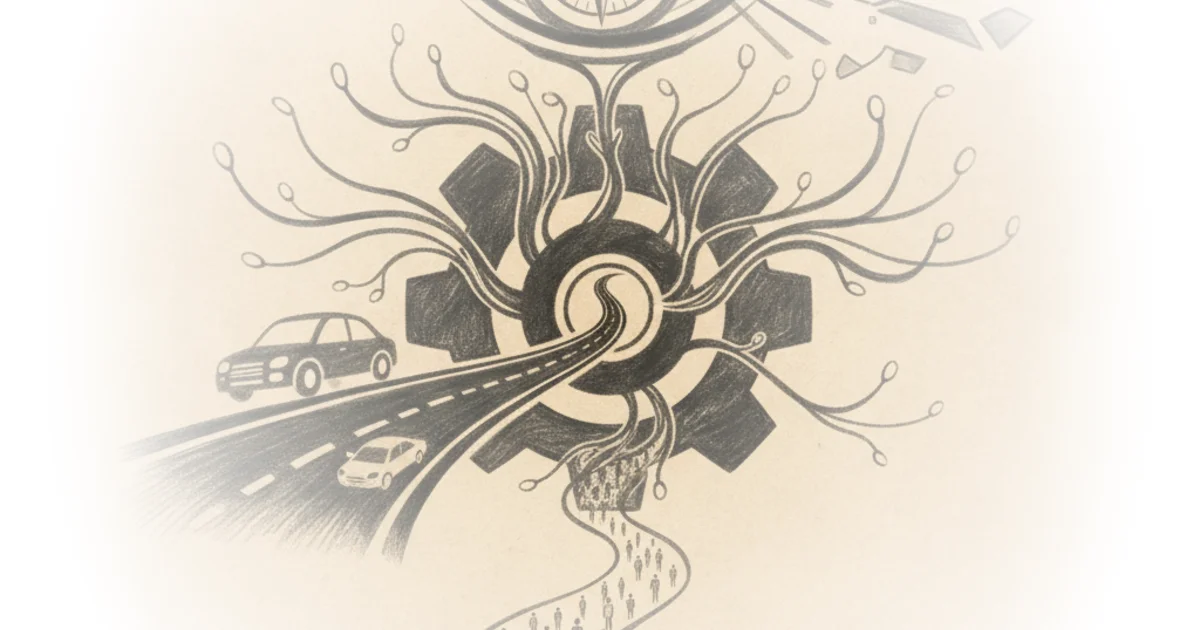
The Technology Already Works
What makes this piece distinctive is its insistence that the technology isn't "over 10 years away" — it's functional now under good conditions. Muller acknowledges that roads aren't well-maintained everywhere and people don't always stay in their lane, making autonomous driving difficult for computers. But at least under favorable conditions, the technology works.
The sensors are extraordinary: lidar capable of seeing 300 meters away, 29 cameras providing full 360 vision, microphones to detect sirens and pull over accordingly. The vehicle doesn't just see where things are — it predicts where they're likely to go, weighting options about whether a pedestrian will cross or keep going straight.
Muller quotes Waymo's safety framework: "we would never launch a rider-only service if we did not meet that base safety framework." They've accumulated over 20 million miles of real-world driving data — which he notes would take an average human driver a thousand years to accumulate. Add in simulation, and it's 20 billion miles of experience.
The Adoption Question
The piece's most compelling element is the psychological shift. Muller describes how riders forget they're in a driverless vehicle within two minutes if the system provides safety cues — they start talking to passengers, stop paying attention to what's happening around them. That's actually dangerous: drivers in early Google tests were "rummaging around in their bags or checking phones putting on makeup or even sleeping in the driver's seat."
This is why Muller argues for level four autonomy — no human required at all. The problem with lower levels is that humans trust technology too much and become less prepared to take over.
Critics might note that the comparison to elevator adoption understates how different transportation safety is from building infrastructure. Elevators don't involve other vehicles, pedestrians, or unpredictable environments. The stakes are fundamentally higher — and regulators will need extensive experience before widespread deployment.
Bottom Line
Muller's strongest argument is the data: autonomous vehicles have driven millions of miles with fewer accidents than human drivers would produce. His biggest vulnerability is the assumption that reducing fatalities automatically translates to public acceptance — but trust doesn't scale as neatly as elevator technology did. The piece succeeds because it addresses both the technical promise and the psychological barrier, leaving readers to decide whether two minutes of forgetting is enough time to change transportation forever.