BobbyBroccoli dismantles the myth of a scientific miracle by exposing a toxic workplace culture that turned ambition into coercion. This isn't just a story about a retracted paper; it is a forensic look at how institutional prestige can blind the world to ethical rot, revealing that the "magic" of the breakthrough was actually the result of systematic exploitation. The piece forces us to ask why the scientific community was so desperate for a hero that they ignored the screams coming from the lab.
The Cult of the "Family" Lab
The narrative begins by peeling back the layers of Dr. Huang Wu's public persona, revealing a man who weaponized the concept of "family" to enforce grueling labor conditions. BobbyBroccoli writes, "Huang was the Korean Elvis, a humble hard-working Superstar scientist who many thought could win the country its first ever Nobel Prize." This celebrity status created a shield, allowing the lab to operate with impunity. The author argues that this "benevolent Mythos" was a deliberate tactic to extract maximum labor from researchers who felt desperate to prove their worth.
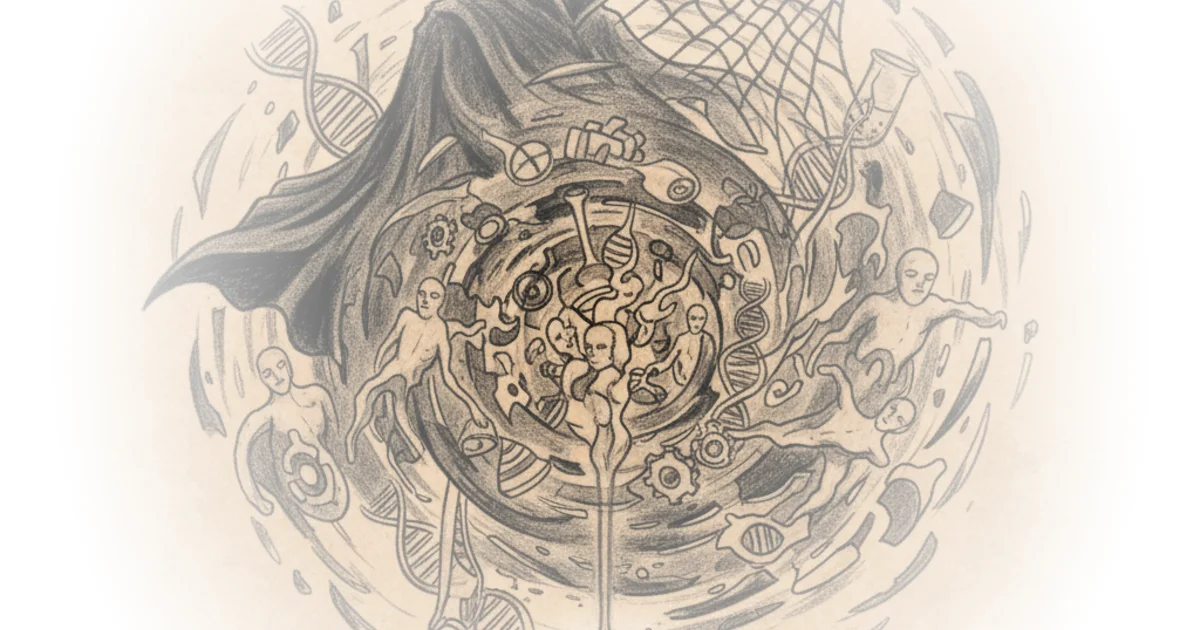
The evidence of this exploitation is stark. BobbyBroccoli notes that "the researchers needed to go to the slaughterhouse by 5am every day their monthly salary was less than 500 pounds." The imagery is visceral, describing a workplace "full of Screams and flooded with blood." This framing is effective because it strips away the sterile language of science to reveal the human cost. The author points out that Huang himself was absent from the manual labor, often issuing vague commands from a temple, yet the culture demanded absolute obedience.
"Huang in his own biography recalls two occasions where Junior lab members were punished for what I feel like are pretty mild things... both individuals were forgiven only after they profusely apologized with tearful faces."
This dynamic created a closed loop of control where dissent was impossible. BobbyBroccoli highlights the absurdity of the lab's catchphrase: "Monday Tuesday Wednesday Thursday Friday Friday Friday Friday," a joke about working weekends that became a reality for everyone. The author suggests that this "toxic parent and child Dynamic" was not an anomaly but a feature of the environment, designed to isolate researchers until they had no life outside the lab. Critics might argue that high-pressure environments are common in elite research, but the specific details of humiliation and financial precarity here suggest something far more predatory than mere ambition.
The Ethics of Egg Extraction
The investigation shifts from labor abuses to the core scientific fraud: the sourcing of human egg cells. The central ethical violation was the alleged coercion of subordinate researchers to donate their own eggs, a practice that violates the Declaration of Helsinki. BobbyBroccoli explains that extracting eggs is risky and that the claim of having 200 eggs from only 16 donors was statistically improbable without illegal payments or coercion.
The turning point came when a reporter from Nature interviewed a co-author who initially admitted, "I can just tell you about my own experience giving eggs." This admission implied that the researchers were not just working on the project but were the subjects of it. The author describes this as "appalling coercing is subordinate to undergo an incredibly risky medical procedure." The narrative captures the terrifying moment the whistleblower realized the danger of speaking out, retracting her statement within thirty minutes after being told to stop talking to journalists.
"Coercing is subordinate to undergo an incredibly risky medical procedure is I cannot stress this enough reprehensible a complete violation of ethical boundaries."
BobbyBroccoli argues that the administration's response was to suppress the inquiry rather than investigate it. Despite the bioethics association raising alarms, the presidential advisor shut down any possibility of a formal probe, claiming the issues were already settled. The author notes that Huang's defense relied on patient confidentiality to block any review, a tactic that prevented independent verification. This section highlights a critical failure of institutional oversight, where the desire to protect a national hero overrode the duty to protect human subjects.
The Collapse of the Narrative
When the allegations finally gained traction in the West, the defense mechanism was to dismiss the critics as jealous rivals. BobbyBroccoli writes, "Huang put out a story I think he he helped to have this story uh go around that nature was just jealous of the publication being in science." This deflection worked for a time because the scientific community was hungry for validation. The author points out that "no one wants to debate the ethics because the government is so excited about it most scientists are also worried about a lack of students in science so they don't want to break the excitement either."
The piece effectively illustrates how the "hero narrative" was a collective delusion maintained by the fear of losing a national asset. BobbyBroccoli concludes that Huang was not a humble man but a master of public relations who "sells himself very well." The eventual collapse of the career was not due to a sudden moral awakening from the administration, but the relentless pressure of evidence that could no longer be ignored.
"He knew the story was a potential bombshell and all he could do was wait and see how the world responded turns out not a whole lot happened."
This delay in accountability is the most chilling aspect of the story. The author suggests that the system was designed to protect the institution, not the truth. The "family" dynamic that was sold as a virtue was actually a mechanism of silencing.
Bottom Line
BobbyBroccoli's strongest argument is the exposure of how institutional prestige can act as a blindfold, allowing egregious ethical violations to persist under the guise of national pride. The piece's biggest vulnerability is its reliance on the testimony of a few whistleblowers who were silenced, leaving some gaps in the timeline of the cover-up. Readers should watch for how similar "hero worship" dynamics in other fields might be masking systemic abuse today.
"Huang is a genius in building a Public Image I don't think he is a humble man he's just pretending to be humble he sells himself very well."