In an era obsessed with metrics and quick fixes, Yale University offers a startlingly human counter-narrative: genius is not a static score on a test, but a dynamic force that demands societal transformation. This lecture transcript, stripped of academic jargon, challenges the listener to abandon the comfortable definition of "high IQ" in favor of a more demanding standard where impact, duration, and cultural reach are the true currencies of greatness.
The Elusive Target
Yale University begins by dismantling the historical comfort zone, tracing how definitions of genius have shifted from a mere "capacity" to a visionary act. They cite John Milton's 17th-century view of genius as a "special endowment" before pivoting to a more compelling distinction made by 19th-century philosopher Arthur Schopenhauer. As Yale University puts it, "Person of talent it's a Target that no one else can hit; person of Genius it's a Target that no one else can see." This framing immediately elevates the discussion from skill acquisition to paradigm shifting. The argument gains traction when applied to modern innovators like Nikola Tesla, who foresaw the smartphone a century before Steve Jobs, proving that true genius often operates in a temporal vacuum that others cannot yet perceive.
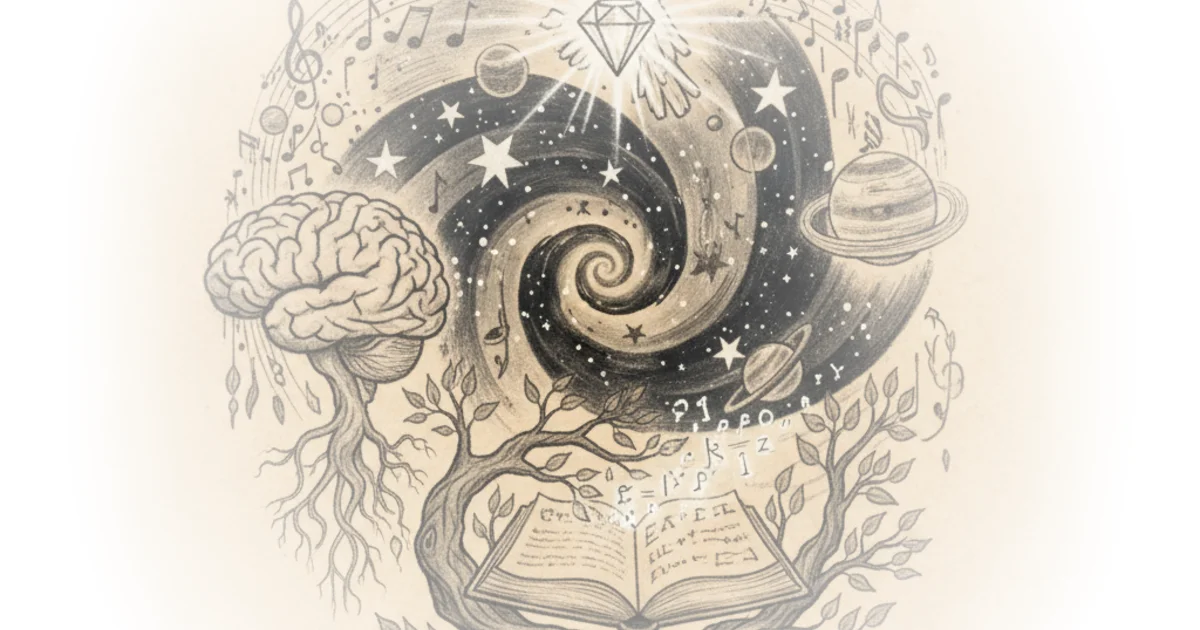
However, the piece wisely avoids romanticizing the solitary genius. Yale University argues that an idea, no matter how brilliant, remains inert without an audience. They pose a provocative thought experiment: if Albert Einstein developed his theories of relativity on a deserted island with no way to communicate them, would he still be a genius? The answer hinges on the definition of impact. "It takes two to effect an act of creativity," the lecture asserts, suggesting that the genius is incomplete without the society that adopts the change. This is a crucial, often overlooked nuance in popular culture, which tends to idolize the individual while ignoring the ecosystem required for their ideas to take root.
Genius is imminent stays within the individual versus genius being impactful on the outside world.
The Weight of Impact
The commentary then moves to the most contentious part of the definition: the necessity of societal change. Yale University draws a sharp line between novelty and creativity, noting that a new way of walking from Grand Central to Times Square is original but useless if no one adopts it. "Something is creative not only because it is original but because it is impactful or useful," they write. This utilitarian lens forces a difficult comparison between different types of contributions. The lecture contrasts the fleeting pleasure of a high-fashion sneaker with the life-saving power of penicillin, estimating that the latter has saved 200 million lives. "With each new model about 250,000 tennis shoes are sold but not 200 million," the text notes, prioritizing the endurance of human life over the transience of consumer trends.
Critics might argue that this utilitarian calculus unfairly diminishes the value of art, literature, or philosophy that does not have a direct, quantifiable effect on mortality rates. A counterargument worth considering is that a single novel or symphony can alter the moral fabric of a civilization just as profoundly as a medical breakthrough, even if the mechanism is less visible. Yet, Yale University stands firm on the metric of "significance," suggesting that the scale of the change is what separates the genius from the merely talented.
The Formula for Greatness
In the final stretch, the lecture attempts to distill this complex philosophy into a usable heuristic. Acknowledging that the full definition is "difficult to remember," the author proposes a simplified formula to measure genius: "G equals S times N times T," where significance, number of people impacted, and duration of impact are multiplied together. This mathematical approach is both brilliant and reductive. It invites the listener to rank historical figures, yet the lecture itself warns against the futility of such comparisons. "Likely we would all agree that's pointless indeed maybe silly," they concede, acknowledging that personal values inevitably color any ranking system.
The piece concludes by returning to a quote often attributed to Einstein: "A genius is someone who takes a very complex idea and turns it into a simple one." Yale University uses this to justify their own simplification, creating a feedback loop where the definition of genius is the ability to simplify the definition of genius. It is a self-aware, almost meta-cognitive ending that leaves the reader with a tool rather than a dogma.
Bottom Line
Yale University's strongest move is reframing genius as a relationship between the creator and the world, rather than a solitary trait of the mind. Its biggest vulnerability lies in the potential to undervalue "quiet" geniuses whose work takes centuries to be recognized or whose impact is cultural rather than material. The reader should watch for how this definition holds up when applied to the digital age, where impact can be instantaneous but often fleeting. Ultimately, the lecture succeeds not by providing a final answer, but by providing a rigorous framework for asking the right questions.