In a field often cluttered with abstract theories about states' rights, Yale University's podcast episode cuts through the noise with a visceral, evidence-based argument: the Civil War was not a tragic misunderstanding, but a calculated political rupture driven by raw racial panic. By mining the transcripts of secession commissioners, the hosts reveal that the South's break from the Union was not a defensive legal maneuver, but an aggressive campaign to preserve a racial order that its leaders knew was already collapsing under the weight of its own contradictions.
The Myth of the Single Cause
The conversation, led by historians Beverly Gage, Joanne Freeman, and David Blight, immediately dismantles the search for a singular trigger. Blight insists that "there is never a single cause to anything," framing the conflict instead as a forty-year erosion of political culture. The hosts trace the decay from the Missouri Compromise of 1820 through the fracturing of the party system, arguing that the war became inevitable only when the mechanism for compromise itself was destroyed.
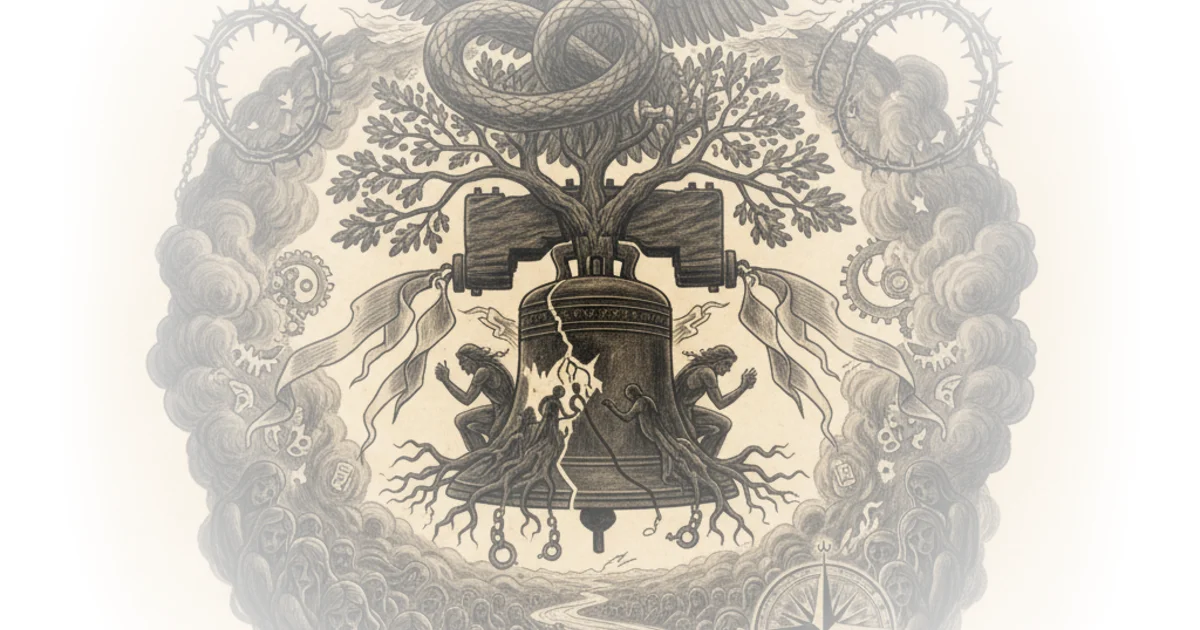
This framing is crucial because it shifts the blame from a momentary lapse in judgment to a systemic failure. The authors suggest that the political system didn't just break; it was actively dismantled by the refusal to accept a changing reality. As Blight notes, the issue was never just about slavery in the abstract, but about whether the nation would have a "free labor future or a slave labor future." This distinction is vital; it transforms the conflict from a philosophical debate into a struggle for the very economic and social DNA of the country.
"The American political party system, the American political culture generally begins to first erode, then dissolve, and then break apart."
The hosts pinpoint the Kansas-Nebraska Act of 1854 as the moment the dam broke. By repealing the Missouri Compromise line, the legislation reopened the question of slavery's expansion, effectively telling the North that their "sacred pledge" was worthless. This move didn't just anger politicians; it radicalized the electorate. The resulting violence in Kansas, described as a "border civil war" where villages fought villages, served as a grim preview of the larger conflict to come. Critics might argue that this focus on the 1850s ignores earlier tensions, but the evidence presented here suggests that prior to this decade, the system had enough friction to hold, however precariously.
The Legal Point of No Return
The discussion turns to the Dred Scott decision of 1857, which the hosts identify as a true "point of no return." Blight explains how the Supreme Court didn't just deny freedom to an enslaved man; it declared that Black people had "no rights which white people are bound to respect." This ruling was a political nuclear bomb that invalidated the Republican Party's core mission to stop the expansion of slavery.
The commentary here is particularly sharp in its analysis of the psychological impact. The decision didn't just create a legal deadlock; it created a conspiracy of fear. The Republican Party, formed in opposition to this ruling, realized that their reason for existing had been legally erased. As Blight puts it, the decision was interpreted by the new party as being told to "take a hike," forcing them to build a coalition based on "vehement opposition" to a court that claimed Black citizens had no future.
"The day after the Dred Scott decision, if you were a black American, you lived in the land of the Dred Scott decision which says you have no future as citizens."
This section effectively highlights how legal rulings can accelerate political polarization. By stripping away the possibility of a legal compromise, the Court forced the nation into a binary choice. A counterargument worth considering is whether the war was truly inevitable after 1857, or if different political leadership could have found a path through the crisis. However, the hosts' evidence of rising voter turnout and the formation of a potent anti-slavery coalition suggests that the political center had already evaporated.
The Fear Thesis and the Racial Order
The most compelling part of the episode is the deep dive into Charles Dew's book, Apostles of Disunion. The hosts use this text to expose the raw, unfiltered rhetoric of the secession commissioners who traveled the South to recruit states to leave the Union. These were not dry legal arguments; they were appeals to "pure racial panic."
Dew's research reveals that while commissioners spoke of "states' rights," their private and public arguments centered on the fear of racial equality and social chaos. They warned that if the Union remained, it would lead to "black people becoming equal to us" and the destruction of the social order. The hosts emphasize that this fear was not abstract; it was a visceral reaction to the possibility of slave insurrections, a fear stoked by events like John Brown's raid on Harper's Ferry.
"Fear bypasses intellect. Fear bypasses reasoning. Fear bypasses all the things that hold people back."
This insight is the episode's strongest contribution. It explains why the South was willing to risk a war they knew they might lose. The leaders weren't acting on a rational cost-benefit analysis; they were acting on a terror that their entire way of life was about to be dismantled. The hosts note that this fear was so potent it drove voter turnout to historic highs, with some states seeing participation rates as high as 90%. The argument that the war was caused by a "conspiratorial vision" of the other side holds up well against the historical record of the 1850s.
"They feared each other for pretty good reasons in some ways."
The hosts also touch on the all-encompassing nature of these worldviews. Slavery wasn't just an economic system; it was the lens through which Southerners viewed family, work, virtue, and the founders. This totalizing worldview made compromise impossible because to compromise on slavery was to compromise on their entire identity. This adds a layer of psychological depth to the political narrative, explaining why the rift became "unreconcilable."
Bottom Line
Yale University's podcast delivers a masterclass in historical clarity, stripping away the myths of states' rights to reveal the terrifying reality of racial panic that drove the nation to war. The strongest part of this argument is the use of primary source rhetoric to show that the South knew exactly what it was fighting for: the preservation of a racial hierarchy at any cost. The biggest vulnerability, however, lies in the assumption that the political system was entirely incapable of adaptation; while the evidence for polarization is overwhelming, the role of individual agency in preventing the final slide into war remains a complex, unresolved variable. For the busy listener, this episode offers a definitive correction to the idea that the Civil War was an accident—it was a choice made in the shadow of fear.