Matt Yglesias makes a counterintuitive claim that cuts through the noise of political despair: the greatest threat to American democracy right now isn't the sheer power of the executive branch, but its chaotic incompetence. While much of the commentary focuses on the terrifying scope of unchecked authority, Yglesias argues that the current administration's "voluntary blunders" have created a narrow, yet viable, path for opposition forces to reclaim the republic.
The Paradox of Overreach
Yglesias begins by confronting the grim reality of the last few years. He writes, "Not to be melodramatic, but I really believe the future of American democracy has been hanging in the balance the past few years." Yet, he immediately pivots from doom to a specific diagnosis of weakness. The core of his argument is that while the executive branch has removed traditional guardrails, it has simultaneously sabotaged its own legitimacy through sheer mismanagement.
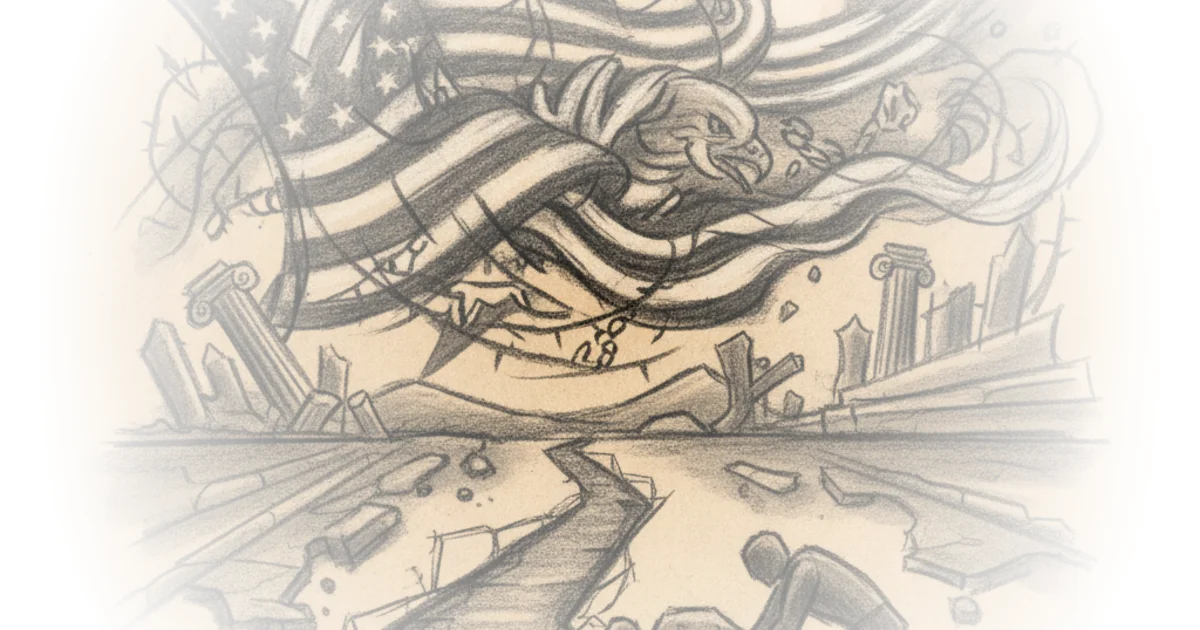
He points to a "no guardrails" presidency where legal accountability has been dismantled for allies and weaponized against enemies. Yglesias notes, "With his pardons, Trump has made clear that there will be no legal accountability for any crimes conducted by his political allies." This is a stark reminder of how the pardon power, historically a tool for mercy or reconciliation, has been repurposed as a shield for corruption. The stakes are high: we have seen "flagrantly unfit leadership at the F.B.I." and repeated purges within the military command structure.
The entire Republican Party has proven, time and again, that it will indulge Trump in essentially limitless levels of inappropriate conduct.
Despite this alarming consolidation of power, Yglesias argues that the administration is not a monolith of efficiency. Instead, he suggests the opposition has been saved by "opportunistic promise[s]" that were never achievable. He writes, "Rather than following a template for political success that would have allowed him to consolidate power, Trump has chosen overreach in almost every domain." This framing is crucial because it shifts the focus from an inevitable authoritarian takeover to a fragile, self-inflicted crisis.
Critics might argue that underestimating an administration's ability to adapt and double down on unpopular policies is dangerous. History shows that political parties often rally around their leaders even when they falter. However, Yglesias insists that these were "voluntary blunders" regarding inflation and economic policy that have given the opposition a fighting chance.
The Strategic Blind Spot of the Left
The commentary then turns its critical eye toward the progressive movement, which Yglesias believes has failed to capitalize on this opening. He is scathing in his assessment: "the entire progressive movement has done less than nothing to respond to them." Instead of focusing on winning key swing states, energy has been wasted on internal conflicts.
He describes a frustrating pattern where activist energy goes into "a series of blue-on-blue primaries in safe districts," pitting establishment figures against insurgents who differ only on cultural flashpoints. Yglesias writes, "the broad left-of-center media has displayed about 1,000 times more curiosity about what it takes to win primary elections in New York City than what it takes to beat Republicans in red-leaning areas." This is a potent critique of the disconnect between media narratives and electoral reality.
The article highlights the structural disadvantage Democrats face due to the Supreme Court's dismantling of protections that once limited gerrymandering. With the Voting Rights Act effectively gone, "Republicans have been able to score a decisive advantage in gerrymandering." Yglesias notes a disturbing possibility: Democrats could win 52 percent of the national vote and still see a Republican trifecta confirmed.
Winning in red-leaning areas is what Democrats need to do.
Yet, there is a glimmer of hope. Yglesias points out that "Trump's blundering and unpopularity, plus some good House and Senate recruiting, have put Democrats in a reasonable position to win." The path forward requires a shift from internal purity tests to external electoral pragmatism. He warns against the "narcissism of small differences" that plagues primary seasons, citing the chaotic situation in Michigan as a prime example.
The Senate Paradox and State-Level Stakes
The piece delves into the specific mechanics of the upcoming midterms, offering a granular look at state-level dynamics. Yglesias identifies a "Senate paradox" where Democrats are unexpectedly strong in some difficult states while facing self-inflicted wounds in others.
He praises Mary Peltola in Alaska for having "met the moment," contrasting her success with the struggles in Maine and Michigan. In Michigan, he laments that "Gretchen Whitmer would have cleared the field and easily won this race," but chose not to run, leaving a fractured field where "the narcissism of small differences is creating a situation where El-Sayed will likely win the primary." This specific example illustrates his broader point: talent and strategy are being squandered by factionalism.
The long-term game involves redistricting. Yglesias explains that while some states like Virginia have had their maps thrown out, others are moving toward more aggressive gerrymanders in response to the Supreme Court's ruling on the Voting Rights Act. He notes that "Illinois will almost certainly draw an additional blue seat," and New York may follow suit, but these changes take time.
Flipping both houses of Congress — and thus delivering a clear sign to American elites that this is not the time to surrender to authoritarianism — is not the most probable outcome, but it is on the table.
The article also touches on the 2028 horizon, specifically in Georgia. The governor's race there could determine whether the state redraws its maps in a way that favors Republicans or Democrats. Yglesias suggests that while former Atlanta Mayor Keisha Lance Bottoms may be the "worst option," she still has a decent shot due to the incumbent's unpopularity.
Tactics Versus Strategy
In his final analysis, Yglesias acknowledges that much of what keeps the opposition in the game is simply the administration's own failures. He writes, "80 percent of what's keeping Democrats in the game here is Trump blundering." While tactical efforts by leaders like Hakeem Jeffries have been impressive, particularly in managing House votes and fire-walling factional infighting, there is a lack of strategic rebranding.
He argues that the national party has not made "even token gestures at a rebrand," relying instead on old talking points from the Obama era rather than developing a fresh pitch on interest rates and productivity. Yglesias warns against complacency: "I really don't want them to get complacent if they flip the House with two seats to spare." The window is open, but it requires seizing the moment before the administration recovers or the opposition falters again.
It's going to take a bunch of things to go right, but for the first time in years, the future isn't just about surviving; it's about winning.
Bottom Line
Yglesias's strongest argument is his refusal to accept fatalism, grounding hope not in moral superiority but in the practical reality of an administration that has overextended itself. His most significant vulnerability lies in underestimating the resilience of a political movement that thrives on chaos and the potential for the opposition to continue its self-sabotage. The reader should watch closely whether the Democratic party can translate this narrow path into a coordinated strategy before the next election cycle closes.