PolyMatter delivers a startling thesis: the modern billion-dollar scam industry isn't a random evolution of cybercrime, but a direct, accidental byproduct of China's crackdown on its own organized crime. This isn't just a story about fraud; it is a geopolitical case study on how state power, when it displaces criminal syndicates without destroying them, can inadvertently export chaos to the global stage.
The Macau Truce
The narrative begins by reframing the history of the Chinese underworld. PolyMatter argues that the Communist Party didn't simply eliminate the triads; it co-opted them. "Strong one party governments also fear organized crime for many of the same reasons. Gangs, triads, and other criminal syndicates challenged the party's monopoly on power." For decades, a tacit agreement allowed these groups to thrive in Macau, serving as a financial valve for wealthy Chinese citizens to move capital out of the country.
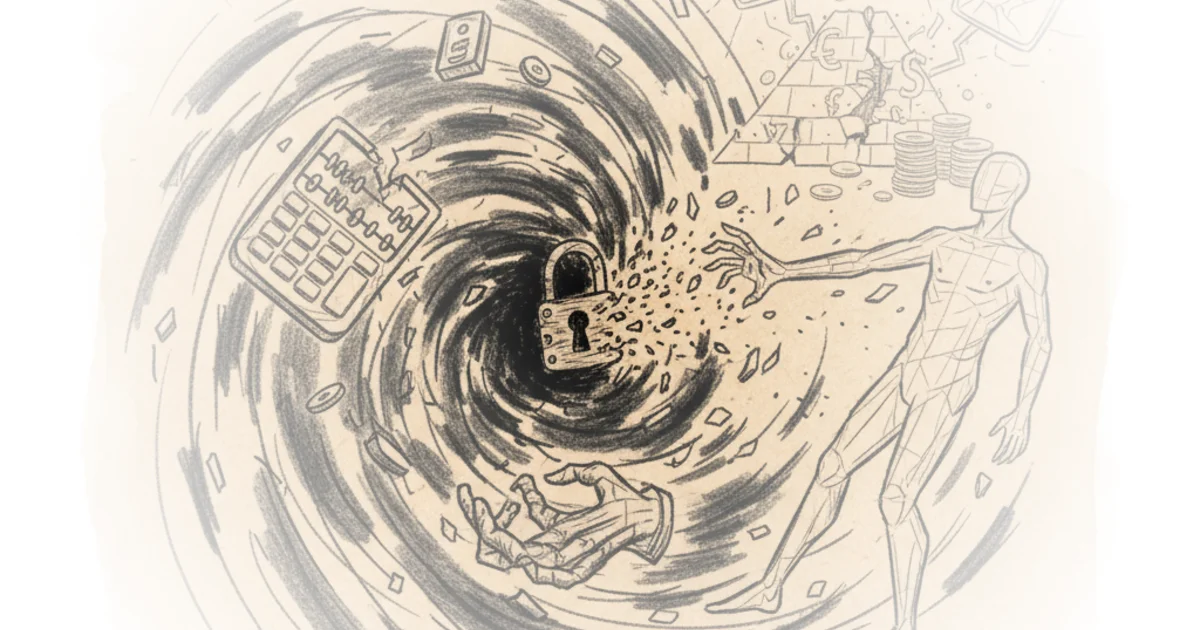
The author explains that the system was a "truce" where the state turned a blind eye to illicit activities in exchange for economic growth and political stability. "Beijing had big plans for Macau. Soon after the handover, all the American casino giants... were invited in for the first time." The triads acted as essential middlemen, or "junkets," bridging the gap between strict Chinese capital controls and the insatiable appetite of Macau's casinos. This arrangement was so profitable that Las Vegas Sands eventually pivoted entirely to the region, abandoning its US properties.
"In 2019, Tiny Macau generated $ 36 billion in gaming revenue, over half of which came from these VIPs."
This framing is compelling because it exposes the unintended consequences of the state's shifting priorities. When the leadership decided that the cost of corruption outweighed the economic benefits, the truce ended abruptly. "The truce had served its purpose, but the triads had long since overplayed their hand and overstayed their welcome." The crackdown in 2021 didn't dissolve these organizations; it merely displaced them.
The Pivot to the Golden Triangle
Once pushed out of Macau, the syndicates migrated to Southeast Asia, specifically the lawless border regions of Myanmar. PolyMatter highlights the irony that the very instability the Chinese state sought to avoid in its own borders was exported to a region where the state barely exists. "Myanmar is ranked number one [in organized crime]... Somehow, it makes even Afghanistan look like Disneyland."
The pandemic acted as a catalyst, severing the physical connection between the scammers and their traditional casino clientele. "After China sealed its borders, these casinos immediately lost access to nearly all their customers for three long years." Forced to innovate, the criminal enterprises shifted from physical gambling to digital predation. The author notes that this wasn't a new invention, but a refinement of existing tactics. "They didn't truly discover online scamming, but they did perfect it, introducing a whole new level of sophistication."
Critics might argue that attributing the rise of global cybercrime solely to Chinese policy shifts oversimplifies a complex, globalized digital ecosystem. However, the evidence presented regarding the concentration of scam compounds in Myanmar and the specific demographic shift of victims supports the core narrative of displacement.
The Industrialization of Trust
The most chilling part of the analysis is the description of "pig butchering." PolyMatter details how the scam evolved from a "smash and grab" approach to a labor-intensive process of psychological manipulation. "Trust, which is built through repeated exposure over a long period of time, can turn a $50 scam into a $500,000 scam." The math, as the author puts it, is undeniable: "You can target just 1% as many victims and yet still earn 100 times as much profit."
This shift required a new workforce. The article reveals that the scammers themselves are often victims, lured by false job offers and then held captive in industrial-scale compounds. "Inside, scammers whose passports are withheld live in densely packed dormitories and eat from on-site cafeterias." They are forced to chat with potential victims for up to 16 hours a day, turning human connection into a high-yield financial instrument.
"It leaves a hole in the victim's bank account and a hole in their heart."
This emotional dimension is crucial to understanding the scale of the crisis. The victims are no longer just losing money; they are losing their sense of reality and trust in others. The author effectively contrasts the old model of petty opportunism with the new reality: "Organized industrial-scale cartels have taken over."
Bottom Line
PolyMatter's strongest argument is the causal link between domestic political crackdowns and international criminal evolution, demonstrating how the suppression of crime in one jurisdiction can inadvertently fuel a more sophisticated, globalized version elsewhere. The piece's vulnerability lies in its reliance on the narrative of a singular, coordinated shift, potentially underestimating the organic, decentralized nature of cybercrime that existed prior to 2021. Readers should watch for how international law enforcement adapts to these stateless, industrial-scale criminal compounds, as the current legal frameworks are woefully unequipped to handle a threat born from the collision of authoritarian policy and digital anonymity.