Ted Gioia delivers a surprising twist on music history: he blames a Norwegian saxophonist for the end of American cultural hegemony in jazz. This isn't a standard biography; it is a confession of lost privilege wrapped in a critique of how art evolves beyond its birthplace. For listeners who assume jazz remains a strictly American export, this piece offers a necessary correction on how global identity reshapes artistic legitimacy.
The End of the Yankee Advantage
Gioia begins with a personal anecdote about his early career as a pianist overseas, where his American identity was his primary credential. He writes, "In jazz circles, I was an obvious American. And everybody knew that great jazz came from the US—just like fancy watches come from Switzerland and stinky cheese comes from France." This framing is effective because it exposes the unspoken hierarchy that once governed the genre. The author admits that his success was partly due to this "Yankee glamor," a status that evaporated once European musicians stopped looking across the Atlantic for validation.
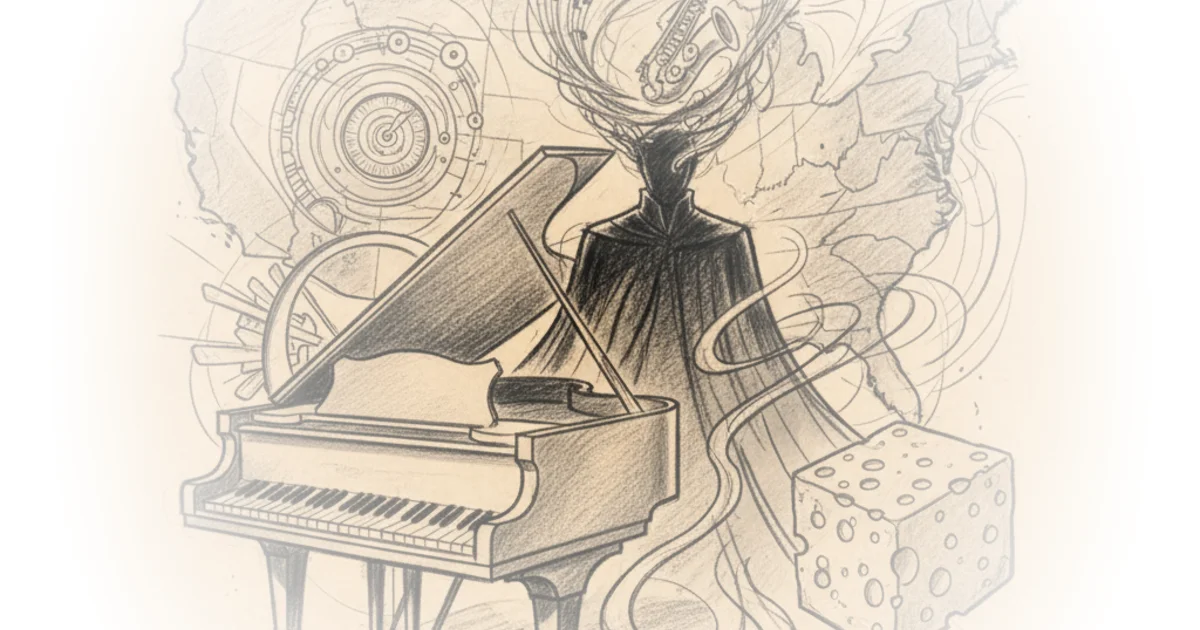
The turning point, according to Gioia, was the rise of Jan Garbarek. The author argues that Garbarek didn't just play well; he fundamentally shifted the center of gravity. "Garbarek was the ringleader and role model. He showed what proud and confident European jazz looked like—unapologetic and independent of US-driven trends and expectations." This is a bold claim, suggesting that one artist's stylistic choices could dismantle decades of cultural imperialism in the arts. It forces the reader to reconsider how much of jazz history was defined by a single geographic origin point.
Garbarek demonstrated this fertile independence in album after album following his departure from Jarrett's quartet. He plays with such authority that the best tracks sound like prophetic statements from someone who has just returned from the mountaintop.
Critics might argue that attributing such a massive cultural shift to a single individual oversimplifies the complex socio-economic factors that allowed European jazz to flourish, such as government funding and different club cultures. However, Gioia's narrative focus on the sound itself provides a compelling, if narrow, lens through which to view this transition.
From Hard Bop to Nordic Silence
The article meticulously traces Garbarek's evolution from a student of American styles to an innovator of a distinct "chamber jazz" sound. Gioia notes that early recordings show Garbarek "playing hot hard bop like he had been born in Philly or New York," mastering the idioms of John Coltrane and Albert Ayler. But the shift occurred when Garbarek, working with producer Manfred Eicher at the ECM label, began to embrace space and silence. "It's music for people who listen closely instead of brawling at the bar," Gioia observes, contrasting the quiet intensity of the new European sound with the high-energy expectations of American post-bop.
This distinction is crucial to the author's argument. He suggests that the "chamber music" label is misleading if it implies daintiness, noting that Garbarek's tone is actually "soul-searing" and intense, just quieter. The collaboration with Keith Jarrett on the album Belonging serves as the ultimate proof of this new paradigm. Gioia writes, "Keith Jarrett already had a quartet back in the US, and some jazz fans thought it was the best band in the world. Why would he abandon it for three unknown Scandinavians?" The answer, he implies, is that the American sound had become stagnant, while the Nordic approach offered a fresh, cosmopolitan vitality.
The piece highlights how this partnership legitimized the European scene. Jarrett, a massive star, composed works specifically for Garbarek, with producer Manfred Eicher noting that the album was composed with "Jan in mind." This reversal of roles—where the American superstar adapts to the European stylist—signals the end of the "Made in America" stamp of approval. "After Garbarek, that was no longer necessary," Gioia concludes regarding the need for European musicians to relocate to New York to achieve stardom.
A Global, Not Just American, Art Form
The final section of the commentary focuses on the lasting legacy of this independence. Garbarek's career became a model for a truly global jazz, featuring collaborations with musicians from Brazil, India, and the Middle East. Gioia points out that Garbarek's discography reads like a list of the world's diverse musical traditions, challenging the very definition of the genre. "He was the cosmopolitan man of the world who found musical partners everywhere," the author writes, contrasting this with the "New York-fixation" of previous generations.
The author's tone here is one of reluctant admiration. He admits that while he lost his "perks" as an American musician, the artistic result was superior. "Garbarek, for all his glacier toughness, was still growing," Gioia notes, describing the saxophonist's ability to maintain his unique voice even when playing with American drummers who tried to speed up the tempo. The metaphor of the glacier—serene on the surface but solid below—perfectly captures the resilience of this new European identity.
Bottom Line
Gioia's strongest argument is that the maturation of European jazz was not merely a geographic expansion but a fundamental redefinition of the genre's soul, moving it from a club-centric American export to a global, introspective art form. The piece's vulnerability lies in its heavy reliance on a single narrative arc centered on one musician, potentially downplaying the collective efforts of the entire European scene. Readers should watch for how this "Nordic silence" continues to influence modern jazz, proving that the center of gravity has indeed shifted permanently away from the United States.