Kinga Głyk is proof that the bass guitar world has a new star. At just 28 years old, she's already been labeled one of the most exciting groove players on the scene today—and she's only just begun.
A Family Affair
Głyk grew up immersed in music. Her father played vibrophone and drums, her mother performed classically on piano, and their home was constantly filled with sound. She remembers listening to mainstream jazz and funk as a child—Marcus Miller especially—but admits some of it could feel overwhelming. Still, she credits that early exposure with shaping her ear.
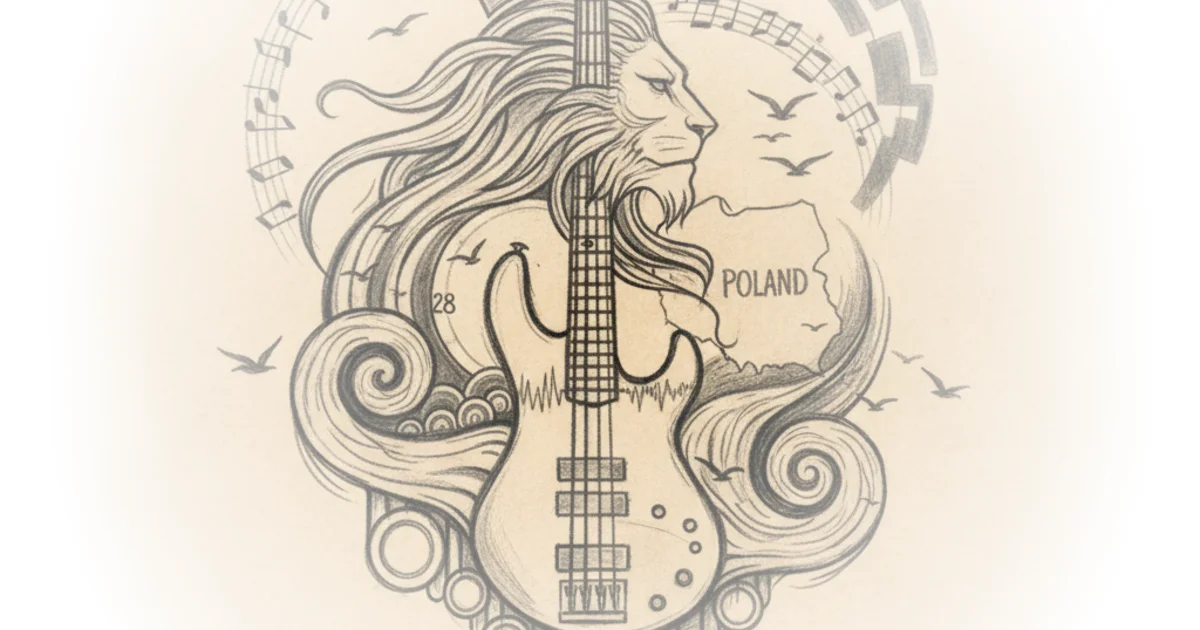
She began playing bass at eleven years old, after her father brought home a smaller instrument suited for her small hands. By twelve, she was already performing in clubs across Poland. The family formed a tight unit: dad on drums, brother handling sound engineering, and Głyk anchoring the low end. Her mother traveled with them too, sometimes exhausted but always supportive.
Finding Her Voice
Głyk describes her path to becoming a bass player as intuitive rather than planned. She didn't know many bass players when she started—she simply heard the sound of the instrument and wanted to be the person creating it.
She spent years transcribing standards and learning difficult pieces, including Keith Jarrett solos. But she admits something curious happens: without understanding what she's playing, she forgets everything within three days. The technical knowledge evaporates if she doesn't repeat it constantly. She's now going back to basics, retracing her steps from student-level fundamentals to rebuild her foundation.
I realized I forget everything I learn because you don't understand what you play. So most things it's not possible for me to remember.
She credits Rick Beato's ear training courses—specifically the competition with herself to hear faster—as a tool that helped her improve dramatically.
The Funk Influences
When asked about funk bass, Głyk points to Larry Graham, whose videos she watches in awe. She admires how he creates profound audience connection with minimal notes. Marcus Miller remains another reference point—she tries to emulate his precision on slap bass, though she acknowledges it's a dangerous technique because any imprecision is immediately audible.
The challenge of funk bass lies in dynamics. The genre demands intensity most of the time, making it difficult to vary your sound. Playing alone gives her more room for precision; playing with others requires balancing that intensity.
Standing vs. Sitting
A practical issue emerged during her preparation for shows: practicing sitting creates a completely different feel than performing standing. Her arm position changes dramatically when she stands—the bass drops lower, and everything shifts. She now ensures she practices both ways, and recommends other musicians do the same.
She also suggests changing where you practice. Musicians get used to certain rooms; traveling to different spaces alters your energy in unexpected ways.
The Creative Process
On social media, Głyk is strategic about what she shares. She's aware that audiences click fast—her choices must be smart, balancing what she loves with what's interesting enough for people to receive. She intersperses her original compositions between covers, wanting listeners to know she creates her own music.
One of those originals is "Joy Joy." She composed it improvisational style over a drum beat, using E minor as a starting point. The structure wasn't planned—it just appeared. She wanted simple chords that listeners could understand, while finding something interesting within that simplicity.
Critics Might Note
Some might argue her approach to learning—constantly relearning to remember—represents an inefficient method compared to systematic study. Others could contend that funk bass players who mastered technique decades ago still outperform her in precision and groove. But Głyk's strength lies precisely in that vulnerability: she sounds like she's still searching, still hungry, still uncertain—which makes her groove feel genuinely alive.
Bottom Line
Głyk's story is less about technical perfection than about authentic musical discovery. She came to bass through instinct, shaped by family, and now she's building something personal from the ground up. Her biggest strength: that hunger keeps her sound fresh. Her vulnerability: without deep harmonic knowledge, she sometimes struggles to articulate what she hears inside her head. That tension—between intuition and technique—is exactly what makes her groove so compelling.