This piece delivers a rare, unvarnished critique of New York's climate strategy, but it comes from an unexpected source: a publication typically known for championing aggressive energy expansion is now echoing the warnings of a progressive policy institute. The most striking claim isn't just that the state is missing its targets, but that the very political coalition driving these mandates is realizing their own policies have become a "political liability" that threatens to derail the entire climate agenda. For busy readers tracking the intersection of energy security and political reality, this convergence of data and admission is the story of the year.
The Collision Course
The article opens by highlighting a report from the Progressive Policy Institute (PPI) that identifies "a clear and undeniable pattern of failure" regarding New York's 2019 Climate Leadership and Community Protection Act (CLCPA). Energy Bad Boys notes that while the state set bold targets—such as a 70 percent renewable electricity mix by 2030 and 9,000 megawatts of offshore wind—the reality is starkly different. The piece argues that these goals were "doomed to fail from the beginning" because they ignored the physical constraints of the grid.
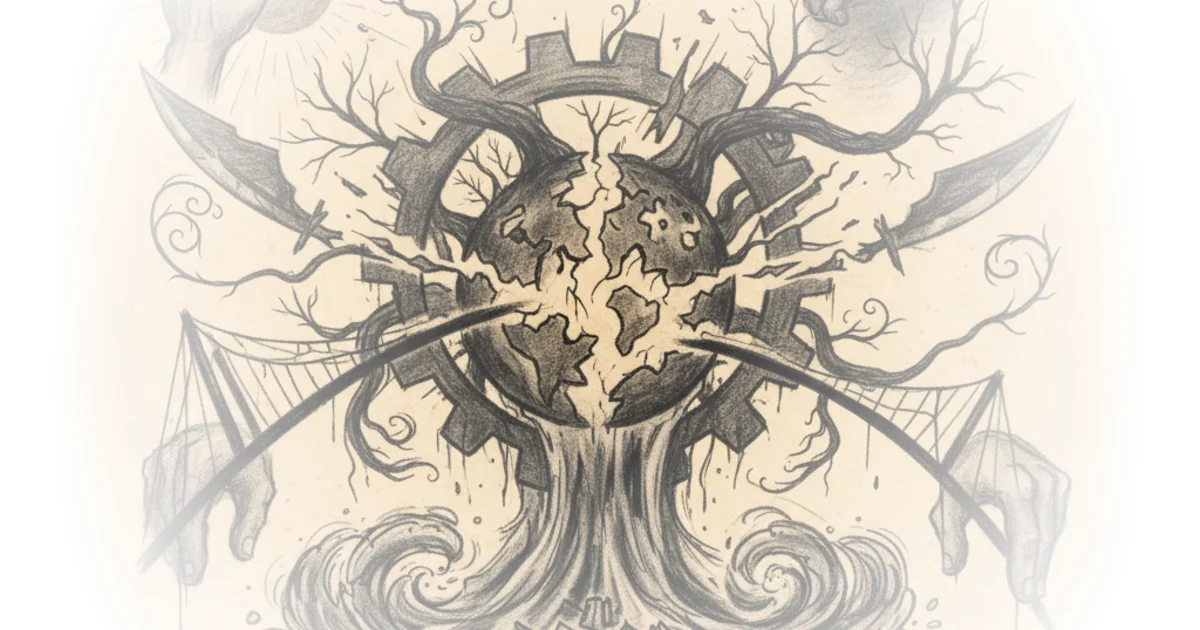
The core of the argument rests on a simple, devastating formula presented in the text: "Reducing Firm Capacity + Mandating Load Growth + Massive Spending on Climate Policies = Low Supply and High Costs." This framing is effective because it strips away the ideological noise and focuses on the mechanical reality of electricity generation. The authors point out that while intermittent resources like wind and solar have been added, "firm capacity" (reliable power from gas, coal, or nuclear) has been in steady decline since peaking in 2011.
"This collision is not accidental; it is the direct result of a policy framework that simultaneously dismantles reliable supply while mandating a surge in demand, with ratepayers bearing the inevitable and escalating cost."
The commentary correctly identifies that the timeline for these transitions is unrealistic. While 30 years sounds long to a human, it is a blink of an eye for the electricity grid, where assets are built to last 60 years or more. The piece notes that New York is attempting to radically alter the resource mix in a timeframe that defies engineering norms. A counterargument worth considering is that the urgency of the climate crisis requires such aggressive timelines, regardless of grid inertia; however, the article's data on rising costs suggests that speed without stability is a dangerous gamble.
The Supply Squeeze and Historical Echoes
The analysis deepens when examining the specific constraints on fuel sources. The article highlights the premature closure of the Indian Point Energy Center in 2021, noting that this removed a massive source of carbon-free power. This is a crucial historical reference: Indian Point was a 2,000-megawatt nuclear plant that provided about a quarter of New York City's electricity. Its closure forced a reliance on natural gas that the state's own policies are now actively constraining.
Energy Bad Boys reports that the state has blocked upgrades to aging natural gas facilities and prevented new pipeline construction, creating a paradox where the state mandates electrification while cutting off the fuel needed to power it. The piece adds that the ban on hydraulic fracturing in the Marcellus Shale formation further tightens the noose on fuel supply. This connects to broader regional dynamics; the Marcellus Shale, which spans Pennsylvania and New York, holds some of the largest natural gas reserves in the world, yet regulatory barriers in New York prevent the state from utilizing its own backyard resources.
"While the state mandates a massive buildout of renewable energy, its existing firm generation capacity is being actively diminished."
The authors argue that this supply-side constraint is colliding with a demand-side explosion driven by mandates to electrify homes and vehicles. The result is a "looming crisis" where the grid is stretched to its breaking point. The New York Independent System Operator (NYISO) has already warned of increased risks of power shortages as soon as next year. This is not a theoretical risk; it is a mathematical certainty based on current capacity and projected load.
The Cost of Virtue
Perhaps the most damning section of the piece is its analysis of the financial impact on consumers. The article cites data showing that residential electricity prices in New York rose by 36 percent between 2019 and 2024, nearly three times the national average. The piece argues that these costs are not accidental but are the direct result of the policy framework.
"The result is an energy system that is less reliable, more expensive, and now politically unsustainable."
This quote from Neel Brown, the PPI study author, is the article's emotional anchor. It suggests that the political coalition behind these laws is finally realizing that "moral high ground" does not pay utility bills. The commentary notes that utilities like Consolidated Edison are explicitly linking rate hikes to the costs of interconnecting renewable generation and accommodating electrification mandates.
Critics might argue that these costs are a necessary investment in a carbon-free future, similar to the initial costs of other major infrastructure shifts. However, the article's evidence suggests that the current path is not just expensive, but inefficient, as it relies on importing power or burning expensive backup fuels when renewables fail to generate. The piece implies that without a course correction, the public will turn against climate policy entirely, turning a "climate leadership story into a cautionary tale."
Bottom Line
The strongest part of this argument is its willingness to use data from a progressive think tank to validate the concerns of skeptics, creating a rare consensus on the grid's fragility. Its biggest vulnerability is the assumption that the political will exists to reverse course before the lights go out, given the deep ideological commitment to the current mandates. Readers should watch for whether the state's recent reversal on pipeline approvals signals a genuine shift in strategy or merely a temporary pause before the next crisis hits.
"The states that rushed to pass unaffordable, unreliable, and unworkable climate mandates from 2017 to 2023 are the dogs that finally caught the car."