In an era where education reform often chases the next digital tool or abstract skill, Natalie Wexler presents a startling counter-narrative: that the path to critical thinking isn't bypassing facts, but mastering them. She documents a sixth-grade classroom in New York City where students don't just recite dates; they wield them to construct complex arguments about global governance, proving that knowledge is not the enemy of engagement but its fuel.
The Myth of the Soul-Deadening Drill
Wexler opens by dismantling a pervasive orthodoxy in modern pedagogy. She describes a scene that sounds archaic to many educators: a student confidently reciting that the Articles of Confederation failed and the Constitution was written in 1787. "If you haven't been in an American classroom lately, you might not think there's anything unusual about this kind of quiz," Wexler writes. "But it's far from typical." She notes that many teachers are trained to believe that drilling facts is "downright harmful" and that the word "memorize" is viewed with "deep suspicion."
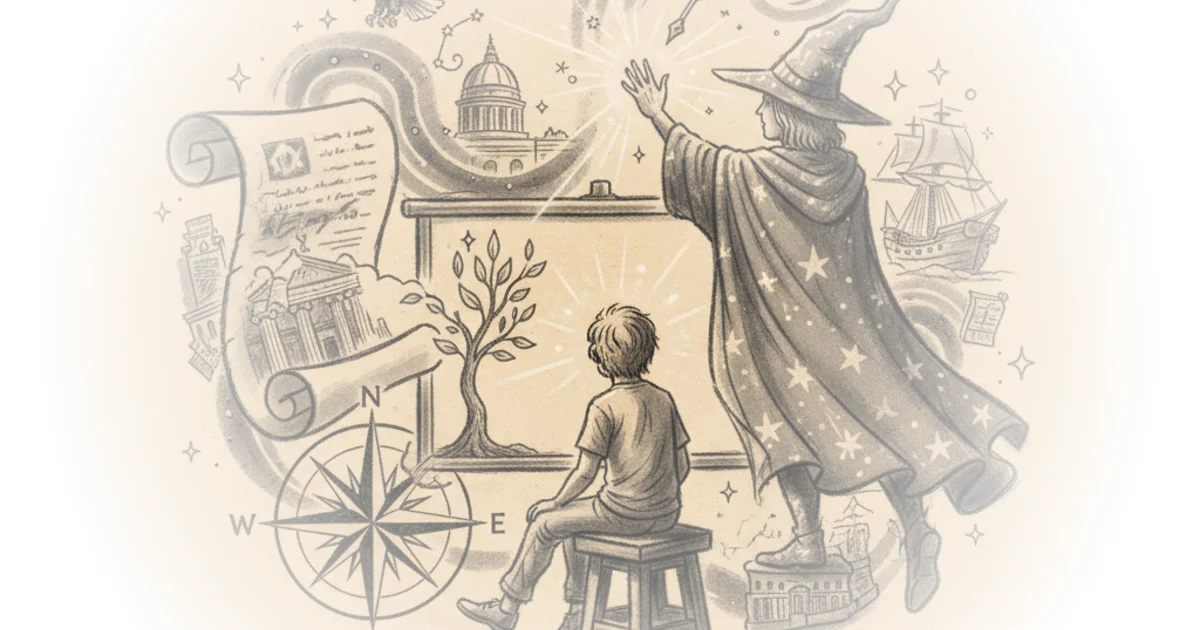
This framing is crucial because it challenges the assumption that the internet has rendered rote learning obsolete. Wexler argues that cognitive science contradicts the "Google it" mentality. "Cognitive scientists have found that it's the necessary foundation for all learning and higher-order thinking," she explains. The more factual information a student has stored in long-term memory, the easier it is to analyze new concepts. This is not merely about trivia; it is about cognitive architecture. Without a base of knowledge, students cannot connect new ideas to existing frameworks, leaving them unable to think deeply about the world.
"Googling information is far more inefficient and unreliable than being able to retrieve it, more or less automatically, from long-term memory."
The piece highlights a specific classroom at KIPP Beyond, a middle school in Morningside Heights serving a predominantly Black and Hispanic student body. Here, the curriculum demands that students memorize 23 significant dates and the locations of all 50 states. The result? A pass rate on the U.S. Citizenship Test of 85 percent, compared to the national adult average of just 39 percent. This statistic alone serves as a powerful rebuke to the idea that high expectations for knowledge retention are elitist or inaccessible.
From Rote Memory to Radical Analysis
The most compelling aspect of Wexler's coverage is how she demonstrates the transition from memorization to analysis. The students aren't just reciting; they are synthesizing. They study the philosophies of Thomas Hobbes and John Locke, then apply these concepts to compare the American and Chinese systems of government. One student argues that China's preference for order stems from its history of chaos following the fall of the Qing dynasty in 1911, linking it to Hobbes's belief in a strong sovereign to prevent violence. Another student counters that the American system, rooted in Locke's fear of tyranny, offers superior protection against corruption.
"Wherever they landed, these students weren't just spinning opinions out of thin air," Wexler observes. "They were drawing on many facts they had learned about history and philosophy." This is the "magical" element the title promises: the moment when raw data becomes a lens for understanding human behavior and political structure. The curriculum, designed by educator Jeff Li, anchors social studies in history, geography, and current events, ensuring that civics is not an abstract exercise but a grounded inquiry.
Critics might argue that this approach is too rigid or that it risks turning history into a list of unconnected facts. However, Wexler's evidence suggests the opposite. By providing a dense web of facts, the teachers enable students to see the causal links between historical events and modern realities. The students at KIPP Beyond, hailing from 60 different countries, used their study of immigration to explore their own family stories, proving that factual knowledge can deepen personal connection rather than stifle it.
"The day I said I couldn't memorize dates, the states that all looked the same... you always added the word yet and now I understand why because I did do it."
The Human Element of Implementation
Wexler is careful to note that the success of this program is not solely due to the curriculum but to the extraordinary teachers behind it. Jeff Li, a former management consultant and Teach for America executive director, co-founded the school with a specific mission: to anchor subjects that "get short shrift in American schools." When Li left to focus on a new project regarding physical fitness, his successor, Ben Esser, adapted the curriculum by adding peer tutoring and writing exercises, pushing the citizenship exam pass rate to 99 percent.
The article captures the joy of this learning environment. The teachers use humor and games, such as a "12th Day of Civics-mas" song, to make the memorization process engaging. Li's playful "break-up note" between the American Colonies and King George illustrates how a teacher can make the Declaration of Independence feel immediate and dramatic. "Li and Esser both appear to be extraordinary teachers who understand how to engage and inspire sixth-graders," Wexler writes. "In one video, Li 'punks' the class... The kids, wide-eyed, hang on every word."
However, Wexler offers a necessary caveat: this model is currently an outlier. "It's not clear to what extent this civics class can be recreated in other schools," she admits. The curriculum is not widely available, and the success relies heavily on the specific talents of Li and Esser. This raises a difficult question for the education system: if the solution is simply to find more extraordinary teachers, how do we scale it? The piece implies that while the method is replicable, the culture of prioritizing knowledge over performative engagement is the harder barrier to break.
Bottom Line
Natalie Wexler's piece is a vital correction to the modern obsession with "skills over content," demonstrating that deep critical thinking is impossible without a foundation of factual knowledge. Its greatest strength lies in the tangible evidence of students from under-resourced communities outperforming the national average on complex civic assessments. The argument's vulnerability is its reliance on exceptional individual educators, leaving the broader question of systemic scalability unresolved. As the nation approaches its 250th anniversary, the takeaway is clear: we cannot hope for a more informed citizenry until we stop treating memorization as the enemy of learning and start treating it as the engine of it.