More Perfect Union uncovers a startling disconnect: the viral anthem blaming "rich men north of Richmond" is being weaponized to fight the wrong enemy. While the political class scrambles to assign partisan blame, the piece reveals that the song's true power lies in its indictment of a system where corporate power and political capture have left the working class with no viable options.
The Anatomy of a Viral Anthem
The coverage begins not with a policy paper, but with the raw, unfiltered reaction of a nation in economic distress. More Perfect Union captures the moment Oliver Anthony's song exploded, noting how quickly the narrative shifted from a critique of wealth to a partisan shouting match. "Our country is in Decline we need to send Joe Biden back to his basement," the piece quotes a listener, only to immediately pivot to the song's actual, broader target. The author argues that the immediate political co-opting of the song misses the forest for the trees. "That song has nothing to do with Joe Biden you know it's a lot bigger than Joe Biden," they observe, highlighting how the media machine forces a binary choice where none exists in the public's mind.
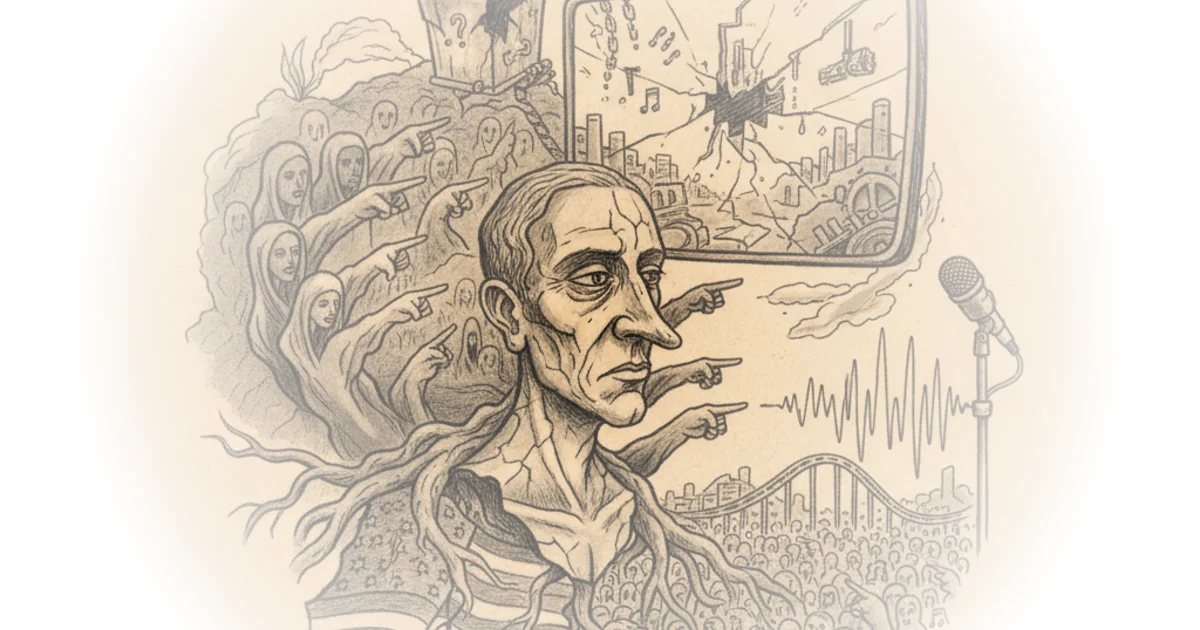
The piece effectively uses the artist's background to ground the argument in material reality. Anthony, a former factory worker, is framed not as a pundit but as a witness. "I've been selling my soul working all day overtime hours for [expletive] pay so I can sit out here and waste my life away," the commentary cites, using the lyric to illustrate the exhaustion of the modern workforce. This framing is crucial; it shifts the conversation from abstract ideology to the visceral experience of working seven days a week and still being unable to afford rent. The author notes that for many, the song resonates because it articulates a feeling of being "punched down on by a bigger business," a sentiment that transcends the usual red-blue divide.
Welfare only makes up a small percentage of our budget we can fuel a proxy war in a foreign land but we can't take care of our own that's all the song's trying to say.
The Real Enemy: Corporate Capture and the Welfare Trap
Where the coverage becomes most incisive is in its dissection of who actually benefits from the public's anger. More Perfect Union challenges the listener to look past the easy target of the welfare recipient and identify the structural drivers of poverty. The piece points out a grim statistic: "two-thirds of Americans use welfare at some point in their life and over half of children in the US will have used food stamps by the time they turn 18." This data point dismantles the moralizing often directed at the poor, reframing welfare not as a lifestyle choice but as a necessary subsidy for low-wage employers.
The author argues that the real conflict is not between the working class and the poor, but between the populace and the entities that profit from their division. "It's between the billionaires and the corporate lobbies versus folks that are on welfare who is more to blame for the problems that we face," the piece asks, forcing a re-evaluation of the political landscape. The commentary suggests that the administration's failure to address wage stagnation has created a scenario where taxpayers effectively subsidize corporate profits. "The truth is millions of Americans are forced to rely on welfare because their jobs don't pay a living wage because companies like Walmart skimp on wages while our tax dollars make up the difference," the author writes, a claim that lands with significant weight given the current inflationary climate.
Critics might note that the piece glosses over the complexities of entitlement reform, potentially oversimplifying the fiscal challenges of expanding social safety nets. However, the core argument—that corporate welfare is the primary driver of inequality—remains a potent, if often ignored, perspective.
The Illusion of Choice
The final act of the piece confronts the voter's dilemma head-on: how to vote when both major parties seem captured by the very elites being criticized. The coverage captures the frustration of a voter who admits, "I truly believe like that is where it starts," referring to the idea that the system is so broken that a "Crime Boss" is seen as the only viable disruptor. More Perfect Union does not shy away from this uncomfortable reality, quoting a listener who describes the current political dynamic as a choice between evils.
The author's conclusion is a call for unity rather than partisan victory. "We have 75% of the population punching down and it's like oh great oh great look at us look at us we're doing exactly what they wanted everybody wants everybody to fight each other all these high people don't don't want peace cuz then then they lose their money," the piece asserts. This analysis suggests that the administration and the opposition are both benefiting from a populace that is too busy fighting itself to challenge the concentration of wealth. The piece ends on a note of collective power, reminding the audience that the elite's greatest fear is a unified working class: "if they figure out that they outnumber us 500 to1 we're screwed."
Bottom Line
More Perfect Union's strongest contribution is its refusal to let the viral moment be hijacked by partisan talking points, instead using the song as a lens to expose the structural capture of the economy by corporate interests. Its biggest vulnerability lies in offering little concrete policy prescription beyond the abstract call for unity, leaving the reader with a clear diagnosis but a foggy path to the cure. Watch for how the administration responds to this specific brand of anti-establishment sentiment, as it threatens the very coalition the executive branch relies on to govern.
We have 75% of the population punching down and it's like oh great oh great look at us look at us we're doing exactly what they wanted everybody wants everybody to fight each other all these high people don't don't want peace cuz then then they lose their money.