Cory Doctorow delivers a startling thesis: the sudden, chaotic unraveling of American global dominance isn't a glitch, but a deliberate, self-inflicted disassembly. He argues that we have mistaken raw power for durability, a fatal error that is now costing the United States its position as the architect of the global digital order. For listeners tracking the shift in geopolitical tides, this piece offers a crucial framework for understanding why the world is rapidly decoupling from American tech, not out of malice, but out of necessity.
The Illusion of Durability
Doctorow opens by dismantling the assumption that the most powerful empire is necessarily the most enduring. He invokes Ursula K. Le Guin to remind us that "We live in capitalism, its power seems inescapable — but then, so did the divine right of kings." The author suggests that the current administration's actions are accelerating a collapse that began decades ago, driven by a financialized economy that prioritizes extraction over production. This is not merely a political cycle; it is a structural rot. Doctorow draws a sharp historical parallel to the Habsburg dynasty, noting that just as the inbreeding of monarchs produced leaders who "can't speak intelligibly," the oligarchic nature of modern American governance has yielded a succession of increasingly erratic rulers. The comparison to Charles II of Spain serves as a grim warning: systems built on hereditary or entrenched privilege eventually produce leaders incapable of governing effectively.
"Power and durability aren't the same thing."
The argument gains traction when Doctorow shifts to the economic mechanics of this decline. He posits that the financialization of the US economy, a trend solidified in recent decades, has hollowed out the nation's productive capacity. By allowing the "Wall Street looters" to walk away from the 2008 crisis unscathed, the political establishment prioritized the wealth of a few over the infrastructure of the many. This created a dangerous dependency where the US could sustain its imperial reach only as long as it had a massive wealth cushion. Now, that cushion is gone. As Doctorow writes, "doubling the wealth of a centibillionaire requires the destruction of whole regions." The administration's current trade policies are not just blunders; they are the final symptoms of a system that has consumed its own foundations.
The End of the Technopoly
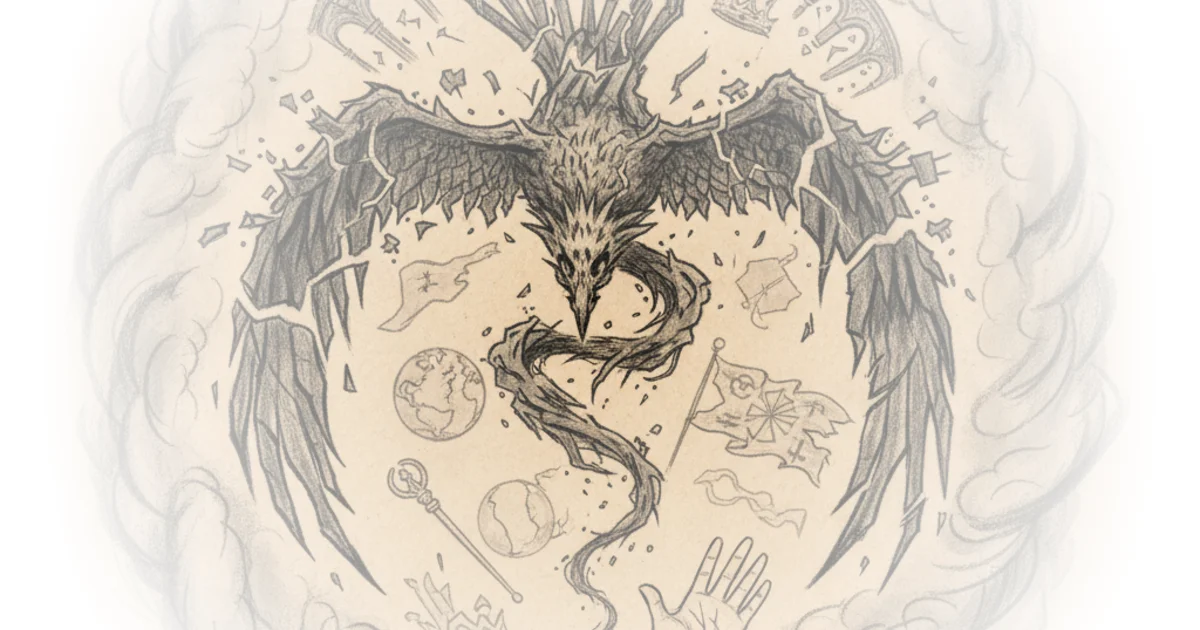
The most compelling section of Doctorow's commentary focuses on the collapse of the "technopoly"—the global dominance of US tech giants. He leans heavily on the analysis of Baldur Bjarnason, arguing that American tech companies did not win the world because their products were superior, but because the US government forced the issue through trade sanctions and diplomatic pressure. "They are allowed to violate local laws because stopping them from doing so would result in trade sanctions," Doctorow notes. This dynamic is now fracturing. The administration's aggressive tariffs and isolationist stance have stripped these companies of their protective shield. Without the weight of the US political empire behind them, companies like Uber and Airbnb are losing their global foothold.
"US tech has extended so many tendrils into so many sectors that it's not possible to defend any industrial sector without impinging on the 'technopoly.'"
Doctorow highlights a critical irony: the very tools the US used to project power are now being weaponized against it. The administration's move to "de-dollarize" the global economy is driving nations away from the dollar, and consequently, away from the American tech ecosystem that relies on it. This is not a passive drift; it is an active rejection. Countries in the Global South, having seen their health systems decimated by aid cuts, are now refusing to tie their mineral access to demands that they keep their hands off US technology. The administration's demand for compliance in exchange for a trickle of aid is being met with a firm "no." This signals a fundamental shift where the "old world of tech is dying and the new cannot be born."
Critics might argue that this narrative underestimates the deep entrenchment of American software and the difficulty of replacing it overnight. However, Doctorow counters that the current volatility is creating a vacuum that open-source alternatives are eager to fill. The collapse of the US-led order may ironically liberate the internet from the grip of extractive monopolies, allowing for a new model of "international digital public goods." Yet, this transition is fraught with risk. As Doctorow points out, the intellectual property framework that protects open-source licenses is itself an artifact of the collapsing American empire. If that framework crumbles, there may be no legal mechanism to prevent the reverse-engineering of these new tools, potentially undoing the very progress the movement seeks to make.
"The post-American internet is being born in a post-American world, and the shape of both is impossible to determine from this side of the veil."
Bottom Line
Doctorow's most potent insight is that the administration's chaos is not a failure of competence, but a feature of a system that has lost its ability to sustain itself. The strongest part of this argument is the linkage between domestic financialization and global technological decline; it reframes the current crisis as an inevitable consequence of decades of policy choices. The biggest vulnerability, however, lies in the uncertainty of what comes next. While the collapse of the American technopoly is clear, the alternative is not yet formed, leaving the world in a precarious limbo where the rules of the game are being rewritten in real-time.
"Without the weight of the US political empire behind it – if Airbnb or Uber had been local startups – much fewer countries in the world would have loosened their regulations and consumer protections to accommodate them to the point where they prospered as they did."
This is a call to recognize that the era of American technological hegemony is ending, not with a bang, but with a series of self-inflicted wounds. For the busy listener, the takeaway is stark: the tools we rely on are no longer backed by the empire that created them, and the future of the digital world will be determined by who can build something better in the ashes.