Brad DeLong delivers a startling reframing of current AI anxiety: the profound sense of historical rupture felt by intellectuals today is not a unique symptom of our times, but the inevitable emotional state of those who find themselves directly in the path of Schumpeterian creative destruction. While many analysts focus on the novelty of artificial intelligence, DeLong argues that the true story is one of frequency and personal vulnerability, suggesting that the "bullseye" has finally shifted from manual laborers to the very people who synthesize history and knowledge. This perspective forces a reckoning with the idea that our current disorientation is not a failure of understanding, but a predictable reaction to a generational economic shockwave that has been ticking like clockwork since 1875.
The Illusion of Unprecedented Rupture
DeLong begins by addressing the palpable anxiety among literate elites, citing historian Adam Tooze's description of feeling like "the mad uncle in the attic, crying fire" while others play "pleasant historical tunes." DeLong posits that this sense of a world too "ruptured, punctuated, discordant" to be understood through precedent is not new. He traces this feeling back to the Renaissance and the invention of printing, noting that writers like Machiavelli and Bacon were equally obsessed with how technology was becoming a "total transformer of society." The core of DeLong's argument is that the sensation of living in an era where all solid orders melt into air has been the human condition for anyone caught in these waves for centuries.
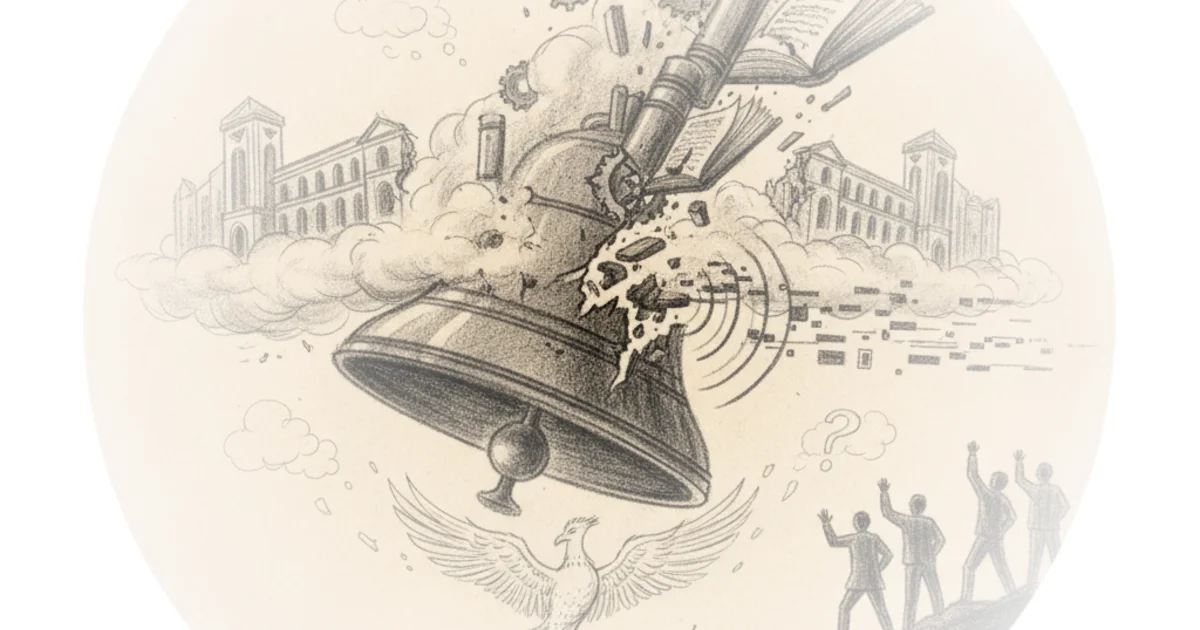
However, DeLong makes a crucial distinction regarding frequency. He writes, "What is different, since 1875 or so, is that these profound historical ruptures no longer come along every century or two... Since 1875, it comes like clockwork every generation." This regularity means there is less excuse for surprise, yet the personal impact remains just as terrifying. He connects this to the "Great Stagnation" era by noting how the underlying bedrock of production was once a reliable anchor; before 1775, nearly everyone could step into their grandparents' economic frame and find a productive role. That stability evaporated for specific groups first, starting with textile workers.
The exaggerated pastness of our narrative is due to its taking place before the epoch when a certain crisis shattered its way through life and consciousness and left a deep chasm.
DeLong uses this quote from Thomas Mann's The Magic Mountain to illustrate how history itself becomes "legendary" once the rupture occurs, separating the current generation from the models of the past. He argues that the 1875–1900 period was just as disorienting to those living through it as our current moment is to us. The argument holds water because it strips away the arrogance of believing we are in a "singularity" and replaces it with a sober historical pattern: the shock is real, but the mechanism is familiar.
The Human Cost of Productivity Gains
The commentary then turns to the brutal math of creative destruction. DeLong explains that when these waves hit, four-fifths of the economy sees a modest 50% productivity boost with little pain, while one-fifth faces a ninefold increase in productivity that obliterates their skills and identities. He vividly recalls the plight of the Silesian weavers in the 1840s, quoting Heinrich Heine's "Weavers' Song" where workers curse God, the King, and their false fatherland while weaving a "shroud" for Germany.
This historical parallel is DeLong's most powerful tool. He notes that "the real relative price of garments fell by perhaps 90% over the post-1775 period," which meant incomes for hand-spinners vanished. The economy as a whole became three times richer, but one-fifth of society was leveled and rebuilt in a different configuration. DeLong writes, "For an unlucky fifth, it obliterated skills, roles, and identities and rebuilt them from scratch." This framing is effective because it acknowledges the aggregate wealth creation while refusing to minimize the specific, devastating trauma of those displaced.
Critics might argue that equating modern knowledge workers with 19th-century weavers ignores the potential for new job creation in the tech sector, suggesting the transition may be less total than DeLong fears. Yet, DeLong anticipates this by emphasizing the speed and scope of the current wave, noting that "AI has clearly been the driving force of US capital accumulation" in a way that dwarfs previous eras. The parallel to the Silesian weavers serves as a warning: even if the economy grows, the human cost for the specific cohort in the firing line can be catastrophic.
When the Bell Tolls for Intellectuals
The piece culminates in DeLong's "key insight": the reason for the heightened anxiety today is that "this time Schumpeterian creative destruction is coming for me." For the first time, the cohort facing total upending consists of people whose jobs involve synthesizing, explaining, and teaching history. DeLong writes, "The twenty-first-century twist is that the next cohort in the firing line looks a lot like Adam Tooze—and me: people whose jobs consist of synthesizing... but this time beneath them, personally."
This self-referential turn transforms the article from abstract economic theory into a personal confession. It validates the reader's fear not by dismissing it as irrational, but by placing it in a lineage of historical trauma. DeLong suggests that the "euthanasia of the labouring classes" vision held by economists like Nordhaus is now becoming a reality for the intellectual class. The argument is compelling because it admits vulnerability; it does not claim to have the answer, but rather identifies the specific group currently losing their sense of place in the world.
For the vast majority, each wave of creative destruction raised productivity relatively modestly and left life-patterns intact. For an unlucky fifth, it obliterated skills, roles, and identities and rebuilt them from scratch.
DeLong's analysis suggests that the "legendary" nature of our current history is being written in real-time by those who feel their professional identities dissolving. The connection to the "Great Stagnation" is implicit here: just as the stagnation of wages for many preceded this era, the disruption of high-skill knowledge work may be the next phase of a long-term structural shift that began with the industrial revolution.
Bottom Line
DeLong's strongest move is reframing current AI anxiety not as a unique crisis of modernity but as the predictable, recurring trauma of being in the "bullseye" of Schumpeterian waves, finally hitting the intellectual class. The argument's vulnerability lies in its deterministic view of historical cycles, potentially underestimating how quickly new roles for human-AI collaboration might emerge to soften the blow. Readers should watch not just for technological breakthroughs, but for the specific policy responses that will determine whether this wave levels society or merely reconfigures it without destroying the middle class.