Byung-Chul Han wants you to rethink everything you think you know about Buddhism, Western philosophy, and why modern life feels so exhausting.
In his 2002 book The Philosophy of Zen Buddhism, this Korean-born German philosopher makes a provocative argument: the burnout society isn't just a critique of neoliberal economics—it emerges from how we inherited certain ways of seeing ourselves that make it impossible to escape. Han argues that Western conceptions of selfhood create a perpetual cycle of self-improvement, optimization, and personal branding. Your worth as a person becomes equal to your market value. And when your brain can't provide value anymore, you're simply forgotten.
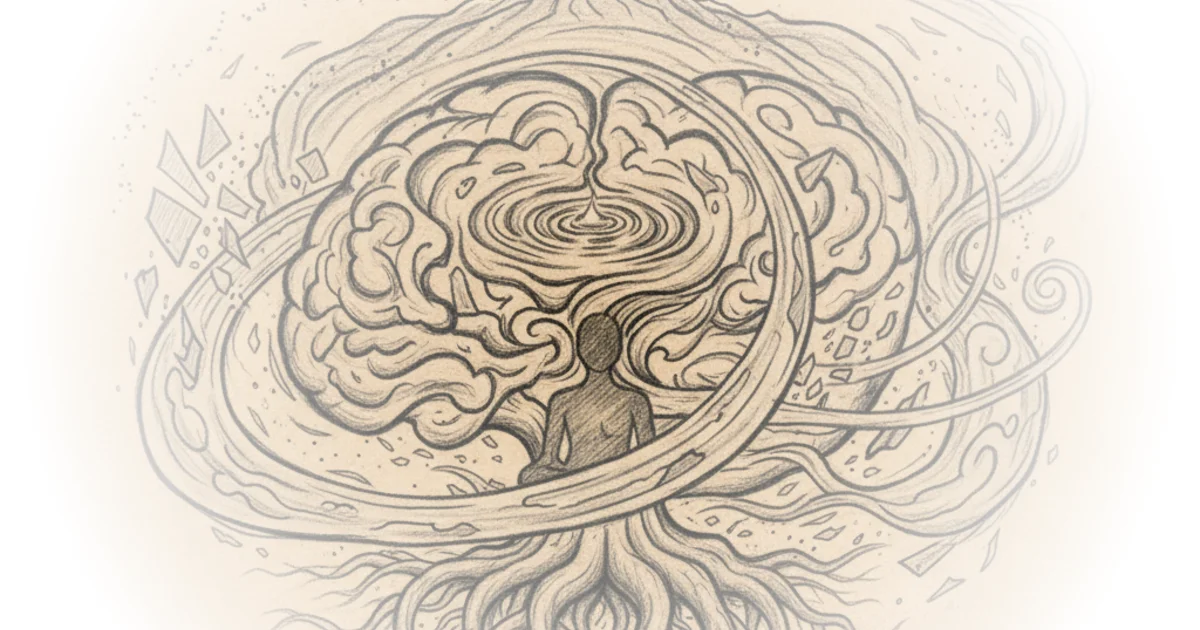
This is the core insight driving Han's cross-cultural dialogue between Mahayana Buddhism and German idealism.
The Burnout Society
Byung-Chul Han gained international attention through his 2010 book The Burnout Society, where he describes a shift that occurred in the late 1980s. Economic policy moved toward neoliberalism, deregulating everything until the only person stopping you from becoming a billionaire is yourself. People became little personal corporations, constantly self-improving, optimizing every aspect of life—even love became something that improves your market value.
When people feel lonely, anxious, or depressed in this environment, Han says something is going wrong with their brain. Not with the world their brain tries to function in. Their entire life becomes one giant ego-driven project where everyone around them either serves their goals or competes against them.
But here's where hope enters: Han believes you've had to accept certain premises about who you are and what the world is that aren't necessary. Being born into the Western world means inheriting ways of seeing things that make this view even possible.
Religion Without God
In his Zen Buddhism book, Han peels back six layers of how we typically see ourselves—each one steering us toward that lonely, burned-out existence. The chapters include: a religion without God, emptiness, no one, dwelling nowhere, death, and friendliness.
Each chapter makes the case that Western subjects spend their lives grasping for stability where it isn't needed.
In Chapter One, Han examines how belief in God brings an ultimate guarantee that changes how you see everything. This matters especially when the picture of God you believe in is the classic Western image—God as the ultimate source of meaning where every moral command flows from this source.
Consider the similarities between this and how people approach their lives in the burnout society. Instead of every moment being monitored by a god, now every moment is monitored by metrics tracking efficiency. Instead of feeling guilty that God is disappointed because you didn't follow His rules, you feel guilty if you're not self-improving enough with every second you have.
This way of thinking primes people to fit perfectly into the neoliberal economic setup Han critiques.
But Han doesn't ask you to abandon religion entirely. He's making a point by refuting Hegel's reading of Buddhism from the 1800s. Hegel examined all world religions and concluded that every religion relates to some absolute functioning like God—sometimes the absolute literally is a being that created everything and gives moral direction, sometimes it's nothingness in Buddhism.
Han says this misses the entire point of Zen Buddhism. Zen doesn't ask practitioners to dissolve their individual existence into nothingness. It claims your everyday experience as it is already works perfectly. You don't need some transcendent thing or god to give you meaning or a set of protocols for how you should act.
The story Han uses illustrates this: a monk asked Master Dung Shan, "What is the Buddha?" The master replied, "Three pounds of flax."
This answer challenges typical Western thinking about transcendence. The Buddha isn't hidden behind reality somewhere in the clouds—enlightenment is available right now in whatever you're experiencing, even three pounds of flax sitting in a marketplace. This stops us from grasping for big metaphysical solutions that will complete our reality. Instead, it invites full attention to the immanence of things.
Emptiness and the Six Chapters
The other chapters follow similar patterns—each examining how Western subjects grasp for stability in areas like emptiness, individual identity, dwelling nowhere, death, and friendliness—where Zen offers different ways of seeing that don't require adding moral frameworks onto experience. Han argues morality typically works as an additive process: we start with a disinterested universe that doesn't care about us, then add on stuff after the fact with religious or philosophical justifications.
Zen is about noticing your position in the world exactly as it is—a meaningful position already complete without needing morality tacked onto it.
Counterargument
Critics might note that Han's Western subjects could simply choose different frameworks instead of inheriting them. The claim that we're locked into certain ways of seeing seems to minimize agency. But Han would respond that choice itself is part of the problem—the very desire to choose your identity is how neoliberalism controls you.
Zen doesn't ask practitioners to dissolve their individual existence into nothingness—your everyday experience as it is already works perfectly without needing a transcendent thing or god to give you meaning.
Bottom Line
Han builds a compelling case that burnout, loneliness, and anxiety aren't personal failures—they're symptoms of inherited Western frameworks about selfhood. His strongest insight is how seamlessly the burnout society connects to religious thinking: both depend on an ultimate authority monitoring your every moment. The vulnerability lies in whether simply seeing these frameworks can change them—but Han would argue that's exactly what Zen practice does, not through intellectual understanding but through direct experience of what's already complete. }