A Bar at the End of an Alleyway
Rose's Bar sits at the end of Firdawsi alleyway in Yerevan, Armenia, sandwiched between an Iranian barbershop and a dead end. It is one of the few Iranian-run bars in the world, a paradox made possible by geography: alcohol remains banned in Iran, punishable by flogging or worse. The Counteroffensive spent a week conducting interviews in the bar's smoky VIP room, and the resulting dispatch is one of the most textured pieces of exile journalism published this year.
The article, reported from the ground by Alessandra and Jacqueline, profiles three Iranian men who ended up at Rose's for very different reasons. A Kurdish fighter named Hossein. A rapper named Behnom Haqshenas. And Majid Farokhnia, who carries two death sentences and gunshot scars on his chest. Their stories converge in a below-ground drinking hole where the music is loud enough to drown out whispered conversations and the clientele never quite trusts the person at the next table.
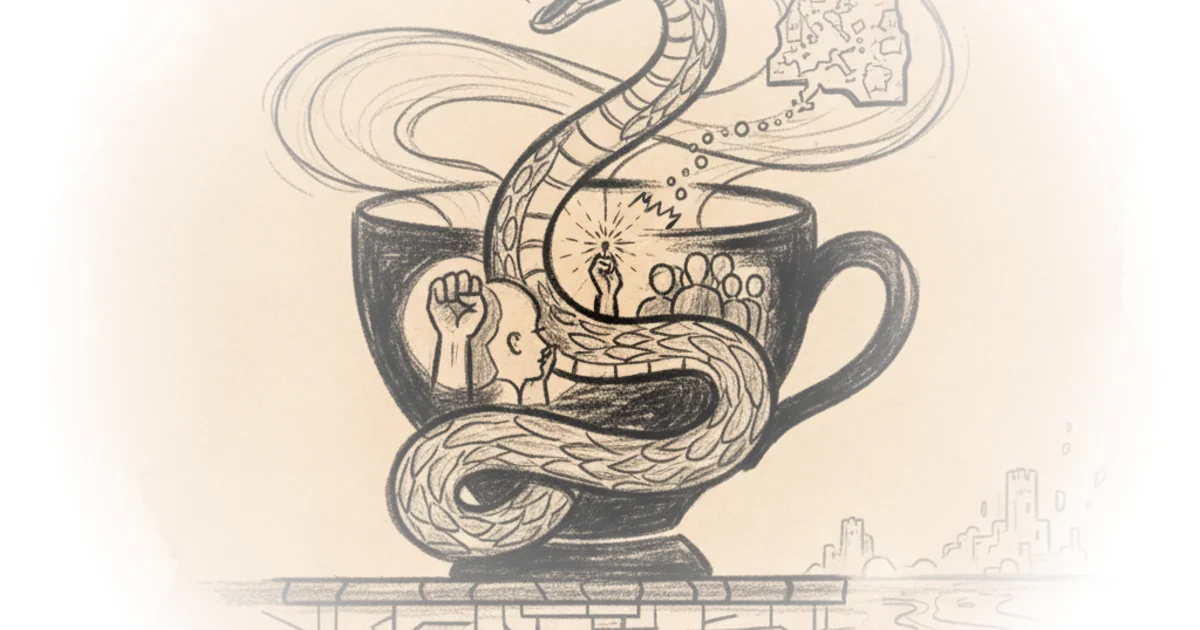
The Paranoia That Follows You Out
The reporting captures something that policy papers on authoritarian regimes rarely convey: the way surveillance becomes internalized. Even in Yerevan, hundreds of miles from Tehran, the habits of living under the Islamic Republic persist.
Despite being one of the world's few Iranian bars -- alcohol is banned in Iran -- the small, underground drinking hole rarely has enough customers to outnumber the staff. But that may well be a source of comfort for its clientele -- many of whom are paranoid after fleeing an authoritarian surveillance state.
That paranoia is not irrational. Dissidents and regime loyalists share the same language, the same cultural touchstones, and sometimes the same bar. The article notes that voices drop when a newcomer enters. Even Hossein, who fought ISIS with two Kurdish militia groups before turning twenty-two, shut down mid-interview when a group of Iranian women sat nearby.
In Iran, you have to know your audience to talk about politics.
Ahmed the bartender delivers that line almost casually, but it carries the weight of a country where the wrong sentence spoken to the wrong person can end a life. The piece is strongest when it sits in these moments of ambient dread rather than rushing to explain them.
Three Portraits, Three Kinds of Loss
Hossein's story is the quietest of the three. He is in Armenia temporarily, earning money for his wife and two-year-old daughter back in Iran. After serving prison time for his militia involvement, legitimate work at home became impossible. He is one of the few Iranians who stays connected to family through a smuggled Starlink device, the satellite internet service banned by the regime. The detail that his neighbors near police and military housing also want to use it speaks volumes about the gap between the state's prohibitions and everyday Iranian life.
Behnom Haqshenas lost his livelihood over a piece of studio art -- a poster of an eye inside a triangle that the regime called evidence of satanic conspiracy. His real offense, of course, was political.
I posted a video of me rapping about the protests in Tehran in 2018, and about a week after my studio was shut down.
Without his studio, Haqshenas could no longer teach music or produce records. He left Iran and left behind a ten-year-old daughter who will not speak to him. The article handles this with restraint, letting Haqshenas's own words do the work.
I'm fine. But ask me again and I'll cry.
That single exchange communicates more about the human cost of exile than any statistical overview could.
Majid Farokhnia and the Refusal to Hide
The most striking figure in the piece is Majid Farokhnia, who stands apart from the other subjects by refusing anonymity. His brother was executed on what Farokhnia says were false charges. His mother, consumed by grief, set herself on fire. Farokhnia himself was arrested during the 2022 protests that erupted after the killing of Mahsa Amini, the twenty-two-year-old woman beaten to death in police custody for violating hijab laws.
While describing the horror of what he saw at the protests, Majid unzipped his black winter coat to reveal soft lines of scar tissue on the left side of his chest from being shot.
He spent eight months in prison, two of them in solitary confinement, enduring interrogation, torture, and threats against his daughter. Prison guards told him repeatedly that he would be executed at five in the morning. When morning came and he was still alive, they repeated the threat. The psychological effect was cumulative and permanent.
I just want revenge.
Three words. They land hard precisely because the article has spent paragraphs establishing the cost behind them. Farokhnia is thirty-four years old but looks older. He carries a tattoo of a Kurdish woman, inked after the Amini protests. He does not lower his voice when the bartender enters the room.
The Timing Problem
The article was published in the immediate aftermath of joint United States and Israeli strikes on Iran that killed Supreme Leader Ali Khamenei. This context shapes everything. The exiles at Rose's Bar are not just reflecting on past trauma; they are watching in real time as the regime that tormented them absorbs blows it may not survive.
If I had the money, I would buy a ticket right now and go.
Farokhnia said that just hours after the initial strikes. It is a moment of raw urgency that the piece captures well.
Where the article is less convincing is in its framing of what the strikes mean for people like its subjects. The piece states that the strikes brought the Islamic regime "to its weakest point in history," but it does not interrogate what that weakness translates to for returning exiles. A weakened authoritarian state is not necessarily a safe one. Regimes in their death throes have historically lashed out hardest at internal dissidents. The article might have benefited from a sentence or two acknowledging that the window Farokhnia wants to rush through could also be the most dangerous moment to do so.
What the Bar Reveals
The best decision the reporters made was to anchor the entire piece in a single location. Rose's Bar functions as a narrative device that holds three disparate stories together without forcing connections between them. The bar itself becomes a character: the oversized Jack Daniel's bottle, the haunting photographs on dark walls, the American country and Afro-house playing over the speakers.
The songs make it almost impossible to eavesdrop on whispered conversations in the smoky VIP room, a seating area that is only accessible with permission.
The detail about Ahmed coaching Iranian customers through their first drink orders is quietly devastating. These are adults who have never had the freedom to learn what a cocktail tastes like. That small observation says as much about the reach of theocratic control as any of the graver revelations in the piece.
The "News of the Day" section appended to the end of the article, covering Khamenei's confirmed death, Iranian retaliation, and CIA involvement in targeting Iranian leadership, is standard newsletter fare. It provides useful context but sits awkwardly against the intimate, place-based reporting that precedes it. The tonal shift is jarring, moving from a man showing his gunshot scars to bullet-pointed geopolitical updates and a photo of someone's cat.
Bottom Line
This is ground-level exile journalism done right. The Counteroffensive went to a place most outlets would overlook -- a half-empty bar in a Yerevan alleyway -- and found stories that illuminate the human wreckage of the Islamic Republic more vividly than any satellite imagery of bombed government buildings. The piece trusts its subjects to carry the narrative and resists the temptation to over-explain. Its main limitation is a reluctance to push back on the optimism that military strikes will translate into safety for the people drinking at Rose's. Revolution is indeed dreamed up in places like this. Whether those dreams survive contact with the chaos of regime collapse is a question the article raises but does not answer.