The Danelectro Daddy O isn't just another overdrive pedal. It's a piece of guitar history, born from the same lineage that spawned countless other circuits—including Josh Scott's own Angry Charlie. When JHS launched these pedals in 1997, Steve Rattinger's relaunch at NAM sold 10,000 guitars off the floor—an almost unheard-of feat. The Daddy O is essentially a Marshall Governor clone, and the Marshal Governor is the tree that so many pedals have branched from.
A Pedal With Stories
What makes this particular Daddy O special is its backstory. It arrived from Robbie, who wrote to explain why he'd kept the pedal even though it stopped working years ago. His father bought it for him before he passed away 15 years ago. Robbie realized he needed to let go of things rather than becoming a gear hoarder—but he wanted this particular pedal to remain in the JHS collection.
"I think pedals are beautiful vehicles of just story and life."
Josh fixed the pedal, performed a special mod, and is mailing it back to Robbie. The emotional weight of that connection—pedals carrying memory and meaning—is what makes this modification meaningful beyond just circuitry.
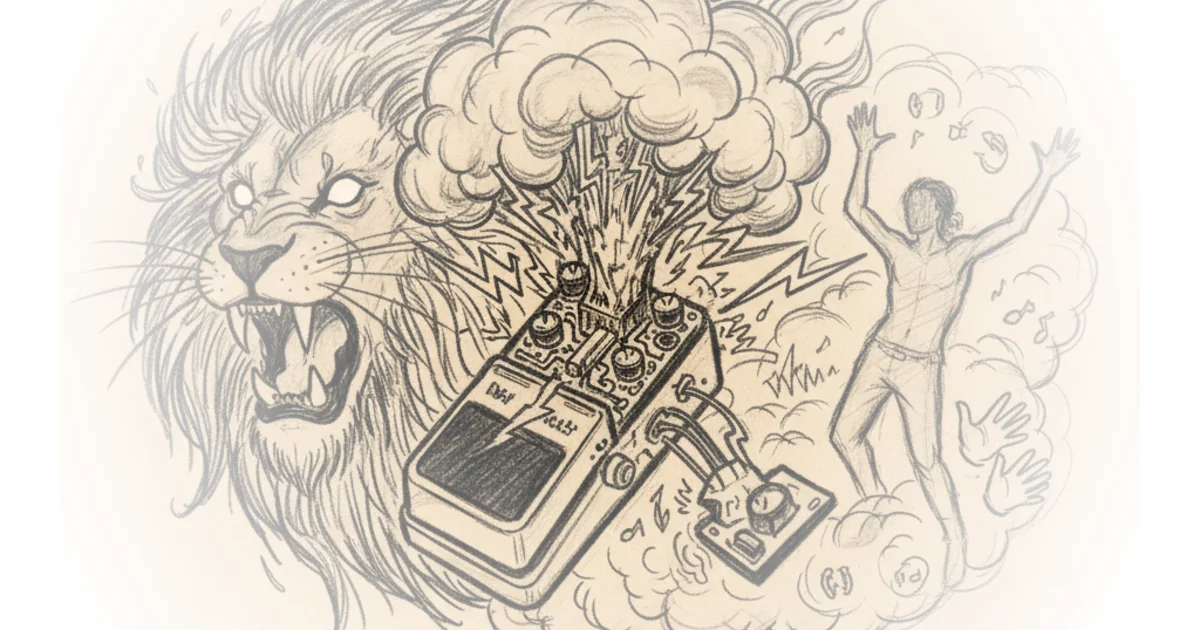
The Modification Process
Before modifying anything, test the pedal to ensure it works. Never modify a non-functional pedal until you know its baseline state. Josh demonstrates with a three-band EQ featuring volume, bass, mids, treble, and drive controls.
The disassembly involves removing four back plate screws. Josh recommends using a workbench mat to keep parts organized—it's cheap on Amazon and makes reassembly much easier later. The process involves multiple screw layers: top section, then the jack section, then another layer. Magnetic tip screwdrivers become your best friend during this process.
The first modification changes capacitor C10 from its stock value to 0.1, creating a smoother treble response. This requires using a solder sucker or soldering braid to remove the old component and replace it with the new one.
The Risk of Modification
One crucial warning: modifying a pedal can break it. Go slowly—modify one thing at a time, test after each change, and you'll always know where you broke something if things go wrong. Most mistakes are simple errors, not catastrophic damage.
Bottom Line
This piece works because it combines technical instruction with genuine emotional weight. The modification itself is straightforward—but the context of honoring someone's memory through a pedal circuit transforms an ordinary how-to into something more meaningful. The core insight isn't really about capacitors or EQ settings; it's about the objects we keep that carry our stories. Josh Scott's approach—testing each mod separately, keeping parts organized, proceeding with caution—is sound advice for beginners. His biggest vulnerability is structural: the video format means readers can't see the visual details of which capacitor to modify, so they'd need to cross-reference with a written diagram before attempting this at home.