← Back to Library

Covid-19 six years later

Six Years After Covid-19

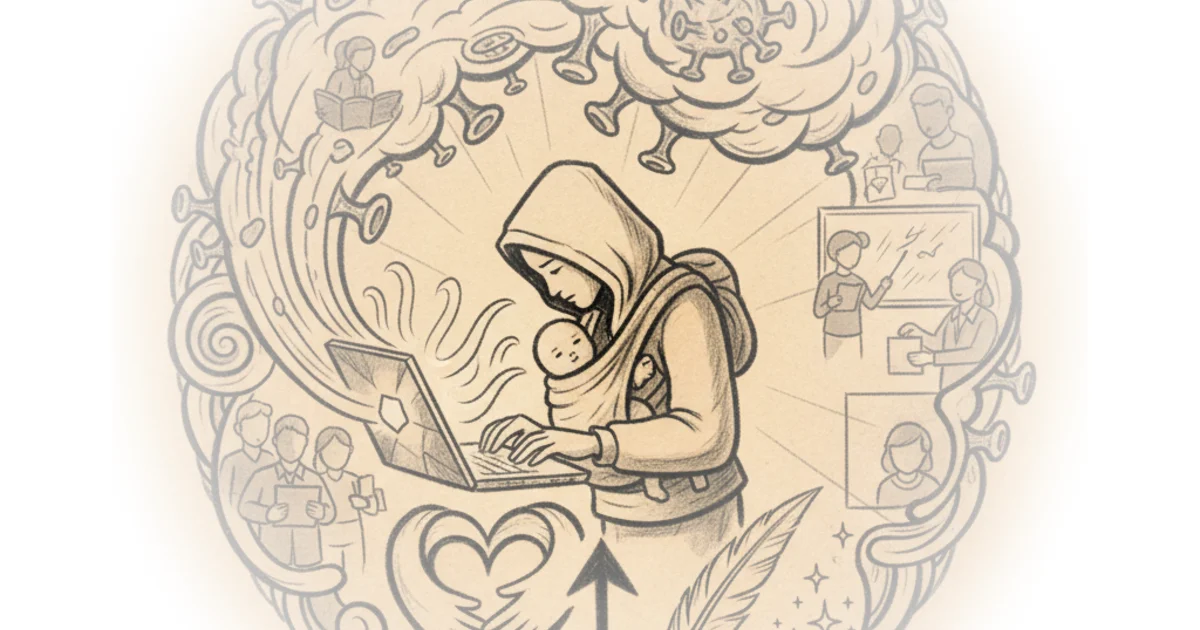
Six years ago, Katelyn Jetelina put her baby in a camping carrier, strapped her onto her chest, opened her laptop on her dining room table, and started typing as fast as she could. She couldn't believe how little communication existed that was timely, understandable, and actionable — with the humility and honesty the public deserved. So she tried to fill that gap.

She told her husband she'd only have to do this for six weeks. Surely someone would fill that gap.

The rest is a blur.

March 22, 2020. Lockdown. Strapped the baby in order to work from home. The start of Your Local Epidemiologist.

A lot has changed since then.

Where We Stand Now

Covid-19 is no longer the third leading cause of death. In fact, it now carries roughly the same severity as the flu. While flu is nothing to brush off, this virus not being a top killer is genuine relief.

Peaks are getting smaller and smaller. Each successive wave has been lower than the last — a pattern reflected in almost every metric, including hospitalizations.

This isn't surprising: as our collective immunity builds, the virus has a harder time breaking through.

SARS-CoV-2 continues to evolve along the same narrow path, which is unusual but very helpful in reducing the number of people with the disease. The coronaviruses that cause the common cold may eventually follow the same path. We are clearly not there yet, as hospitalization rates tell us, but the trajectory is meaningful.

Interestingly, seasonality has recently shifted. We now reliably see two waves each year: one in winter, one in summer. But nationally over the past two years, the summer wave has been larger than the winter wave. We don't know why.

Unfortunately, vaccination rates continue to fall. Roughly 3.5 million fewer older Americans were vaccinated this year compared to last year. That means 3.5 million people in the highest-risk group are now less protected from a largely preventable disease.

Some patterns haven't changed. Those most at risk for severe disease remain the same: Adults over 65 and infants under one year old continue to be the most likely to be hospitalized. The vast majority of hospitalizations are still for Covid-19, not incidentally with it. Risk increases with the number of chronic conditions a person has.

Long Covid is also still a risk — physical symptoms persisting weeks or months after infection.

The vaccines continue to provide additional protection — about 50% against emergency room visits and hospitalization. Protection does still wane, dropping to roughly 18% at around four months. The decline is slower than before, particularly for hospitalization among adults aged 65 and older.

What We Still Don't Know

There's still a lot we don't know, Jetelina observes. It's striking how much remains unknown about this virus six years in.

Long Covid is still poorly understood, with millions of people living with fatigue, cognitive impairment, and cardiovascular effects that medicine is only slowly grappling with.

We know risk has decreased alongside the decline in severe acute disease, but we still lack reliable data on the extent of that decline, and we still have no effective treatments.

Vaccine dosing for older adults is another gap. Current guidance recommends two updated vaccine doses per year for older adults: one in the fall and one in the spring. But robust data on whether two annual doses offer better protection than one is still extremely limited. In fact, Jetelina notes she couldn't find any data that are actually useful for guiding people to make evidence-based decisions about getting a second dose and when.

We also still don't have a clear, honest accounting of which interventions worked during the biggest health emergency this country has faced in more than 100 years. For example, we still don't know what works best to slow the spread of Covid-19. This is mind-boggling, given all we sacrificed as a society, let alone how ill-prepared we are for next time.

A counterargument is that Jetelina's characterization of vaccine data gaps may understate the difficulty of running large-scale dosing studies during a period of waning public cooperation with clinical research.

The Trust Problem

When researchers compared countries that fared well during Covid-19 to those that didn't, they looked at health care infrastructure, population density, universal health care, age distribution, how many vaccines they got, and a ton of other factors. But the strongest predictors of Covid-19 infections weren't any of these.

It was trust: trust in government, trust in institutions, trust in each other. Countries where people broadly believed their neighbors and leaders were acting in good faith did measurably better.

The United States ranked among the lowest among high-income countries.

Six years later, it's getting worse, Jetelina argues. Federal leadership has promised to restore trust. But the latest data show record-low levels of trust in government overall, and specifically in health agencies; trust is eroding further day by day. Lack of transparency, full-on destruction of systems and capabilities, partisan attacks, lack of accountability, performative acts without real change, and a failure to listen to the public are all contributing to it.

Public health, on the outside, isn't providing an alternative path forward either. Many institutions and leaders are stuck in defense mode, circling the wagons to preserve the status quo, or paralyzed, afraid to take even one step forward. Wishing we could return to 2019 is not a plan.

Public health systems saved many people, but they also failed many.

Jetelina says she is finally starting to see some appetite for change peppered here and there, and it gives her hope that things might improve, but not at the pace that meets the urgency of the moment. The health of Americans and biosecurity depend on it. Critics might note that attributing pandemic outcomes primarily to trust, while supported by correlation, risks oversimplifying the role of concrete policy choices — such as testing infrastructure, border controls, and hospital capacity — that varied dramatically between countries.

Bottom Line

Six years! Six years with a complicated data story of real progress alongside real stubbornness.

This anniversary is striking for two reasons, Jetelina reflects. The first is the virus itself: it continues to surprise us, and we remain humbled by how much we still don't understand. The second is what has happened to us in its wake.

Six years ago, Jetelina sat down at her dining room table because she deeply believed things needed to be done differently. She still believes that today.

The question now is whether this country has the wherewithal to do it. Jetelina believes we do — we need to — but it's going to take all of us.

Questions You Might Have

A lot of readers have Covid-19-related questions. Here are some answers:

What do we know about long Covid in 2026? The risk of developing long Covid has decreased significantly compared to early pandemic years, but it's not zero. Millions are still living with it, and we still have no proven treatments.

Will we still be able to get updated vaccines this fall? This is uncertain in a way it has never been before. The federal government's vaccine policy is highly unstable.

Are home rapid tests still reliable? Yes, but timing still matters. Tests are most accurate a few days into symptoms, not at the first sign of illness. So, a negative on day one is not a green light. Test again 24 to 48 hours later for a clearer picture. There are no longer free Covid-19 tests through the government, but you can get one at a pharmacy or online.

Where can one find trustworthy data now? Jetelina still trusts CDC data, and they have a great respiratory dashboard that is updated weekly. She does not trust CDC's guidance around vaccines from the past year.

How much damage does Covid do to the heart, brain, and vascular system? Covid infection is associated with an elevated risk of heart attack, stroke, blood clots, and cognitive decline, even after mild cases. The elevated risk appears to diminish over time for most people, and vaccination reduces the likelihood of these outcomes.

Who should take Paxlovid, and is it still effective? Paxlovid remains effective at reducing the risk of severe disease, particularly for people over 65 and those with underlying conditions. It may also reduce the risk of long Covid, though if it does, the effect is probably small. The $800 out-of-pocket cost for Medicare patients is a serious, largely unaddressed barrier that keeps it from those who need it most.

Metformin has shown some promise in preventing long Covid, but the benefit for vaccinated people is less clear, probably because the vaccines already reduce the risk so much that it's hard to see additional benefit on top of them.

When are we getting a vaccine that prevents infection, not just severity? This is a complicated question, and scientists are still working on it. Right now, many researchers are excited about nasal spray vaccines. The idea is that if you can build up immunity right in your nose and throat — where the virus first enters — your body might be able to stop the infection before it starts.

But there are a few catches. If you've already had Covid-19, getting a regular vaccine already sends immune cells to your nose anyway, so a nasal vaccine might be less of a leap forward than we hope. On top of that, it likely wouldn't protect you for long and would still require regular boosters as the virus mutates.

The good news is that nasal and mucosal vaccines are being developed right now, and early results look promising. Scientists are also working on a universal coronavirus vaccine that could protect against many variants at once, but that's a longer-term goal.

The bottom line: better vaccines are coming, but a widely available next-generation option is probably still a few years away.

Deep Dives

Explore related topics with these Wikipedia articles, rewritten for enjoyable reading:

  • SARS-CoV-2 4 min read

    The virus causing COVID-19 is discussed as evolving along a narrow path and becoming less severe over time.

  • Nirmatrelvir/ritonavir 4 min read

    Mentioned in the excerpt as a treatment option; provides context on antiviral treatments for COVID-19.

  • Long COVID 13 min read

    The article discusses long-term effects and reflection on the pandemic, making this condition highly relevant to the topic.

Six years ago today, I put my baby in a camping carrier, strapped her on, opened my laptop on my dining room table, and started typing as fast as I could. I couldn’t believe how little communication existed that was timely, understandable, and actionable, with the humility and honesty the public deserved. So I tried to fill that gap, bringing my fellow faculty, staff, and students along for the Covid-19 journey in real time, signing every email the same way: Love, Your Local Epidemiologist. I told my husband I would only have to do this for six weeks. Surely someone would fill this gap… The rest is a blur (with many lessons learned along the way.)

A lot has changed since then. I don’t do many deep dives on Covid-19 anymore because the landscape has dramatically changed for the better, but also because, honestly, it brings back some overwhelming emotions. But this anniversary matters not only so you can protect yourself from this virus that is still circulating, and not only to honor the 1.5 million people who died, but also because this moment deserves serious reflection.

So, six years later, this is where we stand.

A lot has changed, and continues to do so.

Covid-19 is no longer the third leading cause of death. In fact, it now carries roughly the same severity as the flu. While flu is nothing to brush off, this virus not being a top killer is genuine relief.

Even better news: Peaks are getting smaller and smaller. Each successive wave has been lower than the last, a pattern reflected in almost every metric, including hospitalizations (see below). This isn’t surprising: as our collective immunity builds, the virus has a harder time breaking through. SARS-CoV-2 continues to evolve along the same narrow path, which is unusual but very helpful in reducing the number of people with the disease. The Covid-19 cousins we call coronaviruses are now responsible for the common cold, and there’s a hypothesis that this virus may eventually follow the same path. We are clearly not there yet, as hospitalization rates tell us, but the trajectory is meaningful.

Interestingly, seasonality has recently shifted. We now reliably see two waves each year: one in winter, one in summer. But nationally over the past two years, the summer wave has been larger than the winter wave (see above). We don’t know why.

Unfortunately, vaccination rates ...