Cory Doctorow delivers a jarring, counter-intuitive thesis: that the chaotic dismantling of American hegemony by the current administration has inadvertently accelerated the global transition to clean energy and digital sovereignty. While most observers focus on the immediate human cost of geopolitical instability, Doctorow argues that the very policies designed to protect fossil fuel interests and US tech dominance have backfired, creating a vacuum that the rest of the world is rushing to fill with superior, decentralized alternatives.
The Unintended Accelerant
Doctorow reframes the narrative of American decline not as a tragedy, but as a catalyst for necessary global modernization. He writes, "There aren't a lot of things I agree with Mark Carney about, but there's one area where he and I are in total accord: the old, US-dominated, 'rules-based international order' was total bullshit." By rejecting the nostalgia for a system that often enforced inequality, the author sets the stage for a radical re-evaluation of current events. The core of his argument rests on the idea that protectionism, when weaponized by the executive branch, forces other nations to innovate rather than rely on American exports.
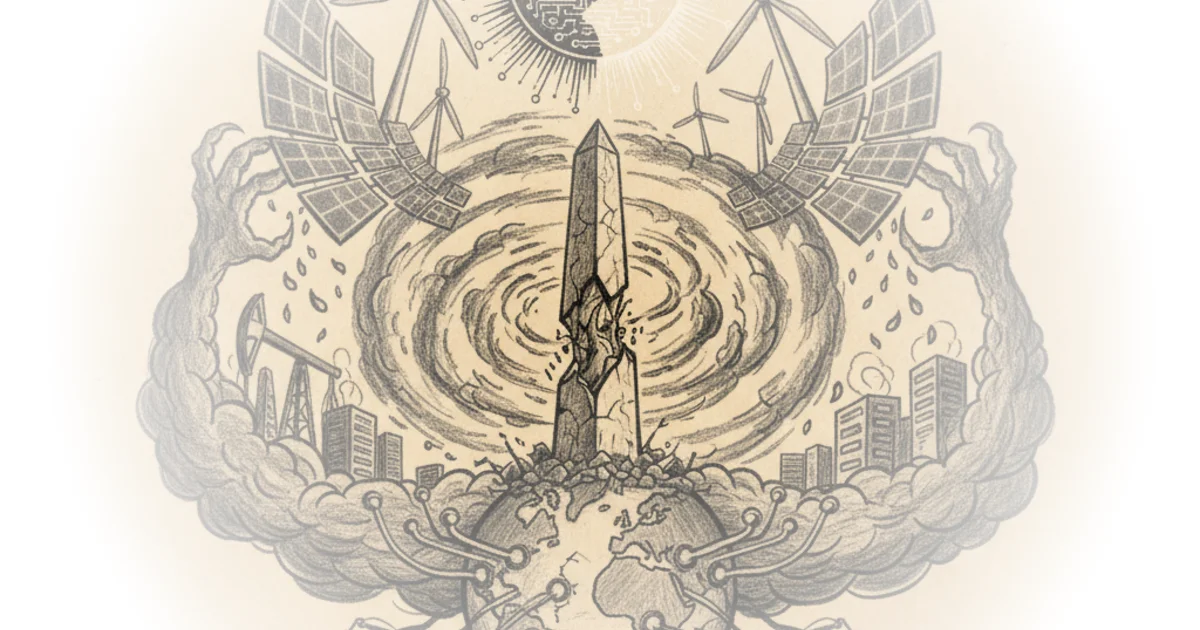
Consider the shift in the energy sector. Doctorow points out that tariffs intended to punish China for solar panel production ended up flooding markets in the Global South with cheap technology. "Pakistani bridal dowries now routinely include four panels, an inverter and a battery," he notes, illustrating a bottom-up revolution that bypassed traditional grid infrastructure. This is a stark inversion of the usual dynamic where wealthy nations hoard innovation. The author connects this to historical failures in global health, recalling how "monsters like Howard Dean insisted that we had to prevent countries in the global south from making their own covid vaccines," arguing that the current energy shift is a corrective to that same paternalism.
The fossil fuel industry has been so insistent that no one get to try it! But cleantech is so much better than fossil fuels — cheaper, more reliable, cleaner — that anyone who tries it becomes an instant convert.
The commentary here is compelling because it highlights the psychological impact of scarcity. Doctorow argues that "rationing is so psychologically scarring that it induces people to make long-delayed investments that result in permanent changes to their consumption habits." When the administration's policies or geopolitical conflicts choke off gas supplies, as seen in the Strait of Hormuz, consumers and businesses are forced to adopt electric alternatives not out of ideology, but out of necessity. This mirrors the rapid energy transition in Europe following the invasion of Ukraine, where "policy shifts in areas that had been deadlocked for a decade, like approvals for balcony solar," suddenly became possible. The author suggests that the UK, despite its planning restrictions, is now "begging us to use more energy this summer, because the grid can't absorb all those lovely free electrons."
Critics might note that this perspective risks downplaying the severe human suffering caused by the very conflicts and policies driving this transition. The acceleration of cleantech does not erase the cost of war or the instability of supply chains; it merely capitalizes on the disruption. However, Doctorow's point remains that the momentum for decarbonization is now irreversible, driven by market forces rather than moral appeals.
The End of American Tech Hegemony
The argument extends beyond energy into the realm of digital sovereignty. For years, the US has enforced "anticircumvention" laws that prevent other nations from modifying or replacing American technology. Doctorow contends that the administration's willingness to weaponize these platforms against foreign judiciaries and political opponents has shattered the illusion of American benevolence. "When Trump started weaponizing US tech platforms to take away the working files, email accounts and cloud calendars of judges who pissed him off... he put the whole world on notice that he could shut down their governments, judiciaries or companies at the click of a mouse."
This realization, Doctorow argues, has liberated other nations from the obligation to maintain these restrictive laws. "Happy Liberation Day, everyone! The post-American internet is at hand," he declares, suggesting that the collapse of trust in US tech giants is the final nail in the coffin for their global dominance. The author draws a parallel to the energy sector, noting that just as solar panels are now cheaper and more reliable than fossil fuels, alternative digital ecosystems are becoming viable because the cost of staying within the US orbit has become too high.
The writing is on the wall. Trump opened Alaska for drilling and the oil companies noped out because they couldn't find a bank that would loan them the money needed to get started.
This section is particularly sharp in its analysis of financial realities. The author observes that even in the most pro-oil jurisdictions, the economic logic has shifted. Texas ranchers, traditionally aligned with fossil fuel interests, are now leading the charge against mandates that would force them to maintain outdated infrastructure. "When the oil-captured Texas legislature introduced a bill to force electric companies to add one watt of fossil power for every watt of solar that their customers installed, furious ranchers from blood red Republican rural districts flooded their town hall meetings," Doctorow writes. This grassroots resistance demonstrates that the transition is no longer a partisan issue but a matter of economic survival.
Bottom Line
Doctorow's most powerful contribution is the reframing of American instability as a global opportunity for modernization, arguing that the administration's destructive policies have inadvertently cleared the path for a cleaner, more sovereign world. The argument's greatest vulnerability lies in its optimism about the speed of this transition, potentially underestimating the entrenched power of fossil fuel lobbies and the human toll of the disruptions required to break them. Readers should watch to see if this momentum holds as the global economy continues to grapple with the fallout of these geopolitical shifts.