Rohin Francis delivers a startling medical truth from the quiet chaos of a 3 a.m. hospital shift: the very act of saving a heart attack victim by restoring blood flow can also inflict a second, devastating wave of damage. This is not a theoretical curiosity but a daily reality for interventional cardiologists, a phenomenon Francis calls "reperfusion injury" that turns the instinct to "unblock the artery" into a complex, high-stakes gamble. For the busy professional seeking to understand the hidden fragility of modern medicine, this piece offers a rare glimpse into why the most obvious cure sometimes makes things worse before they get better.
The Plumber's Paradox
Francis begins by dismantling the intuitive logic of emergency cardiology. He describes his role with self-deprecating humor, noting, "I usually quip that I'm ultimately just a plumber." Yet, he immediately pivots to the core contradiction: "But what if I told you that the act of unblocking that artery, whether it's supplying the heart, a kidney, a brain, or a leg, actually caused more damage." This counterintuitive claim is the engine of his entire argument. He explains that while the initial blockage starves cells of oxygen, the sudden return of blood triggers a toxic cascade of free radicals and inflammation that the weakened tissue cannot withstand.
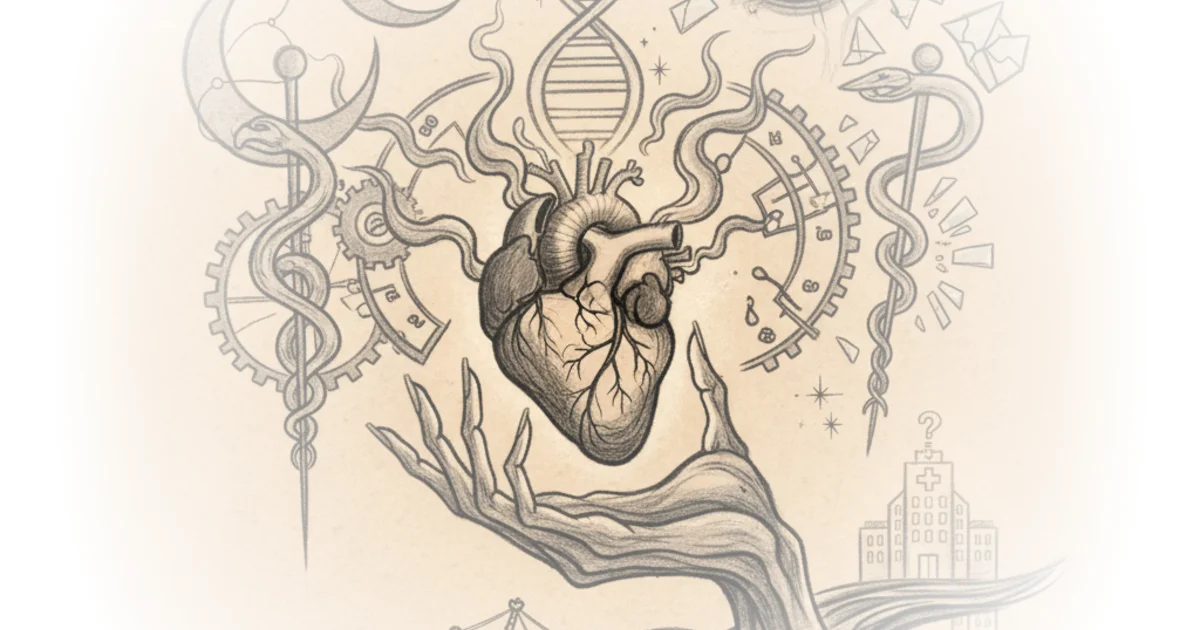
The author's ability to translate complex cellular biology into visceral imagery is his strongest asset. He describes the moment blood returns as a "red tsunami of oxygenated blood" that brings a "second wave of destruction." This framing effectively captures the violence of the biological response, moving beyond dry statistics to explain why a patient's pain can paradoxically worsen the moment the blockage is cleared. Critics might argue that focusing on the damage of reperfusion risks undermining public confidence in life-saving stent procedures, but Francis is careful to contextualize this: the procedure remains the only option that saves lives overall, even if it inflicts collateral damage.
Things get worse before they get better. In fact, that's kind of the TLDDW for this whole video.
The Double-Edged Sword of Restoration
Francis details the mechanism of this injury with precision, explaining how the sudden influx of calcium acts like a "crazed calcium cowboy that just comes into the saloon and starts shooting the place up." This metaphorical flourish serves a practical purpose, demystifying why the heart's pumping function can suddenly deteriorate or why blood pressure can crash immediately after a successful intervention. He connects this to the "no reflow phenomenon," where the vessel is open but the tissue is so swollen and inflamed that blood simply cannot pass through, a visual failure that is "demoralizing to do all that and then at the end of the procedure you get this no reflow."
The argument here is not just about the mechanics of cell death but about the limitations of human intervention. Francis notes that the longer the time between the heart attack and treatment, the more severe this secondary injury becomes. This highlights a critical vulnerability in the current medical model: our ability to fix the blockage is far superior to our ability to protect the tissue from the shock of recovery. He acknowledges that while mortality rates have plummeted due to better stenting and care, the biological reality of the "two hit phenomenon" remains a stubborn obstacle.
The Mystery of Remote Preconditioning
Transitioning to the second paradox, Francis introduces a bizarre discovery from the 1980s: that inducing temporary, harmless blockages in a different part of the body can actually protect the heart during a future attack. He recounts how researchers found that inflating a blood pressure cuff on a patient's arm a few times could reduce the size of a subsequent heart attack. "If you create temporary eskeeia, a little suson of hypoxia a few times before a heart attack, the heart attack is actually smaller," he writes, highlighting the sheer strangeness of a kidney or an arm somehow signaling the heart to brace for impact.
This section underscores the profound gaps in medical knowledge. Francis admits, "Well, in a sentence, we don't really know," regarding the exact mechanism. This honesty is refreshing; rather than overselling a cure, he presents a fascinating biological mystery where the body's defense systems are triggered by stress in one organ to protect another. The implication is that the body possesses a sophisticated, albeit poorly understood, communication network that modern medicine is only beginning to tap into. A counterargument worth considering is whether these findings, largely derived from animal studies, translate reliably to human outcomes in the chaotic environment of an emergency room.
The very process of restarting blood, the blood flow has directly caused damage.
Bottom Line
Francis's commentary succeeds because it refuses to sanitize the messy reality of medical science, presenting reperfusion injury not as a failure of technique but as a fundamental paradox of biology. The piece's greatest strength is its ability to humanize the clinical experience, showing that even the most successful interventions carry hidden costs. However, the argument leaves the reader with a lingering question: if we cannot yet prevent this secondary injury, how much longer must we rely on a "treat first, figure out the side effects later" approach? The future of cardiology may depend on solving the mystery of remote preconditioning before the next heart attack strikes.