Devin Stone, a legal analyst known for dissecting complex cases, abandons his usual detached courtroom demeanor to deliver a raw, unfiltered condemnation of a state-sanctioned killing. His most striking claim is not merely that the shooting was unjustified, but that the entire deployment of Immigration and Customs Enforcement and Customs and Border Protection agents to Minneapolis was a calculated act of "stoastic terrorism" designed to suppress First Amendment rights rather than enforce immigration law.
The Human Cost of State Violence
Stone begins by stripping away the legal jargon that often shields government overreach, asserting that the video evidence speaks for itself. "There is no excuse. Uh there is no justification. And it is the latest in what is probably a long line," he states, emphasizing that the brutality was inexcusable regardless of the victim's background. He highlights a specific, heartbreaking detail from the footage: the victim, Alex Prey, used his final moments not to defend himself, but to ask a woman pushed down by an officer, "Are you okay?" Stone argues that this act of compassion underscores the tragedy, noting that "the last thing that Alex Prey did was to help others."
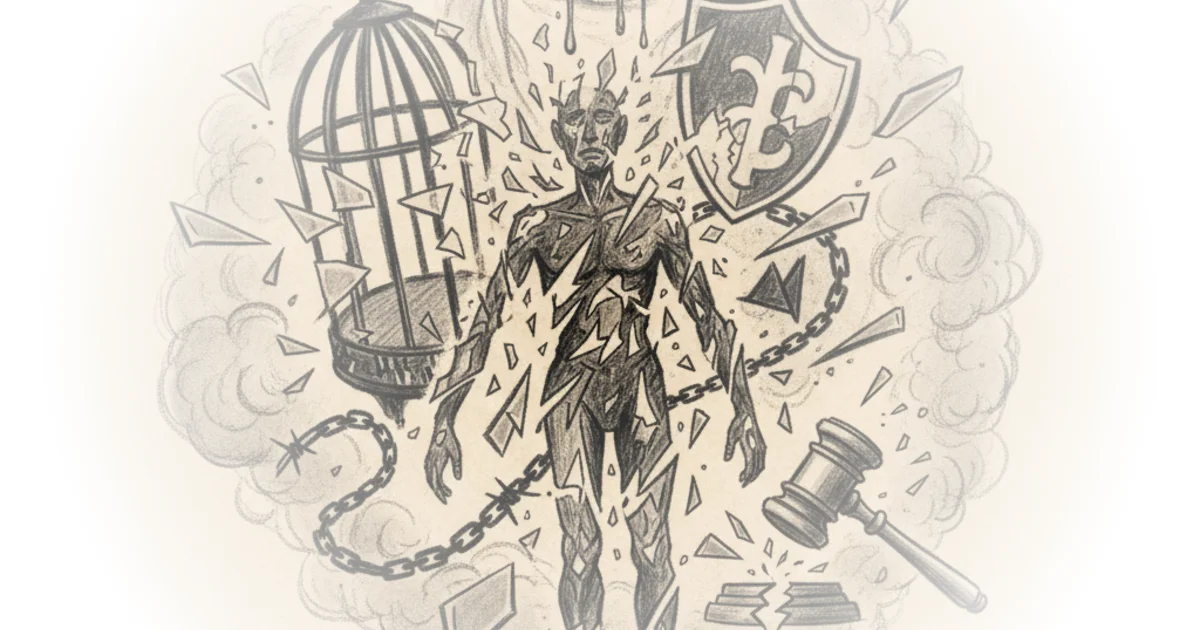
This framing is powerful because it humanizes the victim in a way that legal briefs rarely do. By focusing on Prey's final words, Stone forces the listener to confront the moral bankruptcy of the situation rather than getting lost in procedural debates. However, critics might note that relying solely on the victim's character to prove the illegality of the shooting risks shifting the burden of proof; the state's actions should be illegal regardless of whether the victim was a saint or a criminal. Stone anticipates this, stating, "my legal analysis doesn't change when the victim is, you know, a bank robber or a saint," yet the emotional weight of the "saint" narrative clearly drives his outrage.
The Militarization of Civil Agencies
The commentary shifts to a broader critique of federal agency roles. Stone argues that agencies like ICE and CBP are fundamentally ill-equipped and unauthorized to act as crowd control units. He draws a sharp parallel: "It would be as if we gave every uh postal worker and every person who delivers the mail um you know an AR-15."
This analogy effectively demystifies the absurdity of the situation for the average listener. Stone contends that these agents are not enforcing criminal law but are instead engaging in "state sponsored um protest control of people exercising their first amendment rights." He points out the chilling effect of agents wearing masks and flak jackets, suggesting these are tools "to obscure their identity and prevent accountability" rather than necessary safety gear. The argument here is that the very presence of 3,000 armed federal officers in a protest zone was the catalyst for violence, creating a scenario where death was not just possible but likely.
"If you send 3,000 untrained psychopaths with guns into a place where people are angry... you don't know who's going to die, but you know that people are going to die."
Stone's use of the term "psychopaths" is provocative and lacks the nuance of a standard legal analysis, but it reflects the raw anger of the moment. While some may argue that federal agents undergo rigorous training, Stone's point about the context of their deployment—using lethal force against civil protesters—remains his strongest legal and moral objection. He asserts that the entire operation was a "terror campaign" with no legitimate immigration enforcement basis.
The Legal and Political Fallout
Despite the chaos, Stone finds a glimmer of hope in the swift legal response. He praises the lawyers who, within hours, secured a temporary restraining order to stop ICE from destroying evidence, a move he calls "incredible" given the usual bureaucratic delays. He notes that a the president-appointed judge granted this order, signaling that even within the current administration's judiciary, the overreach was too egregious to ignore.
Stone then turns his fire toward the political leadership, accusing the president and Stephen Miller of having "blood on their hands." He reveals a particularly damning detail: Attorney General Pam Bondi's offer to withdraw ICE forces in exchange for voter data from the governor. Stone interprets this as a confession that the operation was never about immigration, but rather a political maneuver to "win the next election." He concludes that the current system of qualified immunity is "untenable and disgusting," calling for Congress to strip these protections and for the top officials to face impeachment.
Critics might argue that Stone's call for immediate impeachment and the removal of all qualified immunity is politically unrealistic in the current climate, potentially alienating moderate supporters. Yet, his argument serves as a necessary moral baseline, refusing to accept the status quo as inevitable.
Bottom Line
Stone's piece is a rare blend of legal expertise and moral fury that successfully reframes a specific shooting as a symptom of systemic tyranny. His strongest argument lies in exposing the disconnect between the agencies' stated missions and their actual actions on the ground. The piece's greatest vulnerability is its reliance on the assumption that the political will exists to enact the sweeping reforms he demands, a hurdle that remains steep. Readers should watch for the outcome of the emergency motions he cites, as they may set the legal precedent for how the courts handle federal overreach in the future.