In a landscape of political noise, Rohin Francis cuts through the absurdity to expose a terrifying reality: the United States is preparing to run a massive, uncontrolled experiment on the health of its children and the integrity of its medical research. This isn't just about a controversial cabinet pick; it is a structural collision between evidence-based science and a movement built on "vibes" that threatens to dismantle the institutions protecting public health globally.
The Architecture of a Health Crisis
Francis opens by dismantling the notion that this appointment is a mere political maneuver, framing it instead as a potential catastrophe for the entire healthcare ecosystem. He writes, "We will soon find out if the rest of us outside America are in the control arm of a huge experiment with Healthcare." This framing is crucial because it elevates the stakes from domestic US politics to a global public health emergency. The author argues that the selection of Robert F. Kennedy Jr. for the Department of Health and Human Services is not an anomaly but the logical endpoint of a system that has long prioritized entertainment value over medical competence.
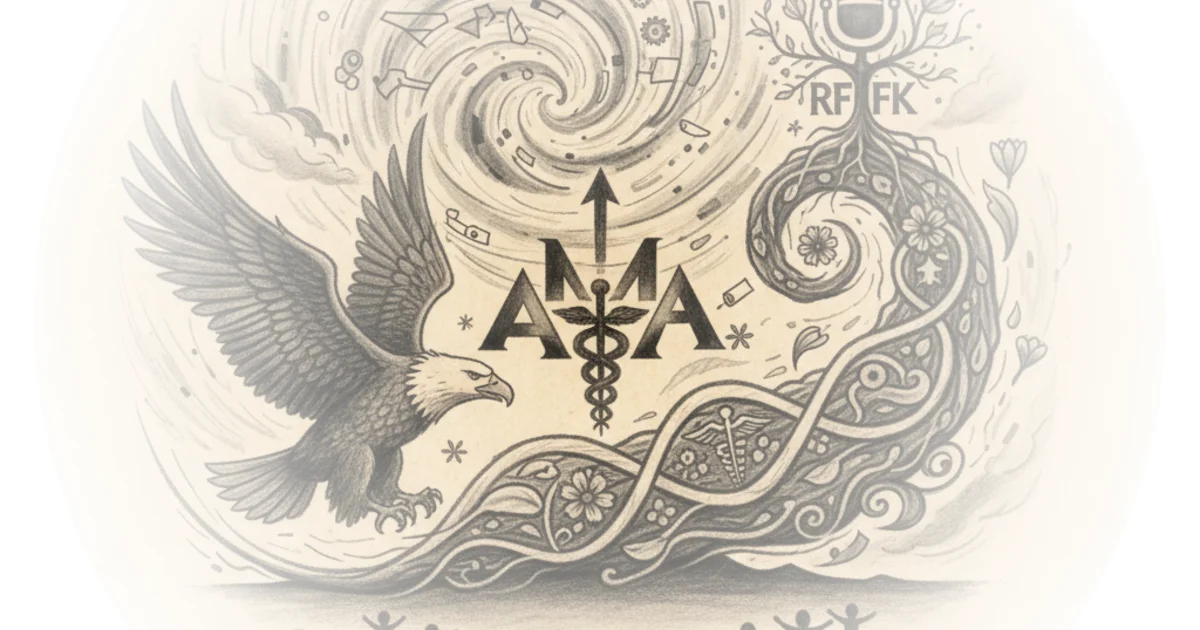
The commentary highlights a disturbing trend where scientific consensus is replaced by influencer status. Francis notes, "The United States has the biggest economy in the world and it spends more of its GDP... on health care than any other country in the world," yet it is placing the budget for Medicare and Medicaid in the hands of someone who has "spent his entire career peddling pseudo science." This juxtaposition of immense financial power with a complete disregard for evidence creates a volatile dynamic. The author suggests that patients can now expect treatments like "juice cleanses and coffee enemas for their abdominal pain" rather than proven medical interventions.
If Joe Rogan is questioning your claims then you exist in a rarified air at least four standard deviations away from the mean.
Francis's critique extends beyond the individual to the broader cultural shift that allows such figures to ascend. He points out that while the Kennedy family has disowned the nominee, the "Maha" (Make America Healthy Again) movement has successfully rebranded fringe conspiracy theories as a legitimate political platform. The author observes that the movement's branding is "completely irrelevant to any of this" regarding its Hindi origins, yet it serves as a perfect vessel to "entice the crunchy yoga conspirituality types." This rebranding effort masks the dangerous core of the ideology, which Francis describes as a "litany of unhinged things" including the claim that HIV might not cause AIDS or that vaccines cause autism.
The Danger of "Vibes" Over Evidence
The most incisive part of Francis's analysis is his rejection of the idea that the nominee is merely "skeptical." He argues that skepticism implies a willingness to engage with data, whereas the nominee operates on a different plane entirely. Francis writes, "He operates entirely on Vibes and I am stunned that people who have previously been vocally critical of him are now sashing him because he is soon to be in power." This observation captures the moral hazard of political expediency, where experts and commentators lower their standards to align with a rising power, ignoring two decades of "unscientific disproven idiotic claims."
The author details specific, well-documented falsehoods to illustrate the depth of the problem, noting that the nominee has promoted the idea that 5G networks cause cancer and that atrazine in water can turn children gay or trans. Francis emphasizes that these are not minor disagreements but fundamental rejections of established science. He states, "There is no scientific uncertainty about this [HIV causing AIDS] — it's a fact." By listing these claims, Francis demonstrates that the nominee is not a reformer but a purveyor of disinformation who has been identified as one of the "disinformation Dozen" responsible for the majority of false vaccine information online.
Critics might argue that focusing solely on the nominee's past statements ignores the potential for policy pragmatism once in office. However, Francis counters this by explaining that the nominee's goal is not to ban vaccines outright but to "normalize parents declining to vaccinate their children" and alter vaccination schedules. This strategy, he warns, leads to a reduction in vaccine uptake, which has catastrophic knock-on effects for herd immunity. "Even if it is a minority of people that does this the knock on effects can be huge," Francis argues, highlighting the unique nature of vaccines as an intervention where individual choices impact the entire population.
A stopped clock is right twice a day and we do not Lord it as it being a promising time piece.
The Global Ripple Effect
Francis concludes by connecting the dots between the US healthcare system's failures and the rise of this movement. He posits that the appointment is a "uniquely American result" of a system that "routinely fails both patients and staff but benefits insurance companies and pharmaceutical companies." This systemic failure has created an environment where anti-science narratives thrive. The author warns that the nominee will also control the National Institutes of Health, the Centers for Disease Control and Prevention, and the Food and Drug Administration, placing the world's most important medical research under the guidance of someone who believes in "leaky brain" caused by Wi-Fi.
The commentary serves as a stark reminder that the influence of US health policy extends far beyond its borders. As Francis puts it, "The United States has an enormous influence on the rest of the world particularly when it comes to healthcare so this has the potential to affect us all." The piece suggests that the coming years will test whether the global scientific community can withstand the pressure of a major world power actively undermining the principles of evidence-based medicine.
Bottom Line
Francis's strongest argument lies in his refusal to treat the nominee's views as a matter of legitimate debate, instead categorizing them as dangerous disinformation that threatens the foundation of public health. The piece's biggest vulnerability is its reliance on the assumption that the nominee will have unchecked power to implement these views, though the political reality of a divided government may act as a brake. Readers should watch for how the administration navigates the tension between its ideological commitments and the legal requirements of the agencies it now controls. The verdict is clear: this is not a standard political transition, but a potential unraveling of the scientific consensus that has protected humanity for centuries.