Tim Mak's reporting cuts through the noise of war to reveal a startling paradox: desperate parents are risking their lives in a conflict zone to secure the one thing the American healthcare system denies them—a child. While the world fixates on missile strikes and drone defense, Mak exposes how the exorbitant cost of fertility treatment in the United States has turned a war-torn nation into a beacon of hope for those priced out of parenthood.
The Economics of Desperation
Mak anchors his narrative in the visceral journey of Lucy and Brad, a Colorado couple whose dream of a family was stalled by the crushing financial realities of American medicine. He writes, "After four years of infertility treatment and three unsuccessful IVF attempts, they decided to explore surrogacy; however, upon learning the cost of the process in the United States, they had to consider more affordable international options." This framing is crucial; it shifts the blame from individual misfortune to systemic failure. The author notes that surrogacy in the U.S. can range from $150,000 to $220,000, a figure that excludes the additional costs of donor gametes, effectively rationing reproduction by income.
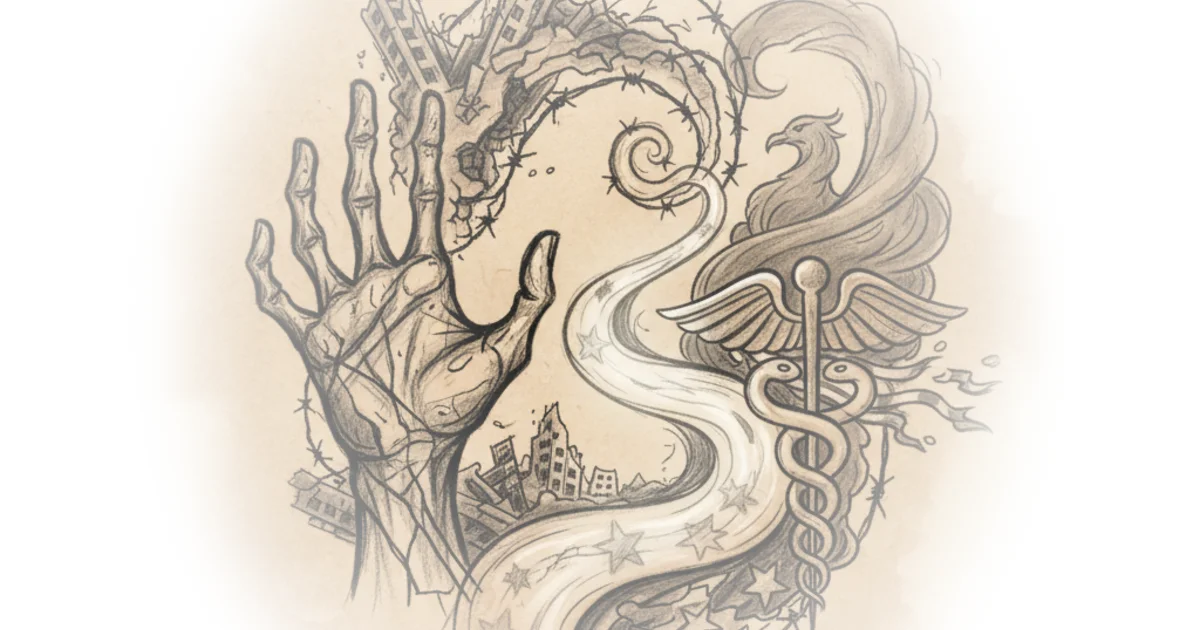
The piece effectively contrasts this with the legal framework in Ukraine, which Mak describes as uniquely favorable to intended parents. He explains that the Family Code of Ukraine ensures the child belongs entirely to the intended parents from conception, a stark contrast to the complex pre-birth orders or adoption processes required in most U.S. states. This legal clarity, combined with lower costs, created a robust medical tourism industry even before the full-scale invasion. Critics might argue that focusing on legal ease overlooks the ethical complexities of cross-border surrogacy, but Mak's data on the global ban of the practice in countries like Thailand and India suggests Ukraine filled a necessary void in the global market.
"Ukraine seemed like the least suitable choice — especially with the war and everything... I can't pinpoint a specific reason — it just all seemed weird and unfamiliar."
The Calculus of Risk
The most compelling section of Mak's analysis is the moral arithmetic families must perform: weighing the safety of a child against the certainty of financial ruin. Mak details how the couple shipped frozen embryos to a clinic in western Ukraine, trusting in the facility's generator-powered independent power supply despite the daily reality of air raids. He writes, "Clinics are purchasing generators, setting up shelters, and providing services though risking disruption. These risks remain a daily reality."
The author does not shy away from the violence that shadows these medical miracles. He references the World Press Photo of the Year, taken by Evgeniy Maloletka in 2022, which captured the bombing of a maternity ward in Mariupol. This historical anchor grounds the story in the tangible horror of the conflict, reminding readers that the "warzone" in the title is not a metaphor. Mak notes that the World Health Organization has documented at least 2,881 attacks on Ukraine's healthcare system as of February 2026, yet the sector adapts. This resilience is framed not as a triumph, but as a desperate necessity.
The narrative takes a harrowing turn when Mak recounts that just two months after Lucy's daughter was born, missile debris struck the very clinic where they received care, killing seven people. "I saw it on the news; it was awful. When it's something you know, it's just awful to watch," Lucy says. This moment crystallizes the author's argument: the American healthcare system is so broken that parents are willing to gamble with their child's life in a war zone to avoid bankruptcy.
The Shadow of Policy
Mak weaves in a sobering postscript regarding the legal limbo these families now face. Having moved to New York, where international surrogacy is prohibited, the couple must live in fear of legal consequences despite their successful journey. This highlights a disconnect between state-level prohibitions and the global reality of medical necessity. The author points out that 41 percent of Americans carry medical debt, with some facing bills in the hundreds of thousands, driving 36 percent to forego necessary care. This statistic serves as the silent engine driving the exodus to Ukraine.
The piece also touches on the broader geopolitical context, noting how Ukraine has become a hub for dental and fertility tourism even as refugees return home for treatment. This dual flow—Americans seeking care while Ukrainians return for it—illustrates the unique, albeit tragic, position of the country's medical infrastructure. Mak's inclusion of the couple's decision to buy books explaining surrogacy to their future child adds a layer of human tenderness that balances the heavy political and economic analysis.
Bottom Line
Tim Mak's strongest argument lies in his refusal to treat this as a simple travelogue; he frames the migration to a war zone as a direct indictment of the U.S. healthcare system's failure to make parenthood accessible. The piece's greatest vulnerability is its reliance on individual anecdotes to represent a systemic crisis, though the supporting data on medical debt and IVF costs provides a solid foundation. Readers should watch for how the legal landscape in the U.S. evolves, as the prohibition of international surrogacy in states like New York may soon collide with the growing number of families who have no other path to parenthood.